
Trees
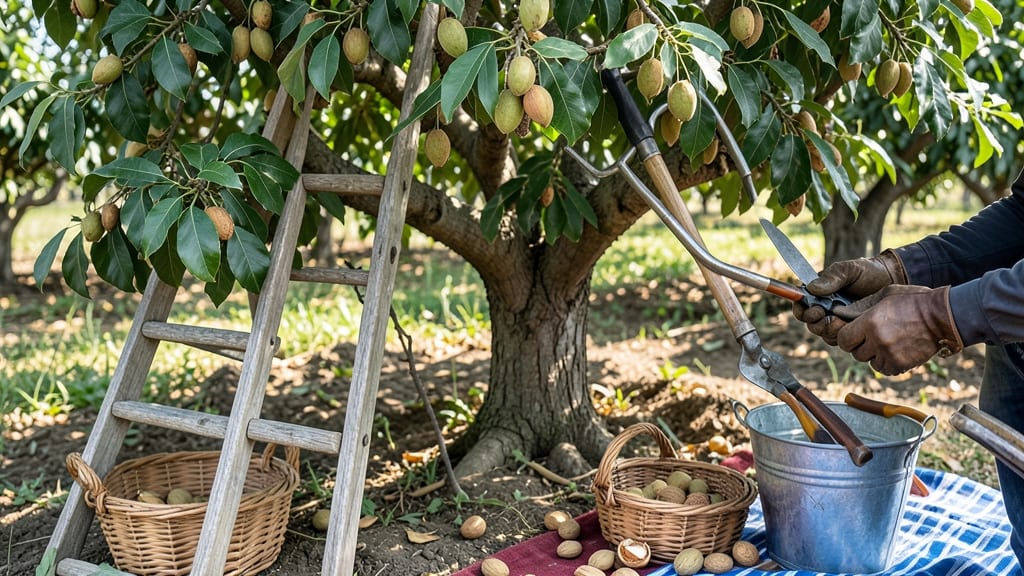
Harvesting the almond tree at the right time turns a sweet, flavorful crop into a bitter disappointment — and knowing the exact months makes all the difference.
Picture this: you’ve waited years for your 🌰 almond tree to bear fruit, only to pick nuts that taste bland or even slightly bitter. That’s the risk when you miss the narrow window between late summer and early fall.
The good news? With a few simple checks, you can pinpoint the perfect moment when those nuts are ready to harvest.
In USDA Zone 6 and warmer regions, almonds typically ripen between August and October, but climate plays a huge role. Coastal areas like California may see harvests as early as July, while Mediterranean climates can stretch into November.
Below, I’ll break down the exact timing for your zone, plus three foolproof touch tests to confirm ripeness.
You’ll leave here knowing not just when to harvest, but how to tell if your almonds are truly ready — and how to care for your tree afterward to ensure next year’s crop is even better.

Exact almond tree harvest months by USDA climate zones
Timing your almond tree harvest correctly ensures you get the sweetest, most flavorful nuts possible. Almond trees thrive in USDA hardiness zones 5 through 10, but their harvest windows vary dramatically based on your climate.
In cooler zones like 5-7, harvests happen earlier, while warmer zones 8-10 enjoy extended growing seasons that shift harvests later into fall. Understanding these variations helps you plan for the perfect harvest time each year.
Temperature plays a critical role in almond ripening. Trees need consistent warm days and cool nights to develop properly. In zones 5-6, early frosts can force harvests as early as late August, while zones 9-10 often see harvests stretching into October or even November.
The key is watching for visual cues like hull splitting and nut detachment rather than relying solely on calendar dates.
Regional variations also matter. California's Central Valley, a major almond-producing region, typically harvests between late August and early October, while Mediterranean climates might extend harvests until mid-November.
Home gardeners in transitional zones like 7-8 should monitor their trees closely, as even small temperature fluctuations can shift the harvest window by weeks.
Here's a quick reference for planning your harvest based on your USDA zone:
| USDA Zone | Primary Harvest Window | Key Temperature Cues | Regional Notes |
|---|---|---|---|
| Zones 5-6 | Late August - Early September | 75-85°F days, 50-60°F nights | Early frosts may force harvest |
| Zones 7-8 | Mid-September - Early October | 80-90°F days, 55-65°F nights | Extended harvest possible with warm spells |
| Zones 9-10 | Late September - November | 85-95°F days, 60-70°F nights | Longest harvest window, often staggered |
| California Central Valley | Late August - Early October | Consistent 80-90°F days | Major commercial harvest zone |
| Mediterranean Climates | September - Mid-November | Warm days, mild nights | Extended harvest possible |
For home gardeners in zones 5-6, I recommend setting reminders for early September to start monitoring your trees. The first frost date in your area is your ultimate deadline—harvest must complete before temperatures drop below 40°F, as cold can damage both the tree and the nuts.
In warmer zones, you have more flexibility, but don't wait too long either—overripe almonds develop bitter flavors and attract pests.
Temperature fluctuations can dramatically affect ripening. For example, a sudden heatwave in zone 7 might push harvest forward by 2-3 weeks, while a cool snap in zone 9 could delay it.
Always check your local 10-day forecast when you notice hulls beginning to split. If rain is predicted, harvest immediately to prevent nuts from absorbing moisture and spoiling.
Pro tip: Keep a harvest journal for at least 3 years to track when your specific tree variety ripens in your microclimate. Factors like soil type, tree age, and water availability can shift harvest times by weeks.
For instance, a young tree (under 5 years) might produce nuts that ripen 2-3 weeks later than mature trees in the same zone.
If you're in a transitional zone (7-8), pay special attention to nighttime temperatures. Almonds need cool nights (55-65°F) to properly develop their sweet flavor. If nights stay too warm, your nuts may taste bland or develop a mealy texture.
In these cases, consider providing light shade cloth during peak afternoon heat to help regulate temperatures.
For commercial growers or those with multiple trees, staggering harvests across zones can create a year-round supply. For example, a zone 6 grower might harvest in early September, while a zone 9 grower could extend their season until November.
This strategy works well for home orchards too—planting a mix of early, mid, and late-season varieties ensures you get nuts over an extended period.
Remember, the perfect almond isn't just about timing—it's about balance. Too early, and you'll miss full flavor development; too late, and you risk pests or weather damage. The golden window is when hulls split naturally and nuts drop easily to the ground.
Once you've mastered your zone's timing, you'll unlock the sweetest, most rewarding harvests your almond tree has to offer. 🌰
3 Touch tests to determine perfect almond ripeness
When the almond tree harvest time arrives, visual cues like hull color can be misleading. That’s why I rely on these three touch tests—they’re foolproof for determining when almonds are perfectly ripe.
These simple checks help you avoid underripe almonds (too bitter) or overripe almonds (prone to mold). The key is consistency: test a few nuts from different branches to confirm ripeness across the tree.
First, I always check the hull’s texture. A ripe almond hull should feel dry and papery, almost like crumpling a brown paper bag. If it’s still slightly leathery or green, the nuts need more time on the tree.
Overripe hulls will feel brittle and crack easily—a sign the nuts may spoil quickly. This test is my first line of defense against wasted harvests.
Press the hull gently—it should feel dry and papery, not leathery.
Gently squeeze the nut—it should feel firm and solid, not soft or hollow.
Shake the branch—ripe nuts should rattle slightly inside the hull before falling.
Next, I move to the kernel firmness test. Hold an almond between your thumb and forefinger and give it a gentle squeeze. A perfectly ripe almond should feel rock-hard and solid—no give at all.
If it feels soft or hollow, the nut is underripe and won’t develop its full sweetness. Overripe kernels, on the other hand, may feel slightly damp or sticky inside the shell, which signals spoilage.
Finally, the detachment test is my favorite because it mimics nature’s way of harvesting. Stand under the tree and give a branch a firm shake. Ripe almonds will rattle inside their hulls before dropping to the ground.
If no nuts fall or they feel loose but don’t rattle, they’re not ready. This test also helps you avoid overharvesting—if nuts are flying everywhere, you’ve missed the window!
Pro tip: Perform these tests in the morning after a dry spell. Moisture can trick you into thinking hulls are ripe when they’re not. And always harvest on a dry, sunny day to prevent mold growth during storage.
These tests have saved me from bitter batches and spoiled harvests—trust me, they’re worth the extra minute!
Once you’ve confirmed ripeness, act quickly. Almonds left on the tree past their prime can attract pests like squirrels or even mold if rains follow. With these touch tests, you’ll know exactly when to harvest for sweet, flavorful almonds every time. Happy harvesting! 🌰