
Picking
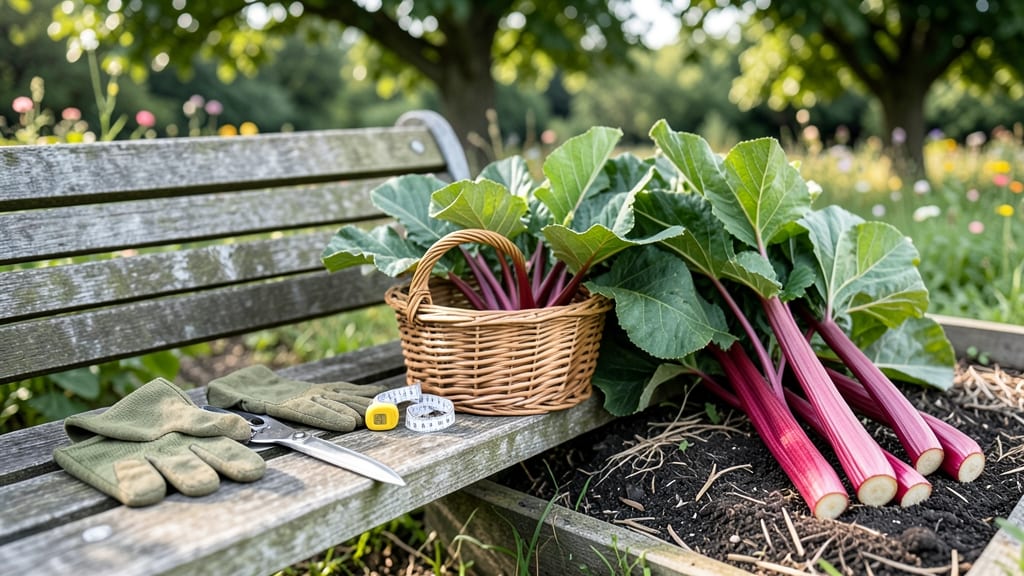
Harvesting rhubarb in September is possible—but only if you time it right to avoid frost damage and keep your plant healthy for next year.
September’s crisp air signals the end of summer, but for rhubarb growers, it also raises a critical question: Can you still harvest this hardy plant before frost sets in? The answer depends on your climate, plant health, and a few key late-season strategies.
In USDA Zone 6a, where rhubarb thrives, the first frost typically arrives by late October, leaving just a few weeks to harvest before the ground freezes.
If your stalks are still 10 inches or longer and firm, you can safely pick them—but only if temperatures stay above 28°F for at least a week.
Below, I’ll walk you through the best practices for late-season harvesting, including how to spot frost risk, when to stop picking, and simple steps to protect your 🍃 rhubarb through winter. You’ll learn how to balance harvests with plant care so you don’t lose next year’s crop.

When and how to harvest rhubarb in September before frost hits
September can still be a productive month for rhubarb harvests, but timing is everything. Unlike summer’s abundant yields, late-season harvesting requires careful attention to temperature thresholds and plant maturity. With the right approach, you can extend your harvest window while protecting your rhubarb crowns for next spring.
The key lies in understanding your USDA zone and avoiding the 28°F (-2°C) frost threshold that signals dormancy.
Your rhubarb plants are likely entering their second growth cycle if you’ve been harvesting since spring. This means they’ve stored energy in their roots and can tolerate a few more harvests—but only if temperatures stay above 30°F (-1°C).
In warmer zones (7–10), you might squeeze in 1–2 more harvests before frost, while colder climates (3–6) should wrap up by mid-September. Always prioritize leaf-to-stem ratios—never remove more than ⅓ of the leaves, as they’re essential for photosynthesis during this critical period.
Here’s your step-by-step guide to harvesting rhubarb in September without risking frost damage or weakening your plants:
Harvest only when temperatures are forecasted to stay above 32°F (0°C) for 5+ days. Use a frost-free window of at least 3 days post-harvest to allow recovery.
Choose stalks that are 10+ inches long, firm to the touch, and have a deep red/green color. Avoid harvesting stalks thinner than a pencil.
Sanitize your pruners or knife with rubbing alcohol to prevent disease. Cut stalks 1 inch above the crown at a 45° angle for faster regrowth.
Leave at least ⅔ of the leaves intact to protect the crown. Remove only yellow or damaged leaves—healthy leaves shield the plant from cold.
Wrap stalks in a damp paper towel and store in a plastic bag in the fridge for up to 2 weeks. For long-term storage, freeze stalks after blanching.
Once temperatures drop below 30°F (-1°C), stop harvesting. Apply 4–6 inches of mulch (straw or leaves) to insulate the crown and prevent frost heave.
After harvesting, monitor your rhubarb for frost damage signs like blackened leaves or mushy stalks. If frost hits unexpectedly, cover plants with frost cloth immediately—even a light freeze can ruin next year’s crop. Remember, rhubarb’s root system is its powerhouse; protecting it now ensures a bountiful spring harvest.
Pro tip: If your rhubarb is younger than 2 years old, skip September harvests entirely. Young plants need all their energy to establish roots for winter survival. For mature plants, limit harvests to once every 2 weeks in September to avoid stressing the crown.
Post-harvest care is just as critical as the harvest itself. Water your rhubarb deeply 1–2 times per week until the ground freezes, and avoid fertilizing after mid-August. This gives the plant time to harden off before winter.
By following these steps, you’ll maximize your September yield while setting your rhubarb up for a strong rebound next spring.
Don’t let frost catch you off guard—plan your final harvest 10–14 days before the average first frost date in your area. Use local weather apps or USDA frost maps to time it perfectly. With careful planning, you can enjoy fresh rhubarb well into fall without sacrificing next year’s crop.
🌱
Rhubarb frost risk by USDA zone: can your plants survive late-season harvests?
Rhubarb’s hardy nature makes it a favorite for gardeners, but September frost risks can turn late-season harvests into a gamble. In USDA Zones 3–7, first frosts often arrive by late September, while Zones 8–10 may see frost as late as November.
The key is knowing your zone’s average frost date and how cold temperatures affect your plant’s ability to produce.
Even if frost hasn’t hit, temperatures below 25°F (-4°C) can damage rhubarb crowns, reducing next year’s yield. In Zones 3–5, I recommend stopping harvests by mid-September to protect roots.
Meanwhile, Zones 6–10 have more flexibility, but watch for light frosts (28–32°F / -2 to 0°C), which can still harm tender stalks.
Comparison table below shows zone-specific frost timelines and whether your rhubarb can survive late harvests. Use this as your guide to decide when to harvest, mulch, or cut back before winter.
In Zones 3–5, I’ve learned the hard way that over-harvesting in September weakens crowns, making them vulnerable to winter kill. Instead, focus on protecting roots with a thick layer of straw or leaves (6+ inches).
For Zones 6–8, a lighter mulch (3–4 inches) suffices, but monitor forecasts for sudden cold snaps.
If frost is imminent, cover plants with frost cloth or row covers to buy 2–4 extra weeks of harvests. Remove covers during the day to prevent heat stress. In Zones 9–10, where frosts are rare, you can harvest until stalks become woody or sparse—typically by late October.
Pro tip: Stop harvesting entirely 4–6 weeks before your average first frost. This gives roots time to store energy for spring regrowth. For example, in Zone 6, I halt harvests by September 15 to ensure robust crowns by winter.
Remember, rhubarb’s perennial nature means next year’s harvest depends on this season’s care. Balance your September cravings with long-term plant health—your future pie recipes will thank you! 🍃