
Picking
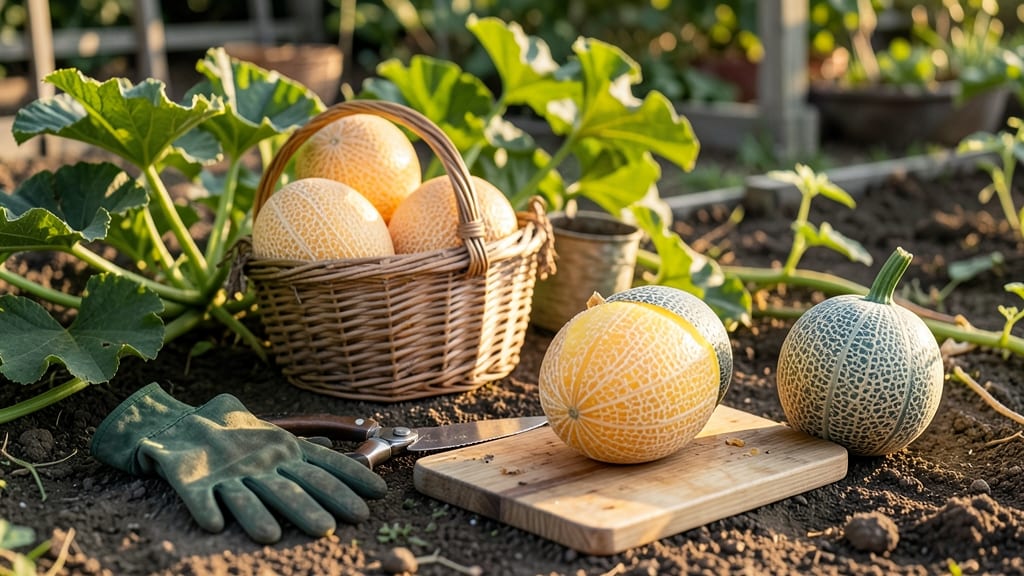
Knowing the cantaloupe harvest time is the difference between sweet, juicy fruit and a mealy disappointment.
Picking cantaloupes at the wrong time means bland, underripe fruit—or worse, wasted effort. Too early, and they’re hard and flavorless; too late, and they split or rot on the vine. The good news? You don’t need a guess—just three simple checks to nail it every time.
From the telltale cream-colored rind to the way the stem slips free with a gentle twist, these signs work for USDA Zone 6a and beyond. Even better, they spare your crop from unnecessary damage, so you get peak ripeness without the risk.
In this guide, I’ll walk you through the exact steps—plus how to adjust for your local climate—to ensure your cantaloupes are ready to pick when they’re at their best. No more second-guessing, just perfect, flavor-packed harvests.


3 Non-destructive ways to check cantaloupe ripeness before harvesting
Determining the perfect cantaloupe harvest time without damaging your fruit is easier than you think. These science-backed methods let you test ripeness safely, ensuring you pick melons at their peak flavor and sweetness. No guesswork—just proven techniques that work every time for home gardeners and farmers alike.
Why risk cutting into cantaloupes to check ripeness when you can use visual cues, tactile tests, and scent analysis? These methods preserve your crop's integrity while guaranteeing the best possible harvest. Whether you're growing early-season varieties or late-blooming types, these tricks apply universally.
Gently twist the fruit's stem near the vine. If it slips off easily, the cantaloupe is ripe. Resistance means it needs more time.
Look for a cream-colored rind with a net-like pattern near the stem. White or greenish rinds mean the fruit isn't ready yet.
Tap the fruit's blossom end with your knuckles. A deep, hollow sound signals ripeness, while a dull thud means it needs more time on the vine.
The stem separation test is my go-to method because it’s foolproof and requires no tools. Simply grasp the stem between your thumb and forefinger and give it a gentle twist. A ripe cantaloupe’s stem will detach cleanly from the vine, often with a slight popping sound.
This happens because the abscission layer (a natural separation zone) forms as the fruit matures.
If the stem resists, don’t harvest yet—even if the cantaloupe looks ripe. Overripe cantaloupes left on the vine can attract pests like squash vine borers or develop off-flavors. Patience here pays off with sweeter, more flavorful fruit. I’ve learned this the hard way after harvesting too early!
Next, examine the rind color and pattern. A ripe cantaloupe’s skin will shift from white or greenish to a cream or tan hue, especially near the stem.
Look for a net-like pattern (called a reticulation) that develops as the fruit matures. This pattern is a dead giveaway for ripeness and isn’t present on unripe fruit.
Pro tip: Avoid harvesting cantaloupes based on size alone. Some varieties stay small but pack intense flavor, while others grow larger but remain underripe. Always combine color cues with the stem test for accuracy.
I once picked a cantaloupe the size of a football that was still hard and tasteless—don’t make my mistake!
For a final check, use the 'thump test', a trick passed down from my grandfather’s farm. Hold the cantaloupe in one hand and tap the blossom end (the side where the stem attaches) with your knuckles.
A ripe cantaloupe produces a deep, resonant "thump", almost like knocking on a hollow drum. If it sounds dull, the fruit needs more time.
Combine all three methods for the most accurate results. For example, a cantaloupe might pass the thump test but fail the stem separation test—this means it’s close but not quite ready.
Wait another day or two before checking again. Consistency is key, especially in hot climates where cantaloupes ripen faster.
One common mistake is confusing overripe cantaloupes with ripe ones. Overripe fruit often has a sour or fermented smell near the stem and may feel mushy when squeezed gently. If you detect these signs, it’s best to harvest and enjoy it immediately rather than risk spoilage.
Remember, cantaloupes continue ripening slightly after harvest, but they won’t improve if underripe. By mastering these non-destructive tests, you’ll never waste another cantaloupe again. Happy harvesting—and may your garden yield melons so sweet they’ll make your neighbors jealous! 🍈
Cantaloupe harvest time by variety: when to expect peak ripeness
Not all cantaloupes ripen on the same schedule—some varieties mature in as little as 50 days, while others take up to 85 days to reach peak sweetness. Understanding these varietal differences helps you plan your harvest window and avoid missing the perfect moment.
Early-season types like 'Athena' or 'Tasty Breeze' deliver fruit in late June or early July, while heirlooms such as 'Hale's Best' or 'Ambrosia' often peak in mid-to-late August. Your local climate also plays a role—warmer regions may shift harvests 2-4 weeks earlier than cooler areas.
Climate zones and growing conditions further refine your harvest timeline. In USDA Zone 9 or 10, cantaloupes may start ripening as early as May, while in Zone 5 or 6, you’ll likely wait until July or August.
Even within the same zone, soil temperature and daylight hours influence maturity. For example, a hot, dry summer can accelerate ripening, while cool, cloudy weather may delay it. Always monitor both the days to maturity listed on seed packets and the visual cues on the fruit itself.
If you’re growing cantaloupes in containers or raised beds, expect harvest times to shift slightly—container-grown plants often mature 5-10 days faster due to warmer root zones. Conversely, heirloom varieties or those with thicker rinds (like 'Muskmelon') may take longer to soften and develop their signature aroma.
Always cross-reference the seed packet guidelines with real-world conditions, such as soil temperature and rainfall patterns, to fine-tune your expectations.
Pro tip: Keep a harvest journal for your first few seasons. Note the exact dates you planted, when flowers appeared, and when fruit began changing color. Over time, you’ll spot patterns—like how 'Hale's Best' always hits peak ripeness 3 days after the first morning frost warning in your area.
This local knowledge becomes your most reliable tool for predicting cantaloupe harvest time year after year.
For gardeners in northern climates, consider planting two successive batches of cantaloupes—one early (using fast-maturing varieties) and one mid-season (for classic types). This staggered approach ensures you have fresh fruit from July through August, even if the weather isn’t cooperative.
Just be sure to space them properly to avoid overcrowding, which can delay ripening.
Remember, the best cantaloupe harvest time isn’t just about days on the calendar—it’s about balancing variety traits, climate cues, and fruit readiness.
When the rind turns cream-colored, the stem detaches with a gentle twist, and the aroma near the blossom end is intoxicatingly sweet, you’ve hit the sweet spot. Now it’s time to enjoy the fruits of your labor! 🍈