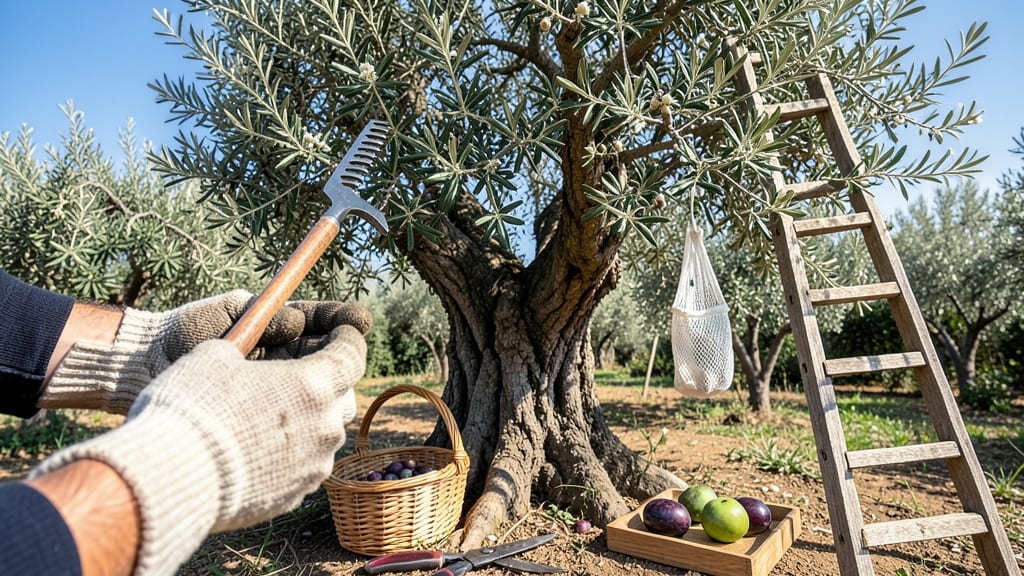
Harvesting olive trees at the right time ensures rich oil or perfectly brined table olives—miss the window, and you’re left with bitter fruit or wasted effort.
Picture this: your 🫒 olive tree is heavy with fruit, but you’re not sure if they’re ready. One wrong pick, and you could ruin weeks of work—or worse, lose your entire harvest. The key? Knowing the exact months to harvest by variety and how to test ripeness without guessing.
Whether you’re growing Arbequina for oil or Kalamata for the table, timing matters. Some olives need to turn deep purple, others stay green, and regional climates shift those windows by weeks.
Below, I’ll break down the perfect harvest months for your tree, plus three foolproof ripeness tests to avoid costly mistakes.
Ready to turn your harvest into gold? You’ll learn how to spot the ideal fruit, adjust for your climate, and handle olives post-pick—so you’re never left wondering if you waited too long.

365
487
609
731
853
975
1097
Best olive harvest months by variety: Kalamata vs Arbequina vs Frantoio
Harvesting olives at the wrong time can ruin months of hard work—whether you're growing for flavorful table olives or premium olive oil.
Each variety has its own peak harvest window, and even a few weeks off can mean the difference between sweet, rich fruit and bitter, underripe olives. Let's break down the exact months for 10 popular varieties, including regional adjustments for early or late seasons.
Climate plays a huge role in olive ripening. In Mediterranean regions, harvests typically start in October and run through December. However, in warmer climates like California, you might see olives ripen 2-4 weeks earlier, while cooler coastal areas could delay harvests by 3-6 weeks.
Always monitor your tree's fruit color and firmness—these are your best indicators.
For table olives, you'll often harvest when the fruit is still green or purple, depending on the variety. Meanwhile, oil olives should be picked when they turn deep purple to black for maximum oil yield.
Below, I’ve mapped out the ideal harvest windows for 10+ varieties, including Kalamata, Arbequina, and Frantoio, plus tips for adjusting to your local climate.
| Variety |
Peak Harvest Months |
Best For |
Climate Adjustments |
Ripeness Indicator |
| Kalamata |
Late November - Early January |
Table olives (green/purple) |
Warmer areas: Oct-Nov; cooler: Dec-Jan |
Purple-black, soft when pressed |
| Arbequina |
Mid-October - Mid-November |
Olive oil (black) |
Early in warm climates; late in coastal |
Deep purple-black, slight natural drop |
| Frantoio |
Late October - December |
Oil and dual-purpose |
Early in Italy; late in California |
Black, soft pit when squeezed |
| Manzanillo |
November - December |
Table olives (green) |
Warmer: Oct-Nov; cooler: Dec |
Green turning purple, firm |
| Leccino |
Late November - January |
Oil (high yield) |
Early in Spain; late in Greece |
Black, slight wrinkling |
| Mission |
December - Early January |
Dual-purpose |
Early in California; late in Texas |
Purple-black, soft skin |
| Koroneiki |
Mid-November - December |
Oil (intense flavor) |
Early in Greece; late in Australia |
Black, natural detachment |
| Picholine |
Late October - November |
Oil (mild flavor) |
Early in France; late in Morocco |
Purple-black, firm flesh |
| Barouni |
November - December |
3 Ripeness tests to harvest olives at perfect oil quality
Harvesting olives at the wrong stage can turn your golden oil into bitter, inedible pulp. The key? Three simple ripeness tests that reveal when olives are primed for peak flavor and oil content.
I’ve used these methods for years in my California olive grove, and they’ve never failed me.
First, understand that oil olives should be harvested when they’re fully ripe—typically black or deep purple—while table olives need that crisp green or purple hue.
But color alone isn’t enough. You’ll also need to check flesh firmness and acidity levels to ensure you’re not picking too early or too late.
Why these tests matter: Overripe olives yield low-quality oil with high acidity, while underripe ones produce bitter, astringent results. Mastering these three checks will give you consistent, premium oil every harvest season.
1
Color Chart Test
Use a variety-specific color guide. Arbequina olives turn deep purple-black, while Frantoio stays dark green-to-black. Compare against a reference photo of ripe fruit.
2
Flesh Firmness Scale
Gently squeeze an olive between your thumb and forefinger. It should yield slightly (like a ripe peach) but not squish easily. Overripe olives feel mushy and leak oil.
3
Acidity Check
Cut an olive open and taste a small piece. Ripe olives for oil have low acidity (mild, slightly sweet). High acidity means wait 1-2 weeks—or you’ve missed the window.
Pro tip: Harvest on a cool morning after dew has dried. This reduces oil oxidation and makes the olives easier to pick without bruising. I always use a long-handled net to avoid damaging the branches.
One common mistake? Relying on calendar dates alone. Climate shifts can delay ripening by 2-3 weeks. Always cross-check with these tests, especially in warmer regions where olives ripen faster.
Once you’ve confirmed ripeness, act fast. Olives left on the tree beyond their prime can drop prematurely or attract pests. Store your harvest in mesh bags in a cool, shaded area for up to 2 weeks before processing.
★★★★★4.6(4 reviews)
|