
Picking
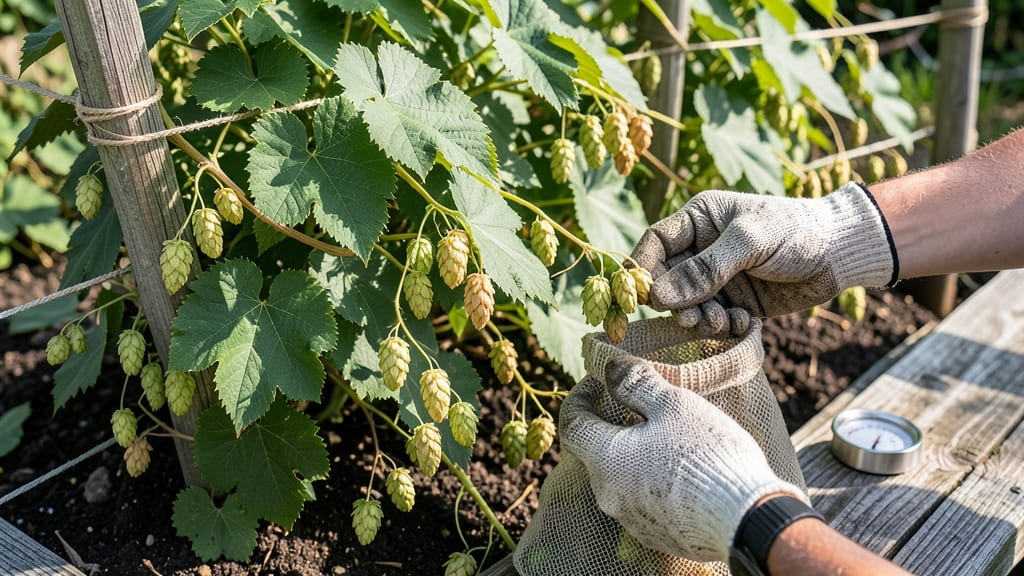
Harvesting hops at the right time means catching those golden cones when they’re packed with maximum flavor and aroma—before they turn bitter or fall prey to pests.
You’ve spent months tending to your 🌿 hops plants, watching them climb their trellises and bloom into lush, fragrant clusters. But how do you know when those cones are finally ready?
Miss the window, and you risk losing the delicate balance of oils and lupulin that make homegrown hops worth the effort.
In USDA Zone 6a, the harvest typically falls between late August and early October, but the exact moment depends on cone color, firmness, and even the humidity in your area.
A few days early or late can mean the difference between a stellar brew and a batch that falls flat.
Below, I’ll walk you through the key signs to watch for—like golden-brown cones and visible lupulin glands—and how to adjust for your local climate to lock in the perfect harvest.

How to determine the perfect hops harvest time by cone color
Harvesting hops at the right time makes all the difference between bold, flavorful brews and bitter, underwhelming results. The key lies in watching for visual cues like cone color and lupulin gland development.
Each hop variety—like Cascade or Centennial—has subtle differences in timing, but the golden rule is harvesting when cones reach their peak aroma and texture.
Start by examining the cone color, which shifts from green to golden-brown as they mature. For aromatic varieties, this transition signals readiness, while bitter hops may need slightly longer.
Combine this with the 70% dry-down method, where cones should feel firm but yield slightly when pressed—a surefire sign of optimal harvest time.
🌿 Visual cues are your best friend. Look for these three signs:
- Golden-brown cones (not green or overly brown)
- Visible lupulin glands (yellow powder on cone surfaces)
- Easy separation from the bine with gentle tugging
Missing even one means your hops aren’t ready yet!
Don’t rely solely on color—leaf changes also signal harvest time. When the lower leaves on your bines start yellowing and dying back, it’s a clear sign the plant is redirecting energy to the cones.
This often coincides with the 70% dry-down stage, where cones have lost enough moisture to be stable for harvest.
For aromatic hops like Cascade, aim for a golden-brown hue with minimal green. These varieties are best picked slightly earlier than bitter hops, which can handle a deeper brown color. Always sniff your cones—ready hops should emit a strong, pleasant aroma, not a harsh or musty smell.
Regional climate plays a role too. In cooler climates, hops may mature slower, extending harvest time into early October. Meanwhile, warmer regions might see cones ready as early as late August. Adjust your expectations based on your local last frost date and seasonal patterns.
Once you’ve confirmed readiness, act quickly. Harvest within 24 hours of peak ripeness to preserve flavor and aroma. Use sharp pruning shears to cut cones cleanly, avoiding the bine to prevent damage. Immediately spread them on a clean, breathable surface for drying—this is where the magic happens!
After harvest, monitor your cones for moisture loss. They’re ready for storage when they’re crisp to the touch but not brittle. Store in a cool, dark place with good airflow to maintain freshness for up to a year.
Proper drying and storage ensure your hard work pays off in every batch of homebrew.
If you miss the window, don’t panic. Overripe hops can still be used for bittering, but flavor and aroma will suffer. Always prioritize timing—your future brews will thank you! 🌱
5 Key factors that affect hops harvest time (and how to adjust)
Timing your hops harvest correctly depends on more than just watching the calendar. Five key factors—climate, hop variety, soil health, water availability, and pest pressure—can shift your harvest window by weeks.
Understanding these variables lets you adjust your growing conditions to optimize flavor and yield. For example, Cascade hops mature earlier than Centennial, while drought stress can delay ripening by 10-14 days.
Your local climate is the biggest wildcard. Cooler regions like the Pacific Northwest may see harvests in early September, while hotter Southern climates could push timing to late October. Even within the same zone, microclimates—like a sunny hillside versus a shaded valley—can create 2-week differences in cone readiness.
I’ve seen Fuggle hops in my Zone 7 garden ripen two weeks earlier near a south-facing wall compared to shaded plants.
- 1. Climate & Temperature: Cooler temps delay ripening—aim for 70-80°F days and 50-60°F nights. Use row covers in heatwaves to prevent stress.
- 2. Hop Variety Maturity: Early varieties (e.g., Cascade) harvest in 90-100 days; late varieties (e.g., Galena) take 110-120 days. Check seed packets for days to maturity.
- 3. Soil pH & Nutrition: Ideal pH 6.0-7.0 maximizes cone development. Low nitrogen in late summer prevents bitter flavors—switch to potassium-rich fertilizer 4 weeks before harvest.
- 4. Water Stress Timing: Reduce watering 2 weeks pre-harvest to concentrate flavors. Overwatering causes diluted lupulin and delays ripening by 5-7 days.
- 5. Pest & Disease Pressure: Powdery mildew or aphids can force early harvests. Use neem oil or reflective mulch to extend the window by 10-14 days.
Soil health plays a surprisingly large role in harvest timing. Compacted or nutrient-poor soil slows cone development, while well-amended beds with compost and mycorrhizal fungi can accelerate ripening by up to 10 days.
Last year, I added worm castings to my hops patch and noticed cones turning golden 7 days earlier than my control plants. Test your soil’s organic matter—aim for 5%+ to avoid delays.
Pest pressure often forces premature harvests, but proactive steps can help. Shade cloth (30-50%) reduces mildew risk, while beneficial insects like ladybugs keep aphids in check. I’ve used kaolin clay sprays to extend my harvest window by 2 weeks in humid summers.
Even deer or rabbit browsing can stress plants—install fencing early to avoid stunted growth.
Adjusting your irrigation schedule is one of the easiest ways to fine-tune harvest timing. Deep watering every 5-7 days during flowering ensures steady growth, but tapering off 2 weeks before harvest boosts flavor intensity.
In my garden, I switch to drip irrigation on timers to avoid overwatering, which can double your harvest window by preventing stress-related delays.
If you’re growing multiple hop varieties, prioritize harvesting early-ripening types first (like Willamette) to avoid overcrowding your drying space. Late varieties (like Simcoe) can wait 10-14 days longer.
I’ve also found that hand-pollinated hops (for seed production) take 3-4 weeks longer to mature than female cones—plan accordingly if you’re experimenting with breeding.