
How To
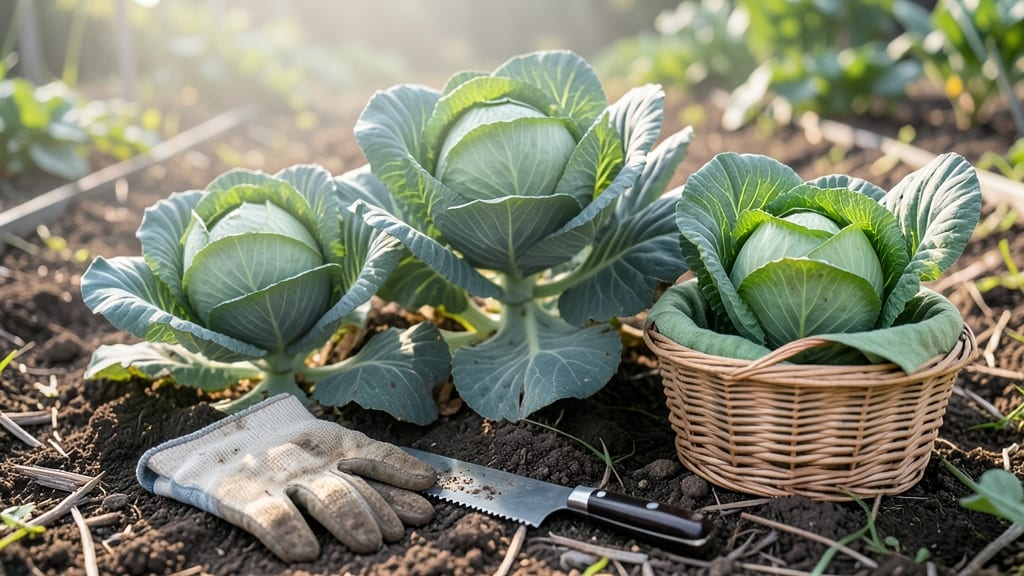
Knowing when to harvest cabbage comes down to three key signs: head firmness, leaf wrapping, and vibrant color—each telling you whether your 🥬 is ready to pick or still needs time.
Picking cabbage at the wrong time means sacrificing flavor, texture, and even yield—yet many gardeners miss the subtle signs that signal peak harvest readiness. A head that’s too soft or loose? You’ve waited too long. One that’s still loose-leafed? It’s not there yet.
In this guide, I’ll break down the visual and tactile cues to watch for, including how size and color vary by variety (green, red, or savoy).
You’ll also learn how climate and planting season adjust your harvest window—because a June heatwave or an early October frost can throw off your timing.
Once you spot the perfect cabbage, I’ll share how to store it for maximum freshness, so your harvest stays crisp for weeks. Let’s get those heads out of the garden at the right moment!

3 Visual cues that prove your cabbage is ready for harvest
Harvesting cabbage at the perfect moment ensures crisp texture and sweet flavor, but many gardeners rely on guesswork instead of visual cues. The truth is, your cabbage sends clear signals—you just need to know what to look for.
From leaf color shifts to head firmness, these three visual benchmarks will transform your harvest timing from uncertain to foolproof.
First, let’s address the biggest mistake: assuming all cabbage varieties mature at the same rate. Green cabbage, red cabbage, and Savoy cabbage each have distinct readiness markers. Ignoring these differences can lead to heads that are either too small or woody.
For example, red cabbage often develops a deeper hue just before harvest, while Savoy cabbage’s crinkled leaves tighten dramatically when ready.
| Cue | Green Cabbage | Red Cabbage | Savoy Cabbage |
|---|---|---|---|
| Head Size | 10-12 inches diameter | 8-10 inches diameter | 6-8 inches diameter |
| Leaf Color | Deep green, glossy | Purple-red, vibrant | Green, wrinkled texture |
| Head Firmness | Solid, no give | Firm, heavy for size | Dense, crisp leaves |
| Leaf Wrap | Tightly wrapped | Fully enclosed | Leaves curl inward |
| Warning Signs | Loose leaves, yellowing | Fading color, splitting | Soft spots, wilting |
The first visual cue to watch is leaf color. For green cabbage, the outer leaves should transition from light to a deep, glossy green.
If you notice yellowing or browning edges, that’s a sign of overmaturity or stress. Red cabbage will deepen to a rich purple-red hue, almost like a ripe plum, while Savoy cabbage maintains its green but develops tighter, more pronounced wrinkles.
Next, check the head size and shape. A ready-to-harvest cabbage head should feel heavy for its size—this weight indicates water content and density.
For green varieties, aim for a 10-12 inch diameter, while red cabbage typically matures slightly smaller at 8-10 inches. Savoy cabbage, with its unique texture, usually reaches 6-8 inches but with a much denser feel.
Don’t overlook the leaf wrapping pattern. When cabbage is ready, the outer leaves should tightly encase the head, almost like a closed fist. If you can easily separate the leaves with your fingers, the head isn’t fully mature yet.
For Savoy cabbage, this wrapping is especially critical—the leaves should curl inward, creating a compact, almost spherical shape.
One common mistake is waiting too long because the head "looks big enough." But overripe cabbage becomes woody and bitter, losing its prized crunch. Look for splitting heads or leaves pulling away from the center—these are red flags that you’ve missed the window.
In my garden, I’ve seen green cabbage heads split open within 24 hours of reaching peak maturity, so timing is everything.
For container-grown cabbage, size benchmarks shrink slightly due to limited root space. A dwarf variety in a 5
Tactile & smell tests: the secret sensory checks gardeners overlook
Most gardeners rely on days to maturity or head size to harvest cabbage—but your hands and nose know better. The firmness test and aromatic cues reveal readiness far more accurately than a calendar. These sensory checks help you avoid woody texture or bitter flavors that come from waiting too long.
Your fingers can detect head density better than any ruler. A ripe cabbage head feels heavy for its size and resists gentle pressure without yielding. This tactile feedback is your first clue that the glucose levels are peaking.
Meanwhile, the earthy aroma near the base intensifies as the plant matures—like a green apple scent for green varieties or a sweet musk for red cabbage.
⚠️ WARNING: Overlooking these cues costs you flavor and texture
Don't harvest based on size alone!
A 12-inch head isn't always ready—firmness and weight matter more. Waiting until the head feels dense and heavy prevents loose, leafy centers that ruin texture. For Savoy cabbage, crinkled leaves should resist when pinched—not feel floppy.
Pro tip: Smell the base—if it lacks that fresh, crisp aroma, it's not harvest-ready. A musty or sour smell means it's past its prime.
For green cabbage, the scent shifts from grassy to sweetly herbal when ready. Red varieties emit a fruity undertone, almost like cherry blossoms. If you're unsure, perform the squeeze test: Gently press the head—if it springs back immediately, it's perfect.
If it lingers in your fingers, it needs more time.
Seasonal variations affect these cues. In cool climates, cabbage develops faster firmness due to slower growth, while warm seasons may delay scent development. Always harvest in the morning when starches convert to sugars, amplifying both texture and aroma.
This peak flavor window lasts just 2-3 days—miss it, and your cabbage turns woody and pithy.
Why trust your senses over a planting calendar? Because temperature fluctuations, soil moisture, and varietal differences all alter maturity timelines. A 10-day delay in warm weather can turn a crisp head into a bolting mess.
By combining tactile feedback with aromatic cues, you'll harvest cabbage at its sweetest, crispiest moment every time.
Next time you're debating whether your cabbage is ready, skip the guesswork. Feel the weight, smell the base, and test the firmness—your garden's flavor depends on it. These simple sensory checks save you from overripe disappointments and underripe frustration, ensuring every bite is peak perfection.