
How To
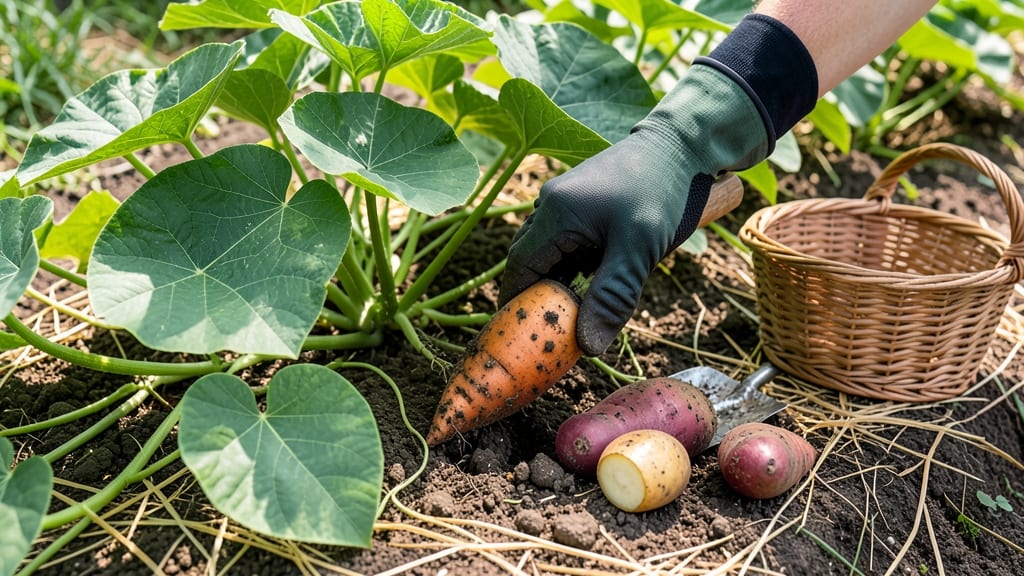
Harvesting sweet potatoes takes 90 to 140 days after planting, depending on the variety and your climate—but getting it wrong means tough, stringy tubers instead of the sweet, tender ones you crave.
Here’s the catch: most gardeners wait too long, letting the roots turn woody, or dig too early and end up with tiny, underdeveloped 🍠. The key is watching for leaf yellowing and soil warmth, not just counting days.
I’ll show you how to nail the timing, whether you’re in a hot southern summer or a cooler Zone 6a garden.
Some varieties like Beauregard mature faster (100 days), while others need the full 140-day window. Soil temperature plays a bigger role than you might think—too cool, and growth slows; too hot, and they bolt. I’ll break down the signs to watch for so you never guess again.
Ready to dig? By the end, you’ll know exactly when to harvest, how to tell if they’re ready, and whether to cure them for extra sweetness. No more waiting too long or pulling them too soon—just perfect, flavorful sweet potatoes every time.

Sweet potato harvest time by variety: exact days from planting to digging
Timing your sweet potato harvest correctly transforms tough, woody roots into the sweet, flavorful tubers you crave. Each variety has its own harvest window, typically ranging from 90 to 140 days after planting.
Understanding these exact timelines helps you avoid digging too early (small, fibrous roots) or too late (rotting in cool soil). Let’s break down the days to harvest by popular varieties and what to watch for in your garden.
Most gardeners follow a simple rule: harvest when vines yellow and die back, but tubers must also reach 3–6 inches in length. Soil temperature plays a huge role—warmer soils speed up growth, while cooler conditions delay maturity.
For example, Beauregard, the most popular variety, thrives in 90–110 days, while Jewel takes slightly longer at 110–130 days. Let’s explore these timelines in detail so you can plan your harvest like a pro.
| Variety | Days to Harvest | Skin Color | Tuber Size | Best For |
|---|---|---|---|---|
| Beauregard | 90–110 days | Reddish-orange | 3–6 inches | Home gardens, baking |
| Jewel | 110–130 days | Copper-red | 4–7 inches | Long storage, sweet flavor |
| Georgia Jet | 85–100 days | Tan with red eyes | 2–4 inches | Early harvest, smooth skin |
| Hannah | 100–120 days | Orange | 3–5 inches | Disease-resistant, sweet |
| Centennial | 100–120 days | Rust-red | 4–6 inches | Long vines, high yield |
If you’re growing Beauregard sweet potatoes, aim for a harvest between 90 and 110 days. This variety is a favorite for its balance of sweetness and texture, making it ideal for roasting or baking.
Start checking for readiness around day 85—this is when vines begin to yellow and tubers start firming up. For Jewel sweet potatoes, which take 110–130 days, patience pays off with an extra-sweet flavor and longer storage life.
For gardeners in warmer climates (USDA zones 8–10), sweet potatoes mature faster due to longer growing seasons. In these areas, you might harvest Beauregard as early as 85 days if soil temperatures stay above 75°F (24°C).
Conversely, in cooler zones (6–7), expect delays—planting Georgia Jet (85–100 days) is a smart choice for shorter seasons. Always adjust your harvest timeline based on local weather patterns.
One of the biggest mistakes I see is harvesting too early because the vines look yellow but tubers are still small. To avoid this, gently brush back the soil with your hands around day 80–90 to check tuber size.
If they’re under 2 inches, wait another week. For varieties like Centennial, which can take up to 120 days, monitor vine dieback closely—this is your best indicator of maturity readiness.
Don’t forget that soil temperature directly impacts harvest timing. Sweet potatoes grow best in soil that’s at least 65°F (18°C) at planting and stays above 70°F (21°C) during growth. Cooler soils slow root development, so if your area experiences unexpected chilly spells, extend your harvest window by 10–14 days.
Use a soil thermometer to track temperatures—this small tool can save you from guessing.
Once your sweet potatoes meet the size and color requirements for their variety, it’s time to dig. Use a garden fork to gently loosen the soil around
How soil temperature affects sweet potato harvest timing (and when to adjust)
Sweet potatoes thrive when soil temperatures stay consistently warm, but cooler conditions can stall growth or even stop it entirely. In my Zone 7 garden, I’ve seen harvest times shift by 3-4 weeks just because of soil temperature fluctuations.
The ideal range is 75–90°F (24–32°C), where roots grow fastest and sweetness develops properly.
Warmer soils speed up the entire growth cycle, often leading to earlier but smaller harvests. If your soil stays above 85°F (29°C) for weeks, your sweet potatoes might mature in 90 days instead of the typical 120 days.
However, this can result in less flavorful, fibrous roots if harvested too soon.
Cooler soils, below 65°F (18°C), slow growth dramatically. In my early spring plantings, vines would sprout but barely produce edible tubers by frost. The roots take 140+ days to mature in these conditions, risking damage from fall frosts or soil compaction from heavy rains.
⚠️ callout warning ⚠️
I once planted Beauregard slips in 60°F soil thinking they’d catch up. By 90 days, the vines were lush but the roots were tiny and woody. Lesson: Wait until soil hits 65°F+—even if it delays harvest by weeks, you’ll get sweeter, larger tubers.
To adjust for your climate, use a soil thermometer (they’re cheap and lifesavers). In cool climates (Zones 3-5), start slips in biodegradable pots indoors 2-3 weeks before last frost, then transplant when soil warms. In hot zones (8-10), plant earlier varieties like Georgia Jet (90-day harvest) to avoid over-mature, woody roots from summer heat stress.
Another trick? Mulch heavily with straw or black plastic to maintain soil warmth. I’ve added 2–3 inches of mulch and seen 10°F warmer soil at root level, accelerating growth by 2 weeks. Just avoid organic mulch too close to harvest—it can contaminate tubers with dirt.
If your vines look healthy but growth stalls, check soil temp again. Sweet potatoes are sensitive to cold snaps—even a 50°F (10°C) dip for 3 days can halt tuber formation.
In my Zone 6 garden, I now plant slips in June instead of May to avoid late-spring chills, guaranteeing a full-season harvest before frost.