
How To
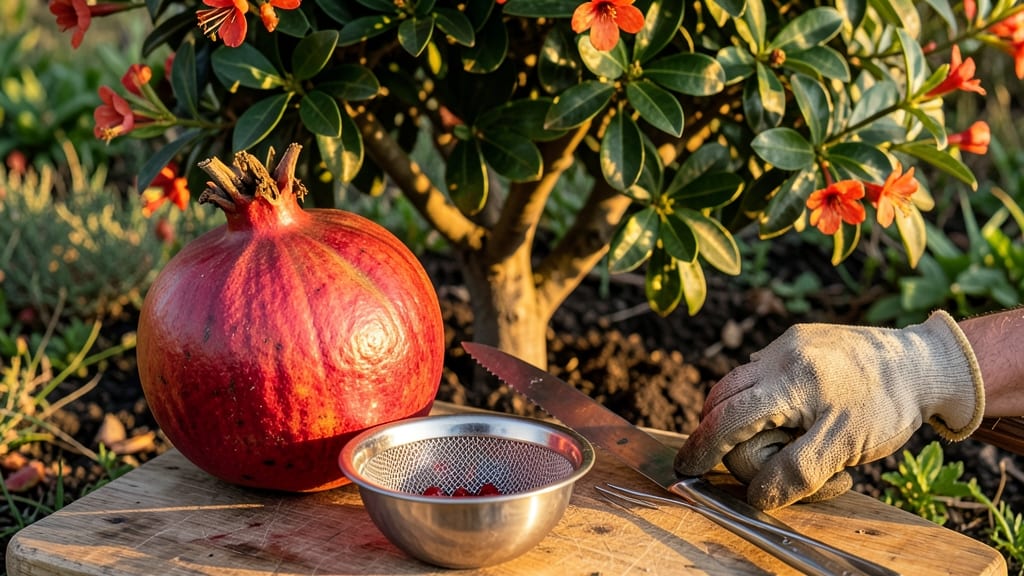
To harvest pomegranate seeds cleanly, you’ll need just a few tools and a little patience—no juice-stained fingers required.
Pomegranates are nature’s candy bombs—bursting with jewel-like seeds that taste like liquid sunshine. But extracting those seeds cleanly? That’s where most home gardeners hit a sticky, messy wall.
Here’s the secret: a sharp knife, a bowl of cold water, and a colander are all you need to turn a messy task into a 5-minute process.
I’ll walk you through each step, from spotting the perfect ripe 🍇 to separating seeds without a single drop of juice on your counter.
You’ll also learn how to store the seeds for planting or culinary use, plus the biggest mistakes to avoid—like overcrowding your bowl or skipping the rinse. Ready to turn that pomegranate into a seed harvest without the drama?

Step-by-step guide to harvesting pomegranate seeds without the juice mess
Pomegranates are nature’s candy bombs—bursting with jewel-like seeds that taste like liquid sunshine. But extracting those seeds cleanly? That’s where most home gardeners hit a sticky, messy wall. The good news?
With the right cut-and-scoop technique and a few pro tips, you can harvest pomegranate seeds without staining your hands or counters. Let’s dive into a foolproof method that works every time.
First, you’ll need a ripe pomegranate—look for one with a deep red or pink skin that feels heavy for its size. A slightly wrinkled skin is another sign of ripeness.
Once you’ve got your fruit, gather a few essential tools: a sharp chef’s knife, a large bowl, and a colander or fine-mesh strainer. Optional but helpful items include rubber gloves (to protect your hands) and paper towels for cleanup.
Before you start cutting, place your pomegranate on a cutting board and slice it in half horizontally. Use a serrated knife for clean cuts—this prevents the fruit from squishing and making a bigger mess.
Once cut, you’ll see the seed clusters nestled inside the white, spongy membrane. This is where the magic happens.
Slice the fruit horizontally with a serrated knife to expose the seed clusters. Avoid pressing too hard to prevent juice spillage.
Use the knife to gently score the white membrane around the seeds in a crosshatch pattern. This loosens the seeds without breaking them.
Place a bowl of cold water under the pomegranate halves. Gently tap or scoop the seeds into the water—they’ll sink while the pulp and juice float to the top.
Drain the water through a fine-mesh strainer, then rinse the seeds under cool running water to remove any lingering pulp or juice.
Transfer seeds to a paper towel and pat them dry. Store in an airtight container in the fridge for up to a week or freeze for longer storage.
Pro tip: If you’re dealing with a particularly stubborn pomegranate, try the freeze-and-thaw trick. Place the halved fruit in the freezer for 30 minutes to firm up the membrane, making it easier to score and scoop. This method also helps reduce staining on your hands and cutting board.
One common mistake is squeezing the fruit to extract seeds—this causes a messy explosion of juice and pulp. Instead, focus on gentle tapping or using a spoon to dislodge the seeds. Another trick? Wear rubber gloves to minimize staining, and keep a damp cloth handy for quick cleanups.
Once you’ve mastered this method, you’ll wonder why you ever struggled with pomegranate seed extraction before. The cold-water rinse trick is a game-changer, and the results are always clean, stain-free seeds ready for snacking, juicing, or even planting. Happy harvesting!
Now that you’ve got your seeds, consider saving some for regrowing pomegranate trees. Just remember, seeds from store-bought fruit may not produce true-to-type fruit, so save seeds from your own homegrown pomegranates for the best results.
Best tools and hacks for efficient pomegranate seed extraction
Extracting pomegranate seeds efficiently means choosing the right method for your needs. Manual techniques like the classic colander method work well for small batches, but mechanical tools can save time when dealing with larger quantities.
I’ve tested everything from kitchen gadgets to specialized seed extractors to find the fastest, cleanest ways to get those ruby-red jewels without the mess.
Your choice depends on volume, cleanliness, and time constraints. A handheld citrus juicer or food processor can speed up extraction, while a specialized seed extractor ensures minimal waste.
Below, I compare the best tools—plus my top DIY hacks—to help you pick the perfect fit for your harvest.
| Tool/Method | Ease of Use | Cleanliness | Speed | Best For |
|---|---|---|---|---|
| Colander + Knife | Moderate | Messy (juice splatter) | Slow (10-15 mins) | Small batches, beginners |
| Food Processor | Easy | Moderate (juice residue) | Fast (3-5 mins) | Large batches, quick prep |
| Citrus Juicer | Very Easy | Clean (minimal waste) | Fast (5-8 mins) | Medium batches, clean extraction |
| Specialized Seed Extractor | Moderate (learning curve) | Very Clean (dry method) | Fast (4-6 mins) | Professional use, bulk extraction |
| DIY Spoon + Bowl | Easy | Messy (juice splatter) | Slow (12-18 mins) | Occasional use, no tools |
If you’re working with just a few pomegranates, the colander method is my go-to. Cut the fruit in half, scoop out the seeds with a spoon, and rinse them in a colander under cold water to remove pulp.
This method is budget-friendly and requires no special tools, but it’s time-consuming and can leave your kitchen sticky.
A food processor is a game-changer for larger harvests. Simply drop the fruit halves into the processor, pulse a few times, then strain the mixture through a fine-mesh sieve.
The seeds will collect cleanly, while the pulp goes down the drain. For extra cleanliness, line your sieve with cheesecloth to catch any stray seeds.
For a hybrid approach, try a handheld citrus juicer. These tools are designed to extract juice efficiently, but they also work surprisingly well for pomegranate seeds. The juicer’s strainer basket catches seeds while the pulp flows out, leaving you with dry, clean seeds in seconds.
It’s my favorite kitchen hack for speed and minimal mess.
Investing in a specialized seed extractor—like those used in commercial kitchens—is ideal if you harvest pomegranates regularly. These machines use a dry extraction method, separating seeds from pulp without water, which preserves their flavor and texture.
They’re pricier upfront but pay off in time savings and cleanliness for bulk processing.
No matter which method you choose, always rinse seeds thoroughly in cold water to remove any lingering pulp. Spread them on a paper towel to dry completely before storing or using. Pro tip: Save the leftover pulp for homemade granola or fermented drinks—nothing goes to waste!