
How To
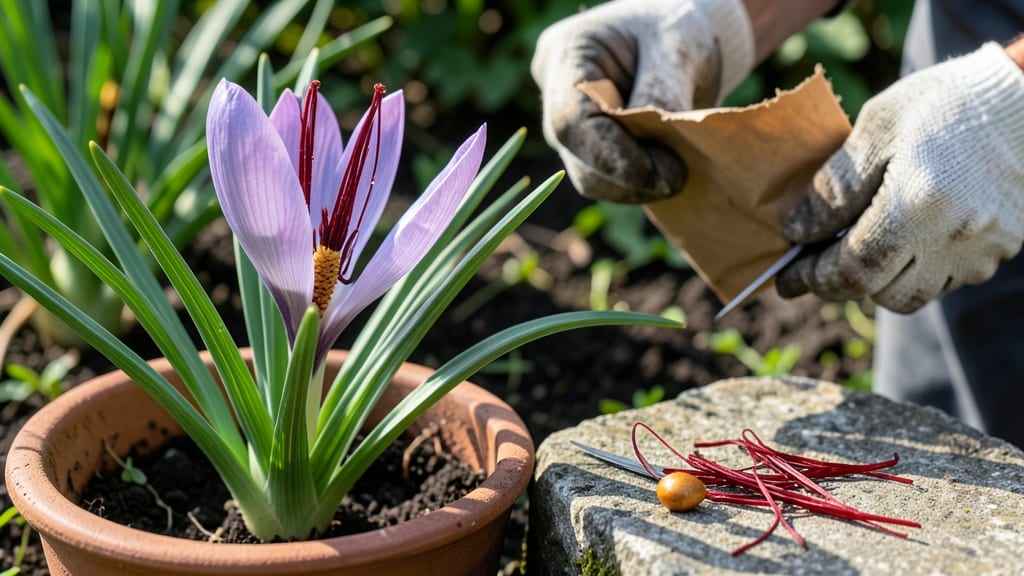
To harvest saffron from the delicate stigmas of Saffron Crocus 🌼, you’ll need to act fast—these tiny threads lose their potency within hours of picking.
Picture this: your garden bursts into vibrant purple blooms overnight, but by noon, those same flowers will wilt if you don’t harvest their hidden treasure. The key lies in timing—morning dew is your ally, and those deep red-orange stigmas must be plucked before the sun fully dries them out.
This isn’t just about picking flowers; it’s about preserving the world’s most expensive spice. One wrong move, and you’ll end up with brittle, flavorless threads instead of the golden harvest you’ve been waiting for.
Inside, I’ll walk you through the exact moment to harvest, how to handle those fragile stigmas without damaging them, and the drying techniques that turn your garden’s bounty into a spice worth its weight in gold.

When to harvest saffron: identifying the perfect Crocus flower stage
Harvesting saffron at the wrong time can turn your golden bounty into brittle, flavorless threads. The perfect harvest window is a 3-4 hour span in the early morning, when the Crocus sativus flowers are fully open but still fresh.
Missing this window means losing quality—and potentially your entire yield for the season.
I’ve learned through years of growing saffron that the optimal harvest time depends on three key factors: flower maturity, local climate, and time of day. Even a one-hour delay can cause stigmas to dry out or lose their vibrant color.
Let’s break down how to spot the exact moment to harvest for maximum yield and quality.
| Stage | Visual Clues | Harvest Readiness | Time of Day |
|---|---|---|---|
| Bud Formation | Tightly closed buds, no visible stigmas | Not ready | N/A |
| Early Bloom | Petals slightly open, stigmas pale yellow-green | Not ready | N/A |
| Peak Harvest | Fully open petals, bright red-orange stigmas, slight morning dew | ✅ Perfect time | 6-8 AM |
| Late Bloom | Petals wilted, stigmas dry or brittle | Too late | After 10 AM |
| Post-Harvest | Stigmas detached, flower head wilting | N/A | N/A |
🌸 Pro Tip: Harvest when stigmas are moist and flexible—this ensures maximum aroma and color.
The bright red-orange color of the stigmas is your best indicator. When they reach this hue, they’re at their peak potency. I always check for slight morning dew on the stigmas—this natural moisture helps preserve their quality during handling.
If you’re in a cooler climate, like USDA Zone 6a, your harvest window might shift slightly later in the day.
Climate plays a huge role in timing. In warmer regions (Zones 8b-9b), flowers may open earlier—sometimes as early as 5 AM. Conversely, in cooler mountain areas, you might not see full blooms until 8-9 AM.
Pay attention to your local first frost dates too; saffron corms need 120-200 frost-free days to mature properly.
Location matters just as much as climate. If you’re growing saffron in containers, they’ll often bloom 1-2 days earlier than in-ground plants due to temperature fluctuations. I’ve noticed my container-grown saffron in Zone 7b opens at 6:30 AM sharp, while my in-ground plants follow at 7:15 AM.
Always scout your garden 30 minutes before your usual harvest time to confirm readiness.
One common mistake I see is harvesting when the stigmas are still greenish-yellow. These won’t develop the deep red-orange pigment needed for optimal flavor and color.
Wait until they’re fully colored—this usually happens 24-48 hours after the flower first opens. Patience here pays off in higher-quality saffron with a stronger aroma.
Finally, avoid harvesting on overcast days or after rain. Excess moisture can weaken the stigmas, making them prone to breaking during harvest. If you must harvest after rain, wait until the flowers are completely dry—this could take an extra 2-3 hours.
I’ve lost entire batches of saffron by rushing the process on damp mornings.
Once you’ve mastered the art of spotting the perfect harvest stage, your next challenge is handling the stigmas with care. Remember: gentle is key. Even a slight tug can damage these delicate threads, reducing their market value. We’ll cover the harvesting technique in the next section—stay tuned!
Step-by-step saffron harvesting process for maximum yield
Harvesting saffron requires precision and patience, as the three delicate stigmas and style from each Crocus sativus flower are what give this spice its value. One wrong move can damage the golden threads, reducing both yield and quality.
I’ve learned that timing and technique are everything—harvest too early, and the stigmas won’t be fully developed; wait too long, and they’ll dry out or lose potency.
Before you begin, gather your harvesting tools: a pair of sharp scissors or tweezers, a small bowl for collecting stigmas, and a paper towel or silicon mat to prevent moisture loss.
Work in the early morning (6-8 AM) when dew is present but flowers are fully open. This is when the stigmas are at their peak moisture and easiest to harvest without breaking.
One common mistake I see is harvesting in the heat of the day, which causes the stigmas to dry out too quickly and lose their vibrant color. Another is using dull tools, which can crush the delicate threads.
Always work slowly and carefully—saffron harvesting is a labor-intensive process, but the reward is worth it.
Pro tip: If you’re harvesting for the first time, process only a few flowers at once to perfect your technique. Saffron yields are tiny—it takes 75,000 flowers to produce just 1 pound of saffron.
Every stigma counts! With practice, you’ll develop a rhythm that maximizes your yield while preserving quality.
🌼