
How To
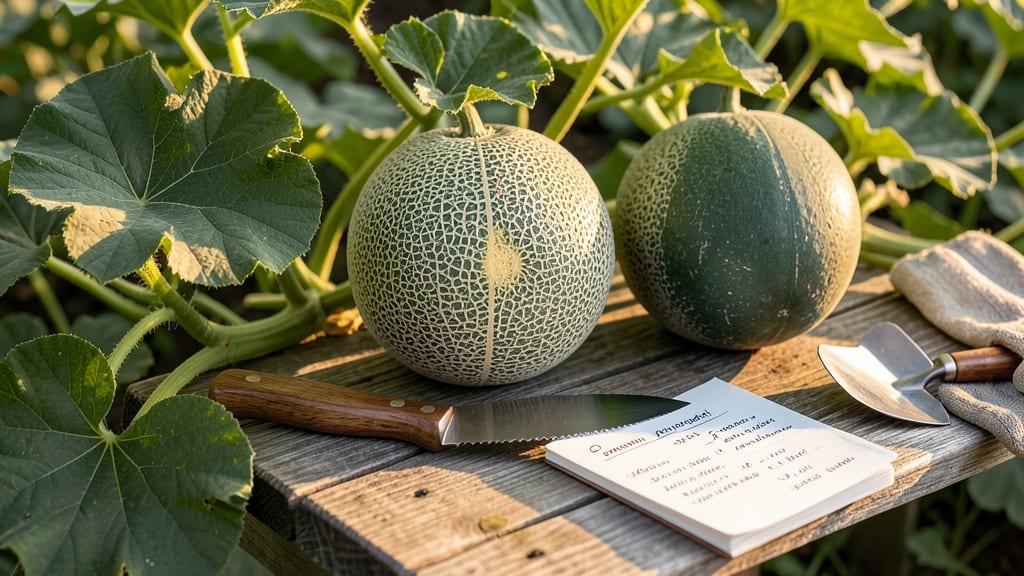
Knowing when to harvest cantaloupe 🍈 means the difference between a sweet, juicy reward and a meal of bland disappointment—yet most gardeners miss the mark every year.
You’ve probably picked a melon that was still hard or tasted like nothing, only to wonder if you waited too long. The truth? Cantaloupe doesn’t ripen on the vine like tomatoes—it needs a specific set of cues, and color or size alone won’t cut it.
Below, I’ll walk you through the three foolproof tests to nail the perfect harvest window, no guesswork required.
From the telltale scent at the stem end to the subtle give near the blossom, these signs work in USDA Zone 6a and beyond. I’ll also cover how heat or humidity can throw off your timing—and what to do if you harvest too early (or too late).
By the end, you’ll confidently pluck cantaloupe at peak ripeness, every time. No more wasted melons, just sweet success.


The 3 essential tests to harvest cantaloupe at peak ripeness
Harvesting cantaloupe at the perfect moment transforms your garden into a sweet, flavorful success story. The key lies in three simple but powerful tests that reveal whether your melons are ready to pick.
Unlike many fruits, cantaloupe doesn't rely on uniform color or size—it demands a multi-sensory approach to ensure peak ripeness.
Many gardeners make the mistake of harvesting too early, resulting in bland, hard melons that lack the signature sweetness. Others wait too long, ending up with overripe, mushy fruit that's past its prime. The solution?
Master these three foolproof tests: the nose test, the thumb test, and the stem twist test. Together, they create an unbeatable system for determining when your cantaloupe is truly ready to harvest.
Let's start with the most reliable indicator: the aroma test. A ripe cantaloupe releases a sweet, musky fragrance near its stem end that's impossible to miss. This scent develops as natural sugars concentrate, signaling the melon's peak flavor.
If you're unsure, simply sniff near the blossom end—the stronger the scent, the riper the fruit.
🍈 Cantaloupe Ripeness Test Comparison
| Test Method | What to Look For | What to Avoid | Expert Tip |
|---|---|---|---|
| Nose Test (Aroma) | Sweet, musky fragrance near stem | No scent or green/grassy smell | Sniff at blossom end—stronger scent means riper melon |
| Thumb Test (Blossom End) | Slightly soft when pressed | Hard or spongy feel | Press gently—ripe melons yield slightly under thumb pressure |
| Stem Twist Test | Stem separates easily with slight twist | Stem resists or breaks cleanly | Twist gently—ripe stems separate near the vine |
The thumb test focuses on the blossom end—the opposite side of where the stem attaches. Press your thumb gently into this area: a ripe cantaloupe will feel slightly soft, almost yielding, but not mushy. This indicates the fruit's internal sugars have fully developed.
Be cautious—if the melon feels hard or spongy, it's not ready yet. Many gardeners mistake firmness for ripeness, but cantaloupe should never feel rock-hard when ripe.
For the final verification, use the stem twist test, which is especially useful for cantaloupe varieties with tougher rinds. Grasp the stem near where it meets the melon and give it a gentle twist.
If the stem separates easily with just a slight pull, your cantaloupe is ready to harvest. This test works because ripe melons naturally detach from the vine as their sugars concentrate. Never pull too hard—you want the stem to separate cleanly without tearing the melon.
A common mistake is relying on rind color alone. While ripe cantaloupe often turns a creamy tan or beige, some varieties maintain green patches even when fully ripe. The three tests I've shared account for these variations, ensuring you harvest at the perfect moment regardless of the melon's color.
Remember, these tests work together—all three should confirm ripeness before you pick.
Timing is crucial, especially in hot climates where cantaloupe can overripe quickly. Harvest in the morning when temperatures are cooler to preserve the melon's quality. Once picked, store cantaloupe at room temperature until fully ripe—never refrigerate until it's ready to eat.
This final step ensures you enjoy cantaloupe at its absolute peak of sweetness and flavor.
With these three tests mastered, you'll never second-guess when to harvest cantaloupe again. The nose test reveals sweetness, the thumb test confirms internal ripeness, and the stem twist test provides the final confirmation. Combine them for foolproof results every time you grow cantaloupe in your garden.
Pro tip: Keep a small notebook by your cantaloupe patch to track which melons pass all three tests. Over time, you'll develop an intuitive sense of when your specific cantaloupe variety is ready to harvest. Happy harvesting—and enjoy that sweet, juicy reward you've earned!
Why cantaloupe color and size aren’t reliable harvest indicators
I’ve harvested cantaloupes for years, and I’ll admit—even experienced gardeners often fall for the same traps when judging ripeness. That golden rind or standard size you’ve been taught to watch? They’re misleading. Cantaloupe ripeness depends on internal changes, not just what you see from the outside.
Many gardeners assume a creamy tan rind means a melon is ready, but environmental factors like heat stress or uneven sunlight can trick you. A melon might look perfect on the outside while still tasting bland or underripe inside.
Similarly, size alone doesn’t guarantee sweetness—some cantaloupes mature unevenly, leaving you with a giant but flavorless fruit.
Even the stem’s dryness isn’t foolproof. While a brown, dried stem often signals ripeness, extreme heat can cause stems to dry out prematurely, leaving the melon underripe. These visual cues are just red flags, not green lights for harvest.
❌ Color: Rind can turn tan due to sun exposure, not ripeness.
❌ Size: Big doesn’t mean sweet—internal sugar levels vary.
❌ Stem Dryness: Heat can dry stems before melons ripen.
✅ What to Do Instead: Use the nose, thumb, and twist tests for accuracy.
Instead of relying on visual guesswork, focus on scent, texture, and stem separation. A ripe cantaloupe will release a strong, sweet aroma near the stem end when gently squeezed. This volatile compound (like limonene) is your best indicator—it develops as sugars mature inside.
Another trick? The blossom end (opposite the stem) should yield slightly to gentle thumb pressure. If it feels firm like a basketball, the melon needs more time. If it’s too soft or mushy, it’s overripe. This thumb test reveals the melon’s internal readiness without cutting it open.
Finally, the stem twist test is your final check. A ripe cantaloupe’s stem should slip easily from the vine with a slight tug. If it resists, the melon isn’t ready yet. This physical separation confirms the melon’s sugars have fully developed.
Next time you’re tempted to harvest based on color or size, remember: trust your nose, thumb, and hands—not just your eyes. These science-backed methods will give you cantaloupes that burst with sweetness every time. 🍈