
How To
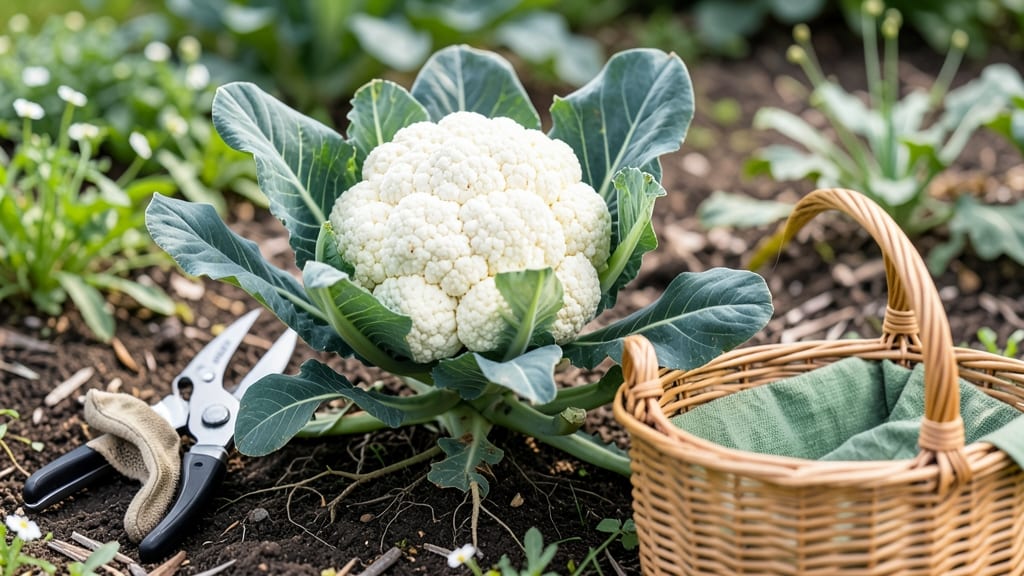
To know when to harvest cauliflower, watch for a firm, compact head that’s 6-8 inches wide and still tightly wrapped in green leaves—this is the sweet spot before bitterness sets in.
Picking too early gives you a small, loose head, while waiting too long turns the curds yellow and tough. I’ve made both mistakes, and trust me, the flavor difference is night and day.
Below, I’ll walk you through the exact visual and tactile cues—from curd color to stem snap tests—to pull your 🥬 at peak perfection, plus what to do if your plants are running late.
You’ll leave here with a clear checklist so your next harvest is crisp, flavorful, and ready for the table in just 3 minutes or less.

Cauliflower harvest checklist: curd color, size, and texture signs
Timing your cauliflower harvest perfectly transforms your garden's hard work into sweet, tender curds instead of bitter, woody florets. The key lies in watching for three critical cues: curd color, head size, and texture.
Miss these signs, and you risk overgrowth that turns your harvest into disappointment. Let's break down exactly what to look for.
First, focus on the curd color—this is your primary visual indicator. For classic white varieties, the head should be a creamy white with no yellowing or browning.
Purple or orange varieties will deepen in their natural hue. Remember, the outer leaves should still look vibrant green while the head reaches its peak color.
Now, let's talk head size. The ideal diameter sits between 6 to 8 inches. This compact size ensures the curd remains tender. If you see heads larger than 8 inches, they've likely passed their prime and may develop a bitter taste or tough texture.
Measure your heads regularly to catch them at this perfect window.
Don't overlook the texture test. Gently squeeze the curd—it should feel firm yet slightly yielding, like a ripe avocado. If it feels rock-hard, it's underripe. If it's mushy or the florets separate easily, you've waited too long.
The stem should also snap cleanly when twisted gently at the base—this indicates the head is fully mature.
| Harvest Sign | Visual/Tactile Cue | Action Required |
|---|---|---|
| Curd Color | Consistent white, pale green, or vibrant purple/orange | Harvest within 1-2 days if color deepens |
| Head Size | 6-8 inches in diameter | Trim outer leaves, harvest immediately |
| Texture | Firm with slight give; stem snaps cleanly | Cut 1-2 inches below head with sharp knife |
| Leaf Wrapping | Outer leaves still green, tightly wrapped | Remove yellowed leaves before harvest |
| Bud Development | No visible buds opening | Harvest before buds form to prevent bitterness |
One common mistake is waiting until the head looks "big enough" without checking the inner florets. Cut a small section of the head to peek inside—if you see yellowing or open buds, it's past its prime.
This quick check saves you from harvesting a bitter crop. For varieties like Romanesco or purple cauliflower, the color change is more dramatic, making it easier to spot when they're ready.
Pay attention to the outer leaves—they should remain green and healthy while the head matures. If you notice yellowing or browning on these leaves, it's a sign the plant is stressed or overripe.
Trim any damaged leaves before harvest, but leave the healthy ones to protect the curd during cutting. This simple step preserves the head's integrity and flavor.
For late-season harvests, watch for temperature drops below 60°F (15°C). Cold weather can accelerate ripening, so check your plants more frequently. If frost threatens, harvest immediately—even slightly underripe cauliflower is better than none. Store harvested heads in the fridge for up to 5 days to maintain freshness.
Pro tip: Harvest in the morning when temperatures are coolest. This ensures the curd is at its firmest and most flavorful. Use a sharp knife to cut the stem about 1-2 inches below the head.
Leave the outer leaves intact to protect the curd during transport. This careful handling keeps your harvest looking as good as it tastes.
Remember, every cauliflower variety has slight variations in timing. Orange cauliflower, for example, often ripens slightly later than white varieties. Keep a harvest journal to track what works best in your climate. Over time, you'll develop an eye for the perfect moment—transforming your garden into a cauliflower harvest machine.
With these visual and tactile cues, you'll never second-guess your harvest timing again. The difference between a perfectly sweet curd and a bitter disappointment comes down to these simple checks. Happy harvesting! 🥬
How to test cauliflower ripeness: the 3-Minute taste and touch method
Harvesting cauliflower at the perfect moment transforms your garden into a flavor factory. The 3-minute method combines simple touch tests and taste checks to guarantee sweet, tender curds. Skip this step, and you risk tough, bitter florets that ruin even the best homegrown meals.
Start by examining the outer leaves. They should remain vibrant green while the curd head reaches its mature size—typically 6-8 inches in diameter. If the leaves yellow or brown prematurely, your cauliflower is stressed, not ready. This quick visual check saves time and frustration.
- 1
- 2
- 3
Pro tip: Use a sharp knife to cut the stem 1-2 inches below the curd. This prevents damage to the plant and encourages a second harvest if your variety produces multiple heads. Avoid twisting—it can bruise the remaining stem.
Timing is everything with cauliflower. Harvest in the morning when temperatures are coolest to preserve sweetness. Store harvested heads in the fridge for up to 5 days, or blanch and freeze for long-term use. The sooner you eat it, the sweeter it tastes!
Overripe cauliflower turns yellow and spongy, while underripe heads stay small and loose. Mastering this 3-minute method ensures you never miss the window between perfect flavor and disappointment. Your taste buds—and your dinner guests—will thank you.