
How To
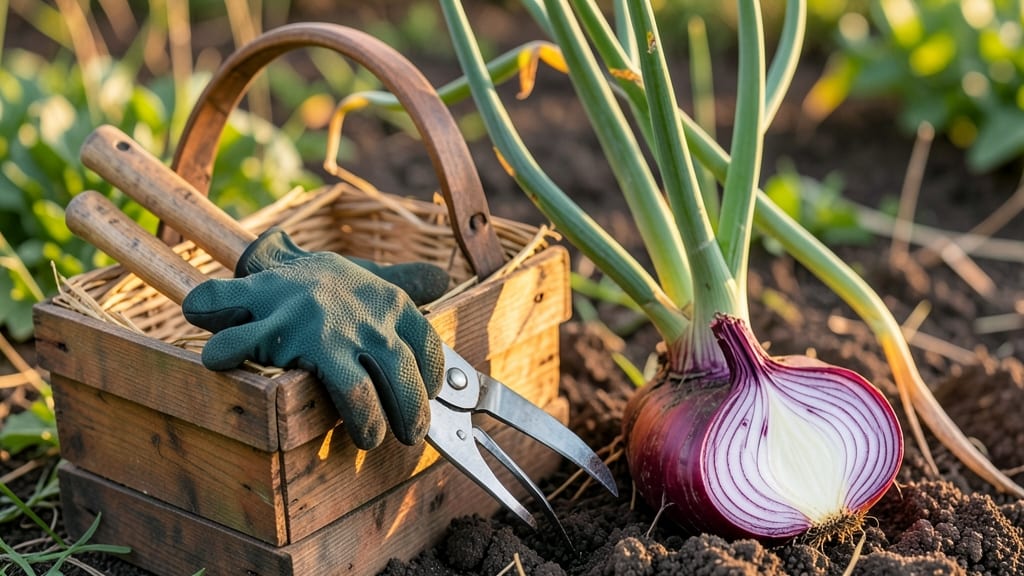
Knowing when to harvest red onions 🧅 means catching them at the peak of flavor—before they turn bitter or split, but after they’ve developed enough pungency to pack a punch.
Picture this: You’ve nurtured your red onions all season, and now the tops are yellowing and flopping over, but you’re not sure if they’re ready. One wrong move, and you could end up with onions that are either too small or too tough.
The secret lies in three simple tactile tests that tell you exactly when to pull them.
In this guide, I’ll walk you through how to check for the right bulb size, leaf color, and soil conditions—plus the best time of day to harvest for maximum storage life. You’ll also learn the common mistakes that turn great onions into garden flops and how to avoid them.
By the end, you’ll never second-guess whether your red onions are ready again. Let’s dig in!


3 Tactile tests to check red onion harvest readiness
Harvesting red onions at the perfect moment transforms your garden into a flavor powerhouse. Unlike many vegetables, onions don’t ripen after picking—so timing is everything. The key lies in three tactile tests that reveal maturity through touch, sight, and a little patience.
These methods help you distinguish between edible green onions (harvested young) and fully mature storage onions (ready for long-term keeping).
I’ve learned the hard way that waiting too long turns sweet onions bitter, while harvesting too early means small, watery bulbs. The solution? Master these hands-on checks to ensure your onions are at peak flavor and texture.
Whether you're growing short-day varieties (like 'Red Creole') or longer-season types, these tests apply universally. Let’s dive into the three foolproof ways to know when your red onions are ready.
🌱 Numbered Highlights: How to Know When to Harvest Red Onions
- 🟡 Leaf Test: 70% yellowing of tops signals maturity. Gently tug—if the bulb pops free, it’s ready!
- 🤏 Neck Test: The stem shrinks and dries to ½ inch wide. Press gently—it should feel papery and firm.
- 🧅 Root Test: Lift the bulb—roots should pull easily without breaking. If soil clings tightly, wait 3-5 days.
Pro Tip: Morning harvests prevent necks from drying too quickly, preserving storage life.
First up is the leaf yellowing test, the most obvious sign of maturity. When about 70% of the green tops turn yellow and begin to flop over, your onions are nearing harvest. This shift happens naturally as the plant redirects energy from leaves to bulb development.
I always check this first because it’s the most visible cue—no tools required! For short-day varieties, this typically occurs around 90-105 days after planting, while longer-season types may take up to 120 days.
Next, focus on the neck thickness, a critical indicator often overlooked. As onions mature, the stem connecting the bulb to the leaves shrinks and hardens. When it’s about ½ inch wide and feels dry to the touch, your onions are ready.
This is where the tactile test comes in—gently squeeze the neck. If it feels papery and firm, harvest immediately. A thick, green neck means the onion is still growing and needs more time in the soil.
The root size and pull test is my favorite because it combines visual and physical cues. Lift the onion gently by the base—if the roots release easily without breaking, it’s harvest-ready. Resist the urge to yank; instead, wiggle the bulb to check for clean separation.
If soil clings tightly or roots snap, wait 3-5 more days. This test is especially useful for edible green onions, where you might harvest when bulbs are 1-2 inches wide but roots are still tender.
Here’s a game-changer: distinguish between edible onions (harvested young) and storage onions (fully mature). For green onions or scallions, harvest when bulbs are ½ inch wide and tops are still mostly green. These are best used fresh within a week.
For storage onions, wait until the entire bulb feels firm and dry, with a thin, papery skin. These keep for months when cured properly in a dry, dark place.
One common mistake I see is harvesting based on size alone. A large bulb doesn’t always mean maturity—it could be waterlogged or diseased. Always combine leaf color, neck thickness, and root ease for accurate results.
Another tip: harvest in the morning when soil is moist but not soggy. This prevents necks from drying too quickly, which can lead to premature sprouting during storage.
For long-term storage, after harvesting, let onions cure in the sun for 3-5 days to toughen skins. Then braid or hang in a well-ventilated area with 60-70% humidity.
If you’re harvesting for immediate use, trim roots and tops to 1 inch and store in a mesh bag in the fridge for up to 2 weeks. This preserves freshness without sacrificing flavor.
Remember, patience pays off—rushing the harvest means sacrificing flavor and storage potential. By mastering these three tactile tests, you’ll consistently grow sweet, pungent red onions that shine in salads, salsas, or long-term storage. Happy harvesting!
When to harvest red onions for best flavor vs. storage
Harvesting red onions at the wrong time can turn your culinary masterpiece into a bitter disappointment. The key lies in understanding two distinct maturity stages: flavor peak (30-45 days after bulb formation) and storage readiness (100+ days total).
For fresh eating, harvest when bulbs reach 1-2 inches in diameter—this is when their sweetness shines. But if you want onions that last through winter, wait until the tops yellow and dry completely.
I’ve learned the hard way that harvesting too early means small, weak-flavored bulbs, while waiting too long results in tough, split onions. The secret is watching for three critical signs: leaf yellowing, neck drying, and papery skin.
These cues tell you exactly when to pull your onions for either immediate use or long-term storage.
| Harvest Type | Time After Planting | Bulb Size | Leaf Color | Best For |
|---|---|---|---|---|
| Flavor Peak (Edible) | 90-110 days | 1-2 inches | Green, slightly yellowing | Fresh cooking, salads, immediate use |
| Storage Ready | 100-120 days | 2-3 inches | Fully yellow, dry | Long-term storage, winter use |
For flavor peak, aim to harvest when bulbs are firm but still plump, around 30-45 days after they begin forming. At this stage, red onions pack their sweetest, most vibrant flavor—perfect for slicing into salads or grilling.
I always test by gently squeezing a bulb; if it feels firm and round, it’s ready. The tops may still be green but starting to yellow slightly.
If you’re growing for storage, wait until the tops turn completely yellow and flop over. This signals full maturity, typically 100+ days after planting. At this stage, the neck begins to dry and shrink, and the skin becomes papery.
These onions will keep for months in a cool, dry place. I cure mine by laying them in a single layer for a week to toughen the skins before storing.
One common mistake I see is assuming all red onions need the same harvest time. Short-day varieties (like 'Red Creole') mature faster than long-day types (like 'Red Wing'). Always check your seed packet for days-to-maturity guidelines. Also, avoid harvesting in wet conditions—this can cause rot during storage.
Pro tip: If you’re unsure, harvest a few test onions and taste them. The perfect balance of sweetness and sharpness is your best guide. Once you master this timing, you’ll never buy store-bought red onions again!