
How To
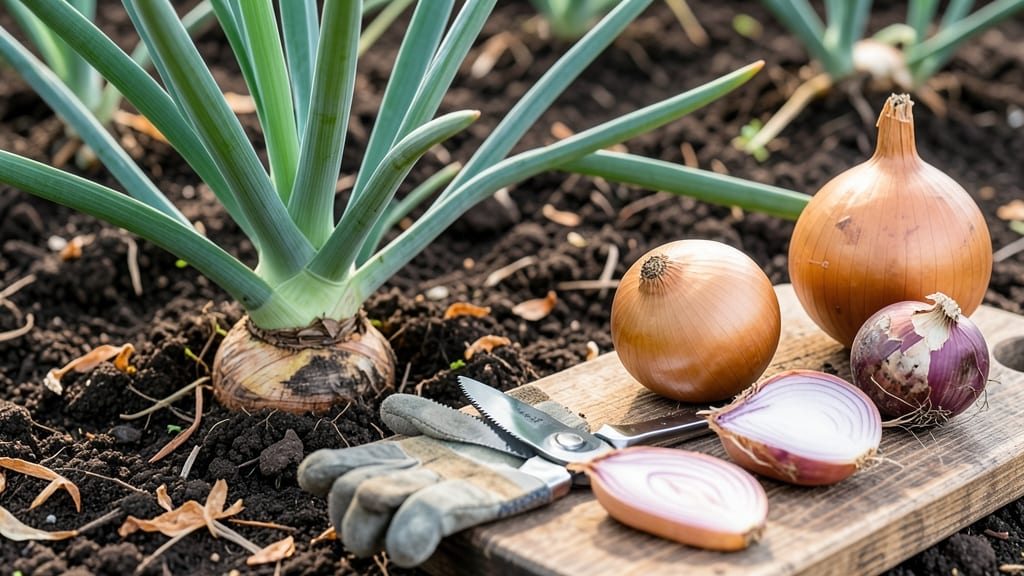
Telling when to harvest onions is all about watching for three key signs: yellowing tops, flattened foliage, and bulbs the size of a golf ball.
Get it wrong, and you’re left with either underdeveloped onions that taste sharp and watery or overripe bulbs that split and rot in storage. I’ve made both mistakes—and the difference in flavor is like night and day.
In Zone 6a, spring-planted onions typically reach peak harvest between July and August, but the real secret is paying attention to the plant’s visual cues, not just the calendar.
Below, I’ll walk you through how to spot the perfect moment, plus what to avoid if you want onions that store like a pro.
Whether you’re growing green onions for quick snacks or storage varieties for winter, these tips will help you pull them at the exact right time for maximum flavor and shelf life.

3 Visual cues to harvest onions at peak flavor
Timing is everything when harvesting onions—wait too long, and your bulbs turn tough and pungent. Harvest too early, and you’ll end up with small, underdeveloped onions that lack flavor. The key is watching for three clear visual cues that signal your onions are ready.
These signs apply to both storage onions (like Yellow Sweet Spanish) and green onions (though the latter has different timing). Let’s break down what to look for in your garden.
First, understand that onions mature at different rates based on variety and growing conditions. Day-length-sensitive onions (like short-day varieties) need specific light exposure to bulb properly, while day-neutral onions focus on size and leaf condition.
Regardless of type, the visual cues remain consistent: yellowing tops, flattened foliage, and bulbs of ideal size. Ignoring these can lead to wasted effort—or worse, a crop that spoils before you even use it.
Here’s the game-changer: harvesting at the right moment ensures sweet, crisp bulbs that store well. Miss these cues, and you might end up with onions that split, rot, or develop a harsh bite. Let’s dive into the three must-know visual signals that guarantee peak flavor and texture.
🌱 3 Visual Cues to Harvest Onions
-
1. Tops Turn Yellow and Flatten
The green tops begin to yellow and flop over, signaling the bulb is mature. This is nature’s way of telling you to act fast—once tops brown completely, the bulb may split or rot.
-
2. Bulbs Reach 2-3 Inches in Diameter
Dig up a test bulb to check size. If it’s 2-3 inches wide, it’s ready. Smaller bulbs (under 1.5 inches) won’t store well and lack full flavor.
-
3. Neck Tightens and Skin Becomes Papery
The stem neck shrinks and the outer skin turns dry and papery. This means the bulb has stopped growing and is ready for harvest and curing.
Now that you know the three key visual cues, let’s address a common mistake: assuming all onions follow the same timeline. Green onions (scallions) are harvested differently—they’re ready when the white bulb is ½-inch wide and the green shoots are 6-8 inches tall.
Snip them just above the soil, and they’ll regrow for multiple harvests! For storage onions, though, those yellow tops and flattened leaves are your golden ticket to success.
What about weather conditions? Hot, dry spells can accelerate maturity, while cool, wet weather slows it down. If your onions are overdue for harvest (past 120 days for most varieties), they may split or rot in the ground.
In this case, dig them up immediately, even if the tops aren’t fully yellow. Storage onions can still cure and dry properly if handled quickly.
Another critical factor is soil moisture. Overwatering before harvest can cause bulbs to split or develop mold. In the final 2 weeks before harvest, reduce watering to half the usual amount.
This helps the neck tighten and the skin dry out naturally. Think of it as prepping your onions for their curing phase, which is essential for long-term storage.
Let’s talk about variety-specific differences. Short-day onions (like Texas Early White) need 10-12 hours of daylight to bulb properly, while long-day onions (like Yellow Sweet Spanish) require 14-16 hours. If you’re in a region with shorter daylight hours, choose day-neutral varieties like Red Baron or Copra.
These adapt better to your local conditions and still show the same yellowing tops and flattened foliage when ready.
One final tip: don’t wait for frost to harvest. A hard freeze can damage bulbs, even if the tops look ready. If frost is forecasted, harvest 2-3 days early and cure the onions indoors.
This ensures you still get high-quality bulbs without the risk of spoilage. With these visual cues in mind, you’ll never second-guess when to pull your onions again.
Ready to harvest? Grab your garden fork, dig gently, and let those flavorful bulbs shine in your kitchen—or storage space! 🧅
Onion harvesting mistakes that ruin your crop
Even experienced gardeners sometimes make critical mistakes when harvesting onions that turn sweet, flavorful bulbs into bitter, pungent disappointments. The timing of harvest is everything—too early or too late can ruin your entire crop.
I’ve seen gardeners pull onions weeks before they’re ready, only to end up with tiny, watery bulbs that spoil quickly. On the flip side, leaving them in the ground too long makes them split, rot, or develop tough skins that ruin storage potential.
Another common mistake is ignoring variety-specific cues. Storage onions like Yellowstone or Sweet Spanish need different care than green onions or scallions. Even the way you handle the bulbs after harvest—like improper curing or storage—can turn a great harvest into a loss.
Let’s break down these mistakes and how to avoid them so you can enjoy perfectly harvested onions all season long.
⚠️ How to Tell When Onions Are REALLY Ready to Harvest
Don’t guess! Use these 3 key signs to know when onions are perfect for pulling:
- 🟡 Yellowing tops: The green tops should turn straw-colored and dry—this means the bulb is fully mature.
- 📏 Bulb size: Gently dig up a test onion—if it’s 2-3 inches wide, it’s ready. Smaller bulbs won’t store well.
- 📄 Papery skin: The outer layers should feel dry and crisp, not soft or rubbery.
Pro tip: Harvest on a dry, sunny day to speed up curing and prevent rot.
One of the biggest mistakes is harvesting onions too early because the tops look a little wilted. While it’s true that yellowing tops signal maturity, you shouldn’t pull them the moment they start turning.
Wait until at least 70% of the tops are yellow and dry—this ensures the bulbs have fully developed. Early harvesting often results in small, pungent onions that lack sweetness and won’t store well.
On the opposite end of the spectrum, leaving onions in the ground too long is just as damaging. Once the tops turn brown and fall over, the bulbs are vulnerable to splitting and rotting, especially in wet conditions.
I’ve seen gardeners wait until the first frost to harvest, only to find their onions bursting open or covered in mold. If you’re unsure whether to harvest, gently dig up a test bulb—if it’s fully formed and dry, it’s time to pull the rest.
Improper post-harvest handling can also ruin your crop. Many gardeners make the mistake of washing or trimming onions immediately after harvest, which speeds up spoilage. Instead, let them cure in a dry, shaded area for 1-2 weeks to toughen the skins and prevent rot.
Store onions in a cool, dark, and well-ventilated space—never in the fridge, as the humidity causes them to sprout or mold.
Another overlooked mistake is harvesting onions with wet soil still attached. Always shake off excess dirt before curing, as moisture trapped between layers can lead to fungal infections. For storage onions, braid or weave them to allow air circulation, which helps them last up to 6 months.
If you’re growing green onions or scallions, harvest them when the stems are 6-8 inches tall—they don’t need to fully mature like storage onions.
Finally, don’t ignore variety-specific needs. Long-day onions (like Sweet Spanish) need 14+ hours of daylight to bulb properly, while short-day varieties (like Texas Early White) mature faster in shorter days.
If you’re in a warmer climate, some onions may bolt or go to seed before bulbing—this is a sign you need to harvest the green tops for cooking instead of waiting for bulbs.