
Picking
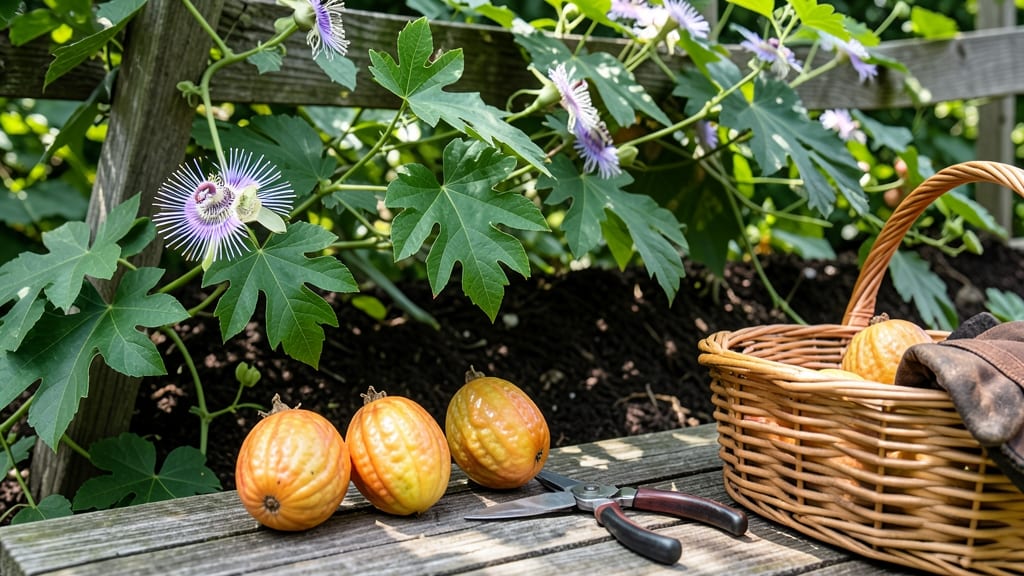
Timing the passionfruit harvest time ensures you get the juiciest, sweetest fruit 🍈 from your vine—here’s how to spot the perfect moment.
Picture this: you’ve waited months for your passionfruit to ripen, only to pick one that’s still tart or mealy. That’s the frustration of guessing instead of looking for the right cues.
The difference between a bland bite and a burst of tropical sweetness often comes down to three simple checks—color, texture, and scent.
In tropical and subtropical regions like zones 9a-11, harvest season stretches from June to October, but the exact timing depends on your variety. Purple passionfruit, for example, turns deep indigo when ready, while yellow types blush golden.
A gentle squeeze should yield slightly, and the stem should pull away with minimal effort—no stubborn tugging.
Below, I’ll break down the ripening stages, regional harvest windows, and pro tips to keep your vines producing flavor-packed fruit all season. Ready to turn your vine into a sweetness machine?

Passionfruit ripening stages: how to identify peak harvest time
Picking your passionfruit at the perfect ripeness transforms tart, underdeveloped fruit into explosively sweet bursts of flavor. Unlike many fruits that ripen off the vine, passionfruit must be harvested at peak maturity—when color, scent, and texture all align.
Missing these cues means sacrificing that juicy, aromatic experience we all crave. Let’s break down the visual and tactile signs that guarantee a harvest worth celebrating.
First, understand that passionfruit varieties ripen differently: purple varieties develop a deep violet hue, while yellow types turn golden. But color alone isn’t enough—you’ll also need to check for stem separation and a sweet, tropical aroma.
Ignoring these details can leave you with fruit that’s either underripe and mealy or overripe and mushy. The good news? With these simple checks, you’ll never miss the window again.
Climate plays a huge role in ripening timing. In tropical zones (USDA 10-11), passionfruit may ripen year-round, while in subtropical areas (USDA 9), harvest peaks in late summer to fall. Even within the same region, yellow varieties often ripen 2-4 weeks earlier than purple ones. Paying attention to these patterns helps you adjust your expectations and avoid disappointment.
| Ripening Stage | Fruit Color | Stem Separation | Texture | Aroma | Harvest Time |
|---|---|---|---|---|---|
| Unripe | Green | Firmly attached | Hard, no give | None | Not ready |
| Early Ripening | Pale yellow/purple | Slightly loose | Slightly soft | Mild sweetness | Wait 3-5 days |
| Peak Ripeness | Deep yellow/purple | Detaches easily | Plump, slight give | Strong tropical scent | Harvest now! |
| Overripe | Dull, wrinkled | Falls off easily | Mushy, leaking | Fermented smell | Too late |
The color shift is your first clue—purple passionfruit should turn deep violet, while yellow types become golden and slightly translucent. But don’t rely on color alone! Gently press the fruit near the stem: at peak ripeness, it should feel plump yet yield slightly, like a ripe avocado.
If it’s rock-hard, it’s not ready; if it’s mushy, it’s past its prime. This tactile check is non-negotiable for flavor.
Next, give the fruit a gentle twist at the stem. If it detaches easily with a slight pop, you’ve hit the sweet spot. This separation indicates the fruit’s natural abscission layer has formed, signaling it’s ready to be picked.
Pro tip: Harvest in the morning when temperatures are cooler—this preserves the fruit’s aromatic oils and prevents bruising during handling.
Your nose is your secret weapon for nailing passionfruit ripeness. A ripe passionfruit emits a powerful, tropical aroma near the stem—think citrusy with floral notes. If you catch a whiff of fermentation or rot, it’s overripe.
Conversely, if there’s no scent at all, the fruit needs more time on the vine. This sensory cue is especially useful when color variations make visual checks tricky.
Variety matters! Yellow passionfruit (like 'Golden Passionfruit') typically ripen 2-4 weeks earlier than purple types, so adjust your expectations. In cooler
Best months to harvest passionfruit by region (u.s. & global zones)
Passionfruit thrives in warm climates, but harvest timing varies dramatically depending on your USDA hardiness zone or global region. In tropical zones like Hawaii or Florida, you can harvest year-round, while temperate zones (like California’s coastal areas) see peak production in late summer through early fall.
Always check for frost warnings—even a light freeze can ruin your crop overnight.
For purple passionfruit, the most common variety, harvest typically occurs 6-9 months after flowering. Yellow passionfruit varieties often ripen slightly earlier, while hybrids may extend your harvest window. Understanding your local climate helps you predict when to expect those first sweet, fragrant fruits ready for picking.
🌱
| Region | Climate Type | Peak Harvest Months | Key Notes |
|---|---|---|---|
| USDA Zones 10-11 (Hawaii, Florida, Southern California) | Tropical/Subtropical | Year-round (peaks June-October) | Frost-free; harvest every 2-3 weeks. |
| USDA Zones 9a-9b (Arizona, Southern Texas) | Subtropical | July-October | Watch for early fall frosts; protect vines. |
| USDA Zones 8-9 (Central California, Coastal Georgia) | Temperate | August-September | Short season; harvest before first frost. |
| Australia (Queensland, Northern NSW) | Tropical | May-October | Southern hemisphere timing; purple varieties dominate. |
| Brazil, Colombia, Kenya | Tropical | Year-round (2-3 harvests/year) | High-altitude areas may have cooler seasons. |
| Spain (Canary Islands), South Africa | Subtropical | June-September | Mediterranean climates with mild winters. |
In temperate zones like California’s Central Valley, passionfruit vines produce their best fruit in late summer, often between August and September. If you’re in USDA Zone 8 or cooler, plan to harvest before the first frost—typically by mid-October.
Use row covers or move potted vines indoors if frost threatens, as even 32°F temperatures can damage the fruit.
For tropical regions, like Hawaii or Puerto Rico, passionfruit can be harvested year-round, though production peaks during the warmest, wettest months. In these areas, I recommend harvesting every 2-3 weeks to keep up with the vine’s prolific output.
If you notice fruit dropping prematurely, it may signal overproduction or nutrient deficiency—time to fertilize with a balanced 7-9-5 NPK blend.
Always prioritize fruit color and stem separation over calendar dates. A passionfruit ready to harvest will yield slightly when pressed and emit a sweet, floral aroma near the stem.
Ignore the calendar if your fruit meets these cues—it’s ready to pick, even if it’s outside the "typical" harvest window for your region.
🌿