
Vegetables
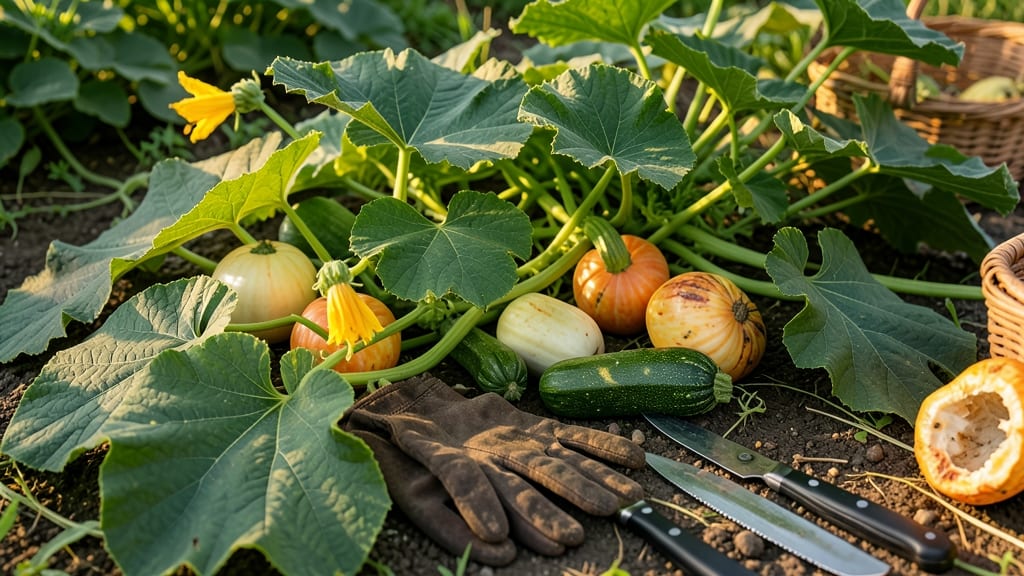
Knowing the squash harvest time is the secret to turning a garden bounty into flavor-packed meals.
Picture this: you’ve waited months for those vines to sprawl, the flowers faded, and now the fruit is sitting there—do you pick it now or wait a little longer? Miss the window, and you’re left with tough, bland squash that’s more trouble than it’s worth.
But nail it, and you’ve got the sweetest, most tender harvest of the season.
Summer squash like zucchini and yellow crookneck are ready when they’re firm, bright, and 6-8 inches long, while winter squash like butternut or acorn need that hard, dull skin and a stem that snaps cleanly. The key isn’t just color—it’s texture, size, and even the way the vine behaves.
In this guide, I’ll walk you through the exact signs your squash is ready, how to avoid common harvesting mistakes, and what to do if the vines die back too soon. By the end, you’ll know exactly when to pull that squash—and how to make it last long after harvest.
Signs your squash is ready for harvest (beyond color & size)
Harvesting squash at the perfect moment ensures peak flavor and storage potential. While size and color are common cues, there are subtle but critical signs that reveal true readiness. Ignoring these can lead to squash that's either too soft or overly mature, compromising both taste and shelf life.
One of the most reliable indicators is the vine's behavior. When vines start dying back naturally, it signals the plant is redirecting energy to the fruit. This happens 2-4 weeks before the squash reaches its ideal harvest window, depending on the variety.
The stem separation test is a game-changer for precision harvesting. Gently twist the squash at its stem—if it snaps cleanly with minimal force, it's ready. A stubborn stem means it needs more time, while a mushy one signals overripeness.
Don’t overlook the skin texture. A truly ripe squash has skin that's hard enough to resist a thumbnail press. Summer squash should feel firm but not rock-hard, while winter varieties develop a thick, papery skin as they mature.
| Harvest Indicator | What to Look For | Why It Matters |
|---|---|---|
| Vine Dieback | Leaves yellow and vines wither near fruit | Plant redirects nutrients to fruit for optimal flavor |
| Stem Separation | Stem twists off cleanly with gentle pressure | Indicates fruit has reached peak maturity |
| Skin Hardness | Resists thumbnail pressure; no dent remains | Prevents bruising during storage and transport |
| Thump Test | Hollow sound when tapped (like a drum) | Confirms seeds are fully developed for storage |
| Leaf Yellowing | Lower leaves turn yellow first, then progress upward | Natural nutrient redistribution before harvest |
A lesser-known trick is the thump test. Give the squash a firm tap—if it sounds hollow like a drum, the seeds are fully developed. This is especially useful for winter squash varieties like butternut or acorn, where seed maturity affects storage life.
For summer squash like zucchini, watch for leaf yellowing patterns. When the older leaves near the base turn yellow and crisp, it’s a sign the plant is shifting energy to the fruit. Harvest within 3-5 days of this change to avoid bitter flavors.
Color alone isn’t enough—some squash, like yellow crookneck, may look ripe but lack sweetness. Pair visual cues with the stem separation test for foolproof results. Overlooking this can mean harvesting squash that’s past its prime.
Timing matters for storage too. Winter squash harvested too early won’t cure properly, while summer squash left on the vine too long becomes woody and seedy. Use these signs to time your harvests for both fresh eating and long-term storage.
Pro tip: Harvest in the morning after dew dries. This reduces moisture on the skin, preventing rot during storage. A clean cut with a sharp knife leaves a small stem stub to help the squash heal and last longer.
Harvesting mistakes that ruin your squash (and how to avoid them)
Harvesting squash at the wrong time or using the wrong technique can turn your hard-earned bounty into a mushy mess. I’ve learned the hard way that timing, cutting method, and post-harvest care all play critical roles in preserving your squash’s flavor and shelf life.
One wrong move, and you’ll end up with squash that spoils faster than a wilting zucchini in July heat.
Even experienced gardeners sometimes make these common harvesting mistakes that ruin their squash before it ever makes it to the kitchen. The key is knowing when to pick, how to cut, and what to do immediately after harvest.
Let’s break down the biggest mistakes—and how to avoid them so your squash stays fresh for weeks.
⚠️ Harvesting Too Early or Too Late
Summer squash harvested too early is watery and bland, while winter squash picked too late becomes overripe and rotten. For summer varieties like zucchini, aim for 6-8 inches in length with hard skin. Winter squash, like butternut or acorn, should have a dry stem and deep color before harvesting.
Another major mistake is using the wrong cutting tool. I’ve seen gardeners yank squash off the vine or use dull knives, which bruises the fruit and shortens its shelf life.
Always use a sharp knife or pruners and cut the stem at a slight angle, leaving a 1-inch stem attachment to protect the squash from rot.
After harvesting, many gardeners make the error of leaving squash in direct sunlight or storing them in high-humidity areas. Squash needs a cool, dry place with good airflow—like a well-ventilated basement or garage shelf.
If storing for long-term, cure winter squash for 7-10 days in a warm, dry spot before moving it to long-term storage.
Don’t forget about vine management after harvest. If you leave too many squash on the vine, the plant will exhaust its energy, leading to poor-quality fruit. Prune overcrowded vines and remove damaged or diseased squash immediately to redirect the plant’s energy to the remaining fruit.
Finally, post-harvest handling is just as important as the harvest itself. Avoid washing squash until right before use—moisture speeds up rot. Store summer squash in the fridge for up to 2 weeks, while winter squash can last 2-3 months in a cool, dark place.