
Picking
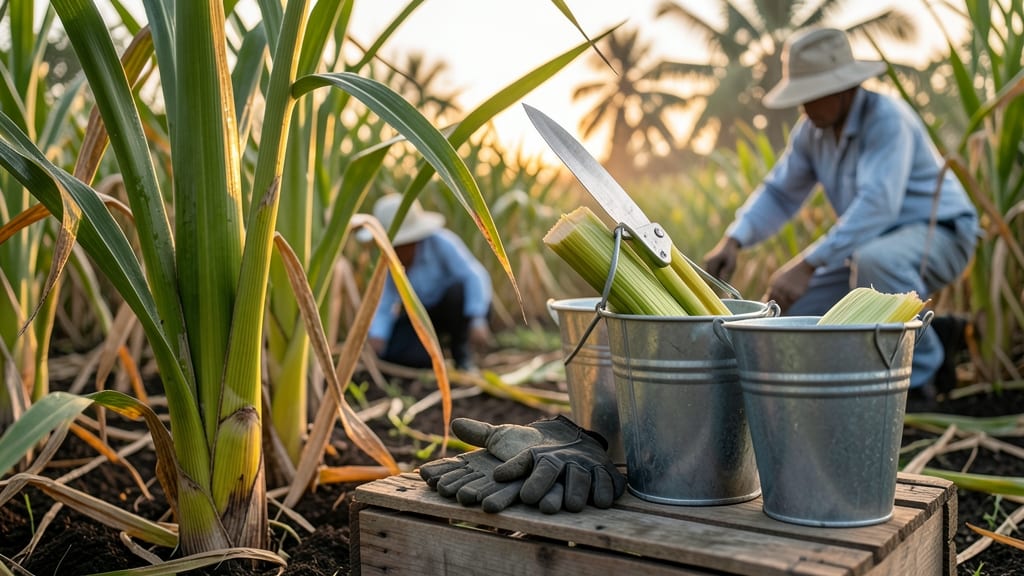
The time to harvest sugar cane 🌾 is when stalks reach 7-10 feet and the juice runs thick and sweet—missing this window means losing flavor and yield.
Picture this: your 12-24-month-old stalks towering like bamboo, their bases turning golden, but you’re not sure if they’re ready. One wrong move, and you’re left with bitter, fibrous stalks instead of the rich harvest you’ve been waiting for.
In Tropical/Subtropical Regions (Zones 10-12), the best harvest time falls between late fall and early winter, when temperatures drop just enough to concentrate the sugar. But in Zone 9b, where cooler microclimates slow growth, you might push harvest into spring.
Below, I’ll break down the 5 key signs your sugar cane is ready—from stalk thickness to leaf color—and how to avoid the mistakes that slash yields by 30% or more.

How to determine the perfect sugar cane harvest time by height and season
Sugar cane thrives when grown to its full potential, but knowing the exact harvest time ensures you capture the peak sweetness in every stalk. Most varieties reach their ideal height of 7-10 feet between 12-24 months after planting, but this varies based on your climate zone and growing conditions.
In tropical regions like Florida or Hawaii, you can harvest year-round, while in Zone 9b, the best window is late spring to early fall.
Height alone isn’t the only indicator—stalk thickness and leaf color also play critical roles. A mature stalk should feel firm and woody, not soft or spongy. The base of the stalk will turn a golden-yellow hue, signaling it’s time to harvest.
Ignoring these visual cues can lead to bitter, underripe canes or overly fibrous stalks that lack sweetness.
Here’s how to align your harvest timing with seasonal cycles for maximum yield and flavor:
In tropical climates, sugar cane grows aggressively year-round, often reaching 10+ feet within 12 months. The key is to harvest during the dry season when stalks naturally concentrate sugars. For example, in Puerto Rico, growers aim for harvests between December and April to avoid waterlogged soil, which dilutes sweetness.
If you’re in a subtropical zone like Zone 9b, your harvest window shifts to late spring through early fall (March to October). Here, sugar cane takes 18-24 months to mature, and you’ll notice stalks slow their upward growth just before harvest.
A quick test: cut a stalk and check the juice—if it’s thick and syrupy, it’s ready. If it’s watery, wait another 2-4 weeks.
For gardeners in temperate zones like Zone 9a, sugar cane is a shorter-season crop, rarely exceeding 9 feet. Focus on harvesting in summer (June-August) when daytime temperatures stay above 80°F.
These canes are less sweet than tropical varieties but still produce enough juice for small-scale syrup-making or fresh eating.
One common mistake is harvesting based solely on height. A 10-foot stalk in a cool climate may still be underripe, while a 7-foot stalk in a hot, tropical region could be prime for harvest.
Always combine height checks with stalk firmness and juice tests for accuracy. Pro tip: Harvest in the early morning when sugars are most concentrated.
After harvesting, don’t let stalks sit too long in the field—process them within 24 hours to prevent sugar degradation. Store cut stalks in a cool, shaded area until you’re ready to crush them for juice. For small-scale growers, a manual roller mill works perfectly for extracting sweet sap.
🌾
5 Key signs your sugar cane is ready for harvest (beyond just height)
Height alone isn’t the best indicator for sugar cane harvest time—even if your stalks reach 7-10 feet, they might still be underripe. Sweetness peaks when multiple physical and chemical signs align. Ignoring these clues can mean harvesting stalks that are too fibrous or bitter, wasting your hard work.
Don’t guess when your sugar cane is ready. Instead, check for these five critical signs that confirm peak harvest time. Each clue helps you avoid the sweetness trap of harvesting too early or too late. The right timing ensures maximum sugar content and a smoother, more flavorful yield.
- 🟡 Golden-Yellow Base: The bottom 12-18 inches of stalks turn golden-yellow, signaling maturity. Green stalks mean more growth time is needed.
- 🍯 Thick, Syrupy Juice: Cut a stalk and squeeze—sweet, syrupy juice confirms readiness. Thin juice means harvest too soon.
- 🪵 Firm, Woody Texture: Press a stalk—it should feel hard and hollow inside. Soft stalks are underripe.
- 🌿 Dying Leaf Tips: Outer leaves may yellow and dry at the edges. Healthy green leaves mean more growing time.
- ⏰ Slow Growth: Stalks stop lengthening upward and focus on thickening. Rapid growth means harvest later.
Testing the juice sweetness is the most reliable method. Cut a stalk, crush a small section, and taste the juice. If it’s thick and sweet, your sugar cane is ready. If it’s watery or bitter, wait another 2-4 weeks—especially in cooler climates where growth slows.
Season also plays a role. In tropical zones, harvest year-round, but in subtropical areas, aim for late fall to early winter when temperatures drop slightly. This slows growth, concentrating sugars in the stalks for a richer flavor.
Once you spot these signs, harvest within 3-5 days to preserve sweetness. Delaying too long can lead to fibrous, woody stalks that yield less juice. Use a sharp knife to cut stalks at the base, then process immediately for the best results.