
How To
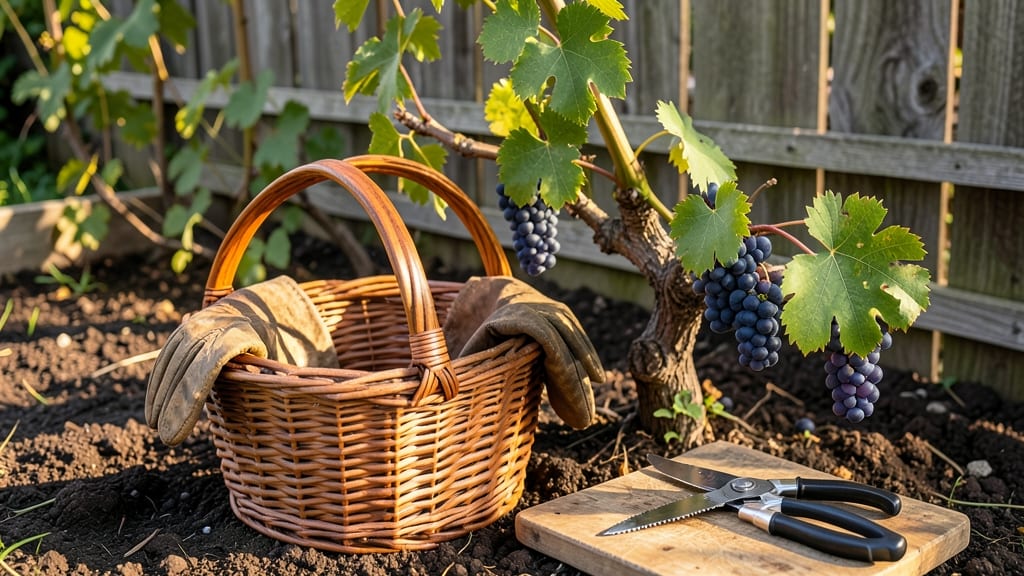
Harvesting Concord grapes at the right time means the difference between juicy, sweet perfection and tart, mealy disappointment—and the key is knowing when those deep purple clusters are truly ready.
Picture this: you’ve nurtured your 🍇 Concord Grape vines all season, and now the fruit is heavy with promise. But how do you know if they’re truly ripe? Picking too early means sour, underdeveloped flavor, while waiting too long can turn them mushy.
The secret lies in three simple tests—color, firmness, and sugar content—that take just seconds to check.
In General (USDA Zone 6 as default), Concord grapes typically ripen between late August and early September, but heatwaves or cool summers can shift that window.
That’s why relying on days since planting is a gamble—what you really need are the visual and tactile cues that guarantee peak flavor, no matter the year.
Below, I’ll walk you through the exact steps to test ripeness, plus how to adjust for your local climate. By the end, you’ll never second-guess when to snip those clusters again.

3 Reliable tests to determine when Concord grapes are perfectly ripe
Picking Concord grapes at the right moment transforms your harvest from tart and disappointing to sweet and jam-packed with flavor. Unlike some fruits that ripen off the vine, grapes must be harvested at peak ripeness for the best taste and texture.
The challenge? Overripe grapes become mushy, while underripe ones stay stubbornly sour. Let me walk you through my three foolproof tests to nail the perfect harvest window every time.
Most gardeners focus on color changes alone, but Concord grapes require a multi-step evaluation. Skipping even one test can lead to grapes that are either too firm or too soft. For example, I once harvested a batch based on color alone—only to discover they were still tart weeks later.
That mistake taught me to combine visual cues with physical and taste tests for accuracy.
🍇 3 Signs Your Concord Grapes Are Ready to Pick
- 🔹 Color Test: Grapes turn deep purple-black (not just dark purple) with a slight sheen.
- 🔹 Firmness Test: Skin resists gentle thumb pressure but yields slightly—like pressing a ripe avocado.
- 🔹 Seed Test: Seeds inside turn deep brown (not white or light tan) when crushed between fingers.
⚠️ Pro Tip: Test 2-3 clusters daily during peak ripening (usually late August to early September in Zone 6).
Start with the color test, which is your first clue. Concord grapes begin as green and gradually darken to a rich purple-black hue. However, don’t rely solely on this—some grapes may appear dark but still taste underripe.
I’ve seen this happen in cooler summers when grapes develop color faster than sugar content. To confirm, gently squeeze a grape between your thumb and forefinger; it should feel plump but firm, not mushy.
The firmness test is where many gardeners go wrong. Overripe grapes feel soft and may bruise easily, while underripe ones are rock-hard. Aim for grapes that yield slightly to pressure but don’t collapse. Think of it like testing a ripe peach—just enough give to know it’s ready.
If the grape skin punctures too easily, it’s past its prime. I learned this the hard way when a heatwave caused my grapes to overripen overnight!
For the most accurate results, use the seed test. Cut open a grape and examine the seeds. At peak ripeness, they’ll be deep brown, almost black. If they’re still white or light tan, the grape needs more time on the vine.
This test is especially useful in humid climates, where grapes can appear dark but remain tart. I always test 3-4 seeds from different clusters to account for variations in the vine.
Timing matters too—harvest in the early morning when grapes are coolest and firmest. Avoid picking after a hot day, as grapes may feel softer due to heat stress.
I’ve noticed that morning harvests also store better, lasting up to 2 weeks in the fridge compared to just 5-7 days for afternoon-picked grapes. Pro tip: Use sharp pruning shears to avoid crushing the fruit, and cut the stem just above the grape cluster.
One common mistake is harvesting based on cluster size alone. Large clusters don’t always mean ripe grapes—some may still be tart. Instead, focus on uniform ripeness across the cluster.
If a few grapes lag behind, wait another day or two. I once harvested a massive cluster only to find half the grapes still green. Patience pays off in flavor!
Finally, trust your taste buds. After performing the first three tests, sample a grape straight from the vine. It should taste sweet with a hint of tartness, not overly sugary or sour. Concord grapes at peak ripeness have a complex flavor—like a mix of berry and plum.
If it tastes bland or overly sweet, it’s likely overripe. Save these for jam or jelly, where the sugar content shines.
With these three tests, you’ll never miss the perfect harvest window again. Concord grapes are worth the wait—they’re one of the few fruits where patience truly equals reward. Now grab your shears and enjoy the sweetest grapes your vine has to offer! 🍇
How climate and vine health affect Concord grape harvest timing
Your Concord grape harvest timing can swing wildly depending on where you live and how healthy your vines are. In hot, dry climates like USDA Zone 8 or 9, grapes may ripen 2-3 weeks earlier than in cooler regions like Zone 5 or 6.
Meanwhile, drought stress or overwatering can throw off flavor and sugar development, making your grapes taste bland or overly tart. Understanding these factors helps you adjust your schedule and avoid missing peak ripeness.
Climate plays a huge role in grape development. Warmer summers accelerate ripening, while cooler, cloudy seasons slow it down. For example, in Pacific Northwest regions, harvests often stretch into late September or October, whereas in Southern states, grapes may be ready by mid-August.
Vine health also matters—well-fed, disease-free vines produce fruit with deeper color and sweeter flavors, while stressed vines may yield smaller, less flavorful clusters.
Regional growing zones directly impact your harvest window. In Zone 6, grapes typically ripen between late August and mid-September, while in Zone 4, you might need to wait until early October to avoid frost damage. Always monitor local first frost dates and adjust your schedule accordingly. For instance, if your area has an early frost risk, prioritize harvesting by mid-September to ensure you don’t lose your crop.
| Region (USDA Zone) | Typical Harvest Window | Key Climate Factors | Adjustments for Stress |
|---|---|---|---|
| Zone 4 (Cold) | Early to mid-October | Short growing season; cool summers | Use black plastic mulch to warm soil |
| Zone 6 (Moderate) | Late August to mid-September | Moderate heat; variable rainfall | Monitor vine hydration during droughts |
| Zone 8 (Warm) | Mid-August to early September | Hot, dry summers; long growing season | Shade cloth for extreme heat |
| Zone 9+ (Hot) | Late July to mid-August | Intense sun; low humidity | Drip irrigation to prevent stress |
Vine maturity also shifts your harvest timeline. Young vines (1-2 years old) produce smaller yields and may ripen 1-2 weeks later than mature vines. If your Concord grapes are on a trellis or arbor, they’ll ripen more evenly, but vines growing on the ground may have uneven maturity.
Pay attention to the oldest canes first—they often bear the ripest fruit. Prune strategically in late winter to encourage balanced growth and consistent ripening.
Drought stress is a silent harvest killer. When vines don’t get enough water, grapes develop concentrated sugars but lose acid balance, making them taste overly sweet or even fermented. Conversely, overwatering dilutes flavor and increases disease risk.
Aim for 1-2 inches of water weekly during fruit development, and always water deeply in the morning to reduce evaporation. If your soil feels dry 2 inches below the surface, it’s time to water.
Adjust your harvest schedule by checking vine leaf color and berry firmness daily as you approach the expected window. In hot climates, grapes may ripen faster, so start testing 2 weeks early.
In cooler areas, wait until 90% of berries are deep purple and pass the sugar test (taste a grape—it should be sweet, not tart). With the right adjustments, you’ll always harvest peak-flavor Concord grapes—no matter where you garden. 🍇