
Picking
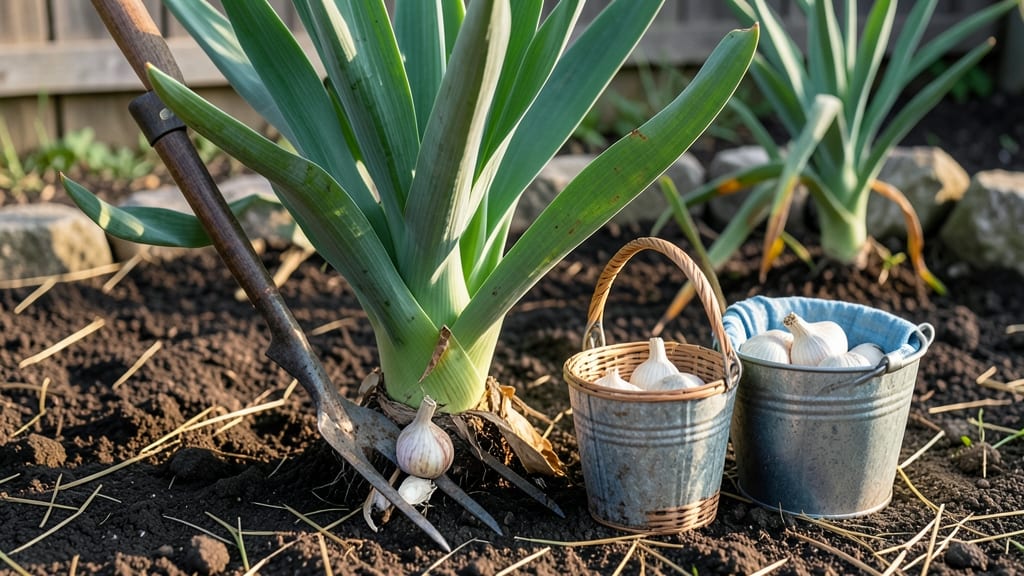
Harvesting garlic in Michigan at the right time means the difference between bold, flavorful cloves and shriveled, bitter disappointment—and the clock starts ticking in mid-July.
Picture this: you’ve nurtured your 🧄 all season, but a single week too early or late can ruin months of work. Michigan’s short growing season and unpredictable frosts add another layer of challenge, so knowing the exact cues is non-negotiable.
In this guide, I’ll walk you through the leaf-dying signals that scream “harvest now,” how hardneck vs. softneck varieties play by different rules, and why soil temperature matters more than calendar dates.
By the end, you’ll confidently pull garlic when it’s perfect—firm, papery, and ready for curing—so your pantry stays stocked with homegrown goodness all winter.

How to identify the perfect harvest time for Michigan garlic
Harvesting garlic in Michigan requires careful attention to leaf signals and climate cues—especially since our short growing season demands precision. Unlike warmer climates, Michigan’s cool summers and early frosts mean missing the harvest window can ruin your crop.
The key is watching for leaf browning and stem collapse, but hardneck and softneck varieties show readiness slightly differently.
For both types, the lower leaves will turn brown and crispy first, signaling the bulb has finished maturing underground. However, hardneck garlic (like Music or German Red) often develops a dry, papery stem that snaps easily—this is your green light.
Softneck varieties (Silverskin or Artichoke) may not show this stem collapse, so focus on the leaf dieback instead.
Here’s the critical difference: Hardneck garlic should be harvested when 50-60% of leaves have browned, while softneck garlic can wait until 70-80% of leaves are brown. Michigan’s humid summers can accelerate leaf browning, so don’t wait too long—overripe garlic splits and spoils quickly.
🌱
Timing your harvest correctly in Michigan also means adjusting for soil conditions. If your garden soil stays cool and damp (common in Michigan’s Zone 5-6), bulbs may take longer to mature.
In these cases, prioritize hardneck varieties, which tolerate cooler soils better than softnecks. Conversely, if your summer is hot and dry, softnecks might mature faster—so monitor leaf browning closely.
One common mistake I see in Michigan gardens is harvesting too late because of rainy weather. Overly wet conditions can cause bulbs to split or rot, so if leaves brown quickly due to humidity, harvest earlier than the table suggests.
Always dig up a test bulb to check for full maturity—if it’s plump and papery, you’re ready to go.
For hardneck garlic, the stem (or "scape") is a critical indicator. Once the scape flattens and turns brown, the bulb is nearing harvest. However, in Michigan’s short growing season, some growers opt to remove the scape early to redirect energy to the bulb.
If you do this, expect to harvest 1-2 weeks earlier than unpruned plants.
Softneck garlic, often grown for longer storage, needs a slightly different approach. Since it lacks a scape, focus on the leaf dieback pattern. The outer leaves will brown first, followed by the inner ones. Once 80% of the leaves are brown and crispy, it’s time to dig.
In Michigan, this usually aligns with late July to early August, but Upper Peninsula gardens may need to harvest by mid-July to avoid frost.
Pro tip: Use a gardening fork to gently lift bulbs from the
Michigan-specific harvest timing: frost, soil, and regional variations
Michigan’s diverse climate zones—from Zone 4 in the Upper Peninsula to Zone 6 in the southern regions—create unique challenges for garlic harvest timing. Understanding your last frost dates and soil temperature triggers ensures you harvest at peak maturity, avoiding both premature pulling and frost damage.
In the Upper Peninsula, where winters are harsher, garlic often matures 2-3 weeks later than in southern Michigan.
The key to perfect timing lies in balancing leaf signals with weather forecasts. While most Michigan gardeners aim for a late July harvest, early varieties in Zone 6 may be ready by mid-July, while late varieties in Zone 4 might not reach maturity until early August.
Soil temperatures dropping below 50°F signal it’s time to harvest, as cooler soils slow bulb development.
- 📅 Zone 6 (Southern Michigan): Harvest late July—watch for 50% brown leaves by July 20.
- 🌡️ Soil temp trigger: Harvest when soil temps drop to 50-55°F at 6 inches deep.
- ❄️ Upper Peninsula (Zone 4): Delay harvest until early August to avoid early frost risks.
- ⏳ Early vs. late varieties: Plant hardnecks (e.g., Music) 2 weeks earlier than softnecks (e.g., Silverskin) for staggered harvests.
Regional variations extend beyond frost dates. Southern Michigan’s warmer microclimates allow for earlier harvests, while northern areas benefit from extended growing seasons when planting late-spring varieties. Always monitor 7-day forecasts—a sudden 40°F drop can stall bulb maturation.
For example, in Traverse City (Zone 5), garlic planted in October may mature by late July, while the same variety in Detroit (Zone 6) could be ready by mid-July.
Adjusting for early vs. late varieties in the same garden is a smart strategy. Plant hardneck garlic (e.g., German Red) in September for a July harvest, then follow with softneck varieties (e.g., Artichoke) in March for an August harvest.
This staggered approach ensures you’re not overwhelmed with harvest tasks or left with overripe bulbs.
One common mistake is harvesting based solely on leaf color without checking soil conditions. Always dig up a test bulb to confirm firm, papery skins—a sign of maturity. In humid Michigan summers, bulbs left too long in the ground risk rot or sprouting.
If your garlic shows green leaves but soil temps are dropping, it’s time to harvest—even if the bulbs aren’t fully formed.
Pro tip: Use a soil thermometer to track temperatures at 6 inches deep. When readings consistently hit 50°F, start harvesting. In northern Michigan, this often aligns with mid-August, while southern regions may see this by late July.
By aligning your harvest with these climate cues, you’ll maximize bulb size and flavor—no matter where in Michigan you garden. 🧄