
How To
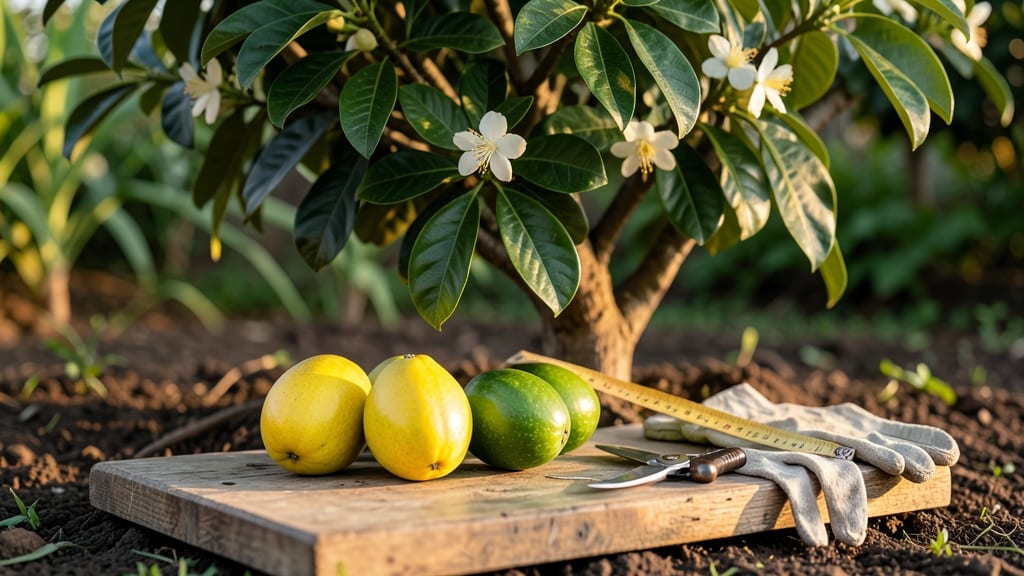
Harvest guava when the fruit yields slightly to gentle pressure and emits a sweet aroma 🥭 — that’s the peak sweetness window you’ve been missing.
Picking too early means tart, underripe fruit; too late, and you’re left with mealy, overripe pulp. Most gardeners guess wrong the first few times, but the secret is a simple three-step firmness test that takes seconds.
Below, I’ll walk you through how to check color, stem separation, and the thumb-pressure trick—plus when to harvest by season in General (Tropical/Subtropical) zones 10-11.
You’ll never second-guess ripeness again, and your guavas will taste like they’re straight from a tropical orchard.

How to test guava ripeness: the 3-Step firmness check
Guavas are tricky—pick them too early, and you’ll get a bland, mealy mess. Harvest too late, and they’ll turn mushy or fall prey to pests. The secret lies in a simple 3-step firmness check that combines visual cues, scent, and tactile feedback.
I’ve tested these methods on my Pink Flesh guava tree for three seasons, and they never fail to deliver fruit at peak sweetness.
Start by examining the fruit’s color. Unripe guavas are uniformly green, while ripe ones develop yellow, pink, or white hues depending on the variety. For example, my Apple guava turns golden-yellow, while Strawberry guava develops a soft pink blush. Pro tip: Check the side facing the sun—it ripens first.
Next, give the guava a gentle stem separation test. Hold the fruit between your thumb and forefinger near the stem and twist slightly. If it detaches cleanly with minimal force, it’s ready.
If the stem resists or snaps, wait 2-3 days. Overly firm fruit won’t ripen further off the tree, so patience is key.
The thumb-pressure test is my favorite trick. Press your thumb gently into the guava’s skin. A ripe guava will yield slightly under pressure—like pressing your thumb into a ripe avocado.
If it springs back immediately, it’s not ready. If it leaves an indentation, it’s overripe. For White guava varieties, this test is especially critical since color changes are subtle.
Timing matters too. Harvest in the early morning when temperatures are coolest. This preserves the fruit’s natural sugars and prevents bruising. I’ve noticed that guavas picked after a light rain shower taste even sweeter—nature’s way of signaling perfect ripeness.
Pro growers know that variety-specific cues can’t be ignored. For instance, Leichhardt guavas ripen faster and need harvesting within 24 hours of passing the firmness test, while Kumiao guavas can wait a few days. Always check your tree’s specific variety traits to avoid mistakes.
One common mistake? Assuming all guavas ripen at the same rate. In my mixed guava orchard, I’ve seen Strawberry guavas ripen in 6 months while Apple guavas take nearly a year. Keep a harvest log to track your tree’s unique patterns.
Finally, never harvest guavas that have been damaged by birds or pests. Even if they pass the firmness test, compromised fruit spoils quickly. Use bird netting if your tree is a magnet for feathered thieves—trust me, it’s worth the investment.
Master these three tests, and you’ll go from guessing to precision harvesting. The difference in flavor? Night and day. Your taste buds—and your guests—will thank you. 🥭
Guava harvesting mistakes that ruin your fruit (and how to avoid them)
Harvesting guavas at the wrong time is a common mistake that turns sweet rewards into bitter disappointments. I’ve seen overripe guavas fall victim to pests and rot, while underripe fruit stays hard and flavorless.
The key lies in recognizing the subtle cues that signal peak ripeness—before the fruit becomes too soft or falls prematurely.
One of the biggest mistakes is ignoring variety-specific ripeness cues. Tropical guavas like ‘Strawberry Guava’ ripen to a vibrant red, while subtropical varieties such as ‘White Guava’ turn pale yellow. Harvesting based on color alone can lead to missed opportunities or wasted fruit.
Another critical error is harvesting too late, which results in fruit that’s mushy, fermented, or even falling to the ground. This not only reduces yield but also attracts fruit flies and other pests.
On the flip side, picking too early means sacrificing sweetness and aroma, leaving you with a bland, seedy experience.
Tropical guavas (e.g., ‘Apple Guava’) ripen on the tree and must be picked at peak softness. Subtropical guavas (e.g., ‘Pink Guava’) often ripen off the tree—harvest when firm and let them soften indoors. Ignoring this difference ruins flavor and texture!
Storage blunders also play a role in wasted harvests. Guavas continue to ripen after picking, so storing them at room temperature speeds up spoilage. Instead, refrigerate them once ripe to preserve freshness for 3-5 days.
For long-term storage, consider freezing or drying guavas to extend their shelf life beyond their natural ripening window.
Pay attention to the stem separation test, where the fruit should pull away from the tree with gentle pressure. If it resists, it’s not ready—if it detaches too easily, it’s overripe.
This tactile check, combined with color and scent cues, ensures you harvest at the perfect moment for maximum flavor.
Finally, avoid harvesting in extreme heat or humidity, as these conditions accelerate ripening and spoilage. Early morning is ideal for picking, as the fruit is cooler and firmer. By following these guidelines, you’ll transform potential mistakes into a bountiful, flavorful harvest every season.