
Container Gardens
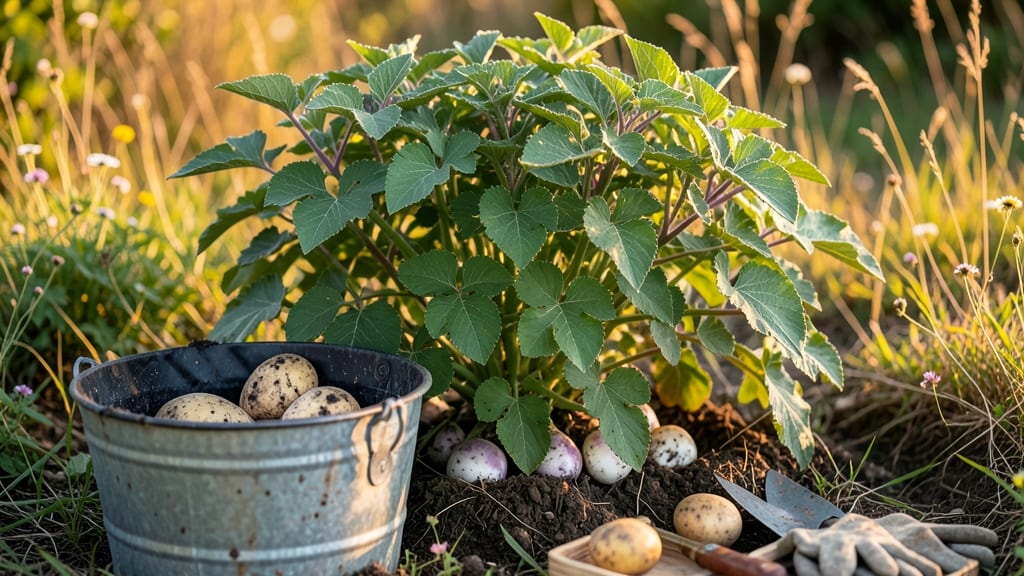
Harvesting potatoes in a bucket at the right time means perfect size and flavor—no more waiting too long for tough tubers or pulling them too early when they’re still tiny.
Picture this: you’re checking your bucket-grown 🥔 plants, and the foliage is turning yellow while the stems flop over. That’s your cue—but how do you know if they’re really ready? A simple finger-poke test tells you when those spuds are ideal for digging, saving you from guesswork.
Timing matters because bucket potatoes grow in a confined space, so they need just the right conditions: 70–90 days after planting, when the tubers are firm, the skin resists pressure, and the stems brown and dry. Miss this window, and you risk small potatoes or even rot.
Below, I’ll walk you through the foolproof finger-poke test, container-specific tips, and how to adjust for your climate zone—so you pull your potatoes at their peak, every time.

How to use the finger-poke test for bucket-grown potatoes
Growing potatoes in a bucket is a fantastic way to save space, but knowing when to harvest potatoes in a bucket can be tricky. The finger-poke test is my go-to method for determining the perfect harvest time.
This simple technique helps you avoid pulling potatoes too early (small and tough) or too late (overgrown or rotting). Whether you're growing Yukon Golds or Red Pontiacs, this test works for all varieties.
Start testing about 70 days after planting, when your potato plants are flowering but before the foliage yellows. The test involves gently probing the soil around the base of the plant to feel for tubers.
This method is especially useful in containers, where you can't dig up the entire plant to check. The key is consistency—test every 5-7 days once you begin, and you'll catch them at peak size and flavor.
Here’s how to perform the test correctly and what to look for at each stage:
Gently poke your finger 2-3 inches deep into the soil around the plant base. Feel for small, pea-sized tubers. If you find any, they’re not ready yet—wait another week and test again. Early tubers are often green-tipped and too small to eat.
Now, you should feel walnut-sized tubers (about 1-2 inches in diameter). Press lightly—if the skin resists your thumbnail, they’re nearing readiness. If they feel soft or spongy, wait another week. This is the ideal window for most varieties.
By now, tubers should be baseball-sized or larger. The skin should feel thick and firm, and the stem end should be brown and dried. If you feel any hollow spots or hear a "thud," the tubers may have overgrown and started rotting—harvest immediately.
💡 Pro Tip: Use a wooden dowel if your fingers can’t reach deep enough—it’s gentler on the tubers!
The finger-poke test is especially critical in buckets because container-grown potatoes have limited space. If left too long, tubers can become deformed or rot due to overcrowding. Once you confirm readiness, harvest within 2-3 days to avoid missing the window.
For new potatoes (smaller, younger tubers), you can harvest earlier—just aim for 1-inch diameter and a firm texture.
Pay attention to the foliage as well. When the leaves start yellowing and dying back, it’s a final sign that harvest time is near. This is your plant’s way of telling you it’s redirected energy to the tubers.
However, don’t wait until the plant is completely dead—this can reduce yield and increase the risk of disease in the tubers.
After harvesting, let the potatoes cure in a dark, dry place for a week before storing. This helps toughen their skins and improves storage life. If you’re growing late-season varieties, like Russets, you might need to wait until after the first frost in your area.
But for most bucket-grown potatoes, the finger-poke test is your best friend for a perfect harvest.
One common mistake is overwatering before harvest, which can lead to soft, waterlogged tubers. Reduce watering slightly in the final 2 weeks leading up to harvest to encourage firmer skins.
And remember, the deeper your bucket, the longer you can wait—18-inch-deep containers allow for larger tubers compared to shallow 10-inch buckets.
With practice, the finger-poke test becomes second nature, and you’ll consistently harvest potatoes at their peak flavor and size. Whether you’re growing for your family or selling at a farmers' market, this method ensures you’ll never waste another bucket of underdeveloped spuds again. Happy digging!
Best time of year to harvest potatoes in buckets (by climate zone)
Timing your potato harvest in a bucket depends on your USDA climate zone and the variety you're growing. Early potatoes like 'Yukon Gold' mature in 60-70 days, while late varieties like 'Russet' need 90-120 days.
Containers also dry out faster, so timing matters even more than in-ground gardens. Miss the window, and you risk small tubers or frost damage.
In cooler zones (3-6), aim for harvest between late July and early September to avoid early frost. Warmer zones (7-10) can extend harvests until October or November, but watch for heat stress in small containers. The key is balancing tuber size with seasonal threats like frost or drought.
| Zone | Early Varieties | Late Varieties | Best Months | Container Tip |
|---|---|---|---|---|
| 3-4 | 60-70 days (June-July) | 90-100 days (July-Aug) | July-August | Use 5-gallon buckets; harvest before frost |
| 5-6 | 65-75 days (late June-July) | 100-110 days (Aug-Sept) | July-September | Add straw mulch to insulate roots |
| 7-8 | 70-80 days (July-Aug) | 110-120 days (Sept-Oct) | August-October | Water deeply 2x/week to prevent stress |
| 9-10 | 75-85 days (Aug-Sept) | 120-130 days (Oct-Nov) | September-November | Use larger containers (10+ gallons) |
Container size directly impacts harvest timing. A 5-gallon bucket may need harvesting 1-2 weeks earlier than a 10-gallon container because soil dries faster. Always check for firm tubers (2-3 inches) and yellowing foliage—these are your best clues. In zones 3-6, prioritize early varieties to avoid frost.
Watch for heat stress in zones 9-10. Containers can overheat, causing tubers to turn green (toxic). If your bucket feels hot to the touch, move it to partial shade or bury it halfway in the ground.
Late varieties in warm zones often need shade cloth during peak summer to prevent stress.
For new potatoes, harvest when tubers are 1-inch diameter (about 40-50 days). For storage potatoes, wait until foliage dies back completely. In all zones, stop watering 1-2 weeks before harvest to toughen skins and improve storage life.
Pro tip: Keep a harvest journal to track when your bucket potatoes reach peak size. Note the days from planting to harvest—this helps you fine-tune timing next year. With practice, you'll nail the perfect harvest window for your climate!