
How To
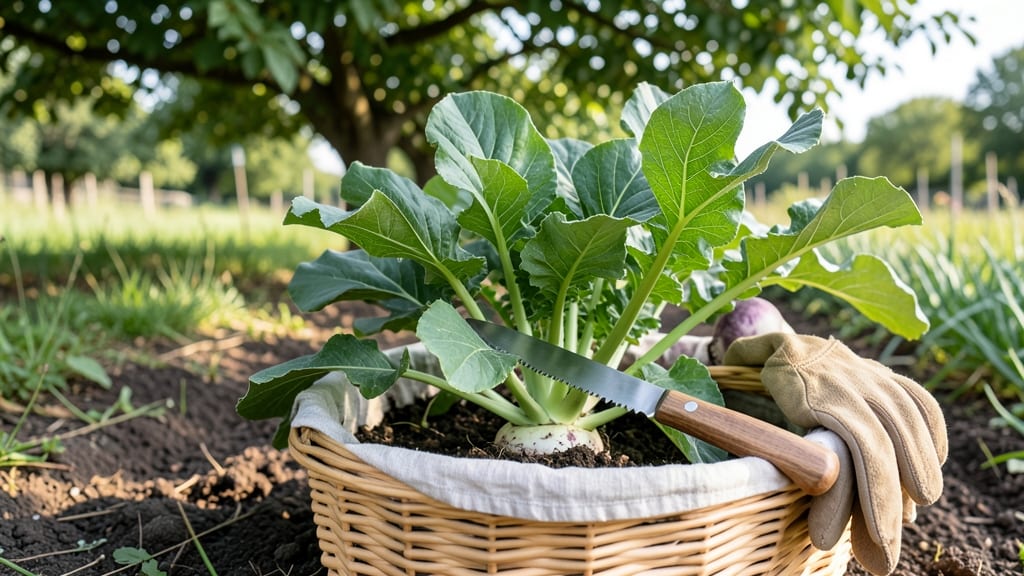
Harvesting turnip greens at the right time ensures tender, flavorful leaves 🥬 — and missing that window means tough, bitter greens.
Turnip greens pack a punch of nutrients—but harvesting them too early or too late can mean the difference between tender, flavorful leaves and bitter, tough ones. Timing is everything, and these 3 simple leaf tests will help you nail the perfect harvest window for maximum taste and yield.
Look for dark green leaves that are 4-6 inches long and firm to the touch. If the stems feel woody or the lower leaves start yellowing at the base, you’ve waited too long. The key is to harvest when the leaves are crisp but still young enough to avoid bitterness.
In this guide, I’ll walk you through the 3 visual tests to determine when your turnip greens are ready, how to encourage regrowth for multiple harvests, and the best times to pick baby greens versus mature leaves.

3 Visual leaf tests to determine perfect turnip greens harvest time
Harvesting turnip greens at the right moment ensures peak flavor and tender texture. Unlike root crops, the greens mature quickly—often in just 30-60 days—but timing is critical. Too soon, and you’ll get bland, underdeveloped leaves; too late, and they’ll turn bitter and fibrous.
These three simple visual tests will help you identify the ideal harvest window every time.
First, focus on leaf size. The most reliable indicator is when the outer leaves reach 4-6 inches long. Smaller leaves (under 3 inches) are still developing their full flavor profile, while larger ones may have already passed their prime.
I like to compare them to a standard ruler or credit card for quick reference—this helps standardize my judgment, especially when harvesting multiple plants.
Next, examine the leaf color. Mature turnip greens should be a deep, glossy green, almost like the rich hue of kale or Swiss chard. If the leaves are pale or yellowish-green, they’re not ready yet.
Conversely, if you notice yellowing at the edges or a dull, grayish tint, the greens have likely overmatured and may taste bitter. The color test is especially useful in shady conditions, where leaves might stay smaller but still reach maturity.
Finally, check the stem firmness. Gently pinch a stem between your fingers—it should feel firm but slightly pliable, like a celery stalk. If it snaps easily, the greens aren’t ready; if it feels woody or tough, you’ve waited too long.
This test is my go-to for late-season harvests, when cooler temperatures can slow down the plant’s natural softening process.
| Test | Ready-to-Harvest Signs | Overripe Signs | Action |
|---|---|---|---|
| Leaf Size | 4-6 inches long Dark green, crisp |
>6 inches long Yellowing edges, tough texture |
Harvest outer leaves first |
| Leaf Color | Deep, glossy green Uniform color |
Pale/yellow-green Dull or grayish |
Wait 2-3 more days |
| Stem Firmness | Firm but pliable Bends slightly |
Woody or brittle Snaps easily |
Harvest immediately |
For the best results, I recommend harvesting in the morning, after the dew has dried but before the heat of the day. This ensures the leaves are crisp and hydrated, making them easier to handle and store.
Use a sharp pair of scissors or pruning shears to cut the outer leaves just above the soil line or lower leaves. This encourages the plant to produce more greens—you can often get 2-3 harvests from a single planting!
Pro tip: If you’re growing turnip greens for baby greens, you can start harvesting as early as 3-4 weeks when the leaves are just 2-3 inches long.
These younger leaves are milder and more delicate, perfect for salads or quick-cooking dishes. Just be sure to leave the central leaves to keep the plant producing.
One mistake I’ve made in the past is waiting until the greens look perfectly uniform across the entire plant. In reality, turnip greens mature asynchronously, meaning some leaves will be ready while others lag behind.
The key is to harvest selectively, picking only the largest, most mature outer leaves while leaving the smaller inner ones to grow. This extends your harvest window by weeks!
If you’re in a cooler climate (like USDA Zone 5 or below), your turnip greens may mature more slowly. In these cases, focus on the stem firmness test over size, as cooler temperatures can stunt leaf growth.
Conversely, in hotter regions, the greens may bolt (flower) faster—so prioritize the color test to catch them at peak tenderness before they go to seed.
Once you’ve mastered these tests, you’ll never second-guess your harvest timing again. The reward? Tender, flavorful greens packed with nutrients, ready to elevate your favorite dishes. And the best part? You’ll have a continuous supply all season long with proper care.
Optimal harvesting windows by growth stage: when to pick for baby greens vs. mature leaves
Harvesting turnip greens at the right stage transforms them from mild and tender to bold and slightly bitter. The key lies in understanding their growth timeline—each stage offers a distinct flavor and texture profile.
For baby greens, you’ll want to harvest early, while mature leaves deliver deeper flavors but require precise timing to avoid toughness.
Your climate plays a crucial role too. In cool-season regions, turnip greens mature faster (3-4 weeks for baby leaves, 6-7 weeks for full-size). Meanwhile, in warmer zones, growth slows slightly, stretching the window to 4-5 weeks for baby greens and 7-8 weeks for mature harvests.
Varieties like 'Tokyo Cross' or 'Purple Top' also influence timing—some bolt quicker than others.
📅 Growth Stage Guide: Here’s how to match your harvest to the plant’s development for peak quality.
For baby greens, aim for leaves that are 2-4 inches long and still tender enough to eat raw. These early harvests deliver a sweet, mild flavor perfect for salads or light cooking.
If you’re growing 'Tokyo Cross', you can even harvest individual leaves without disrupting the plant—ideal for a cut-and-come-again approach.
When leaves reach 4-6 inches (the young mature stage), they’re ready for stir-fries or sautéing. Here, the flavor deepens slightly, offering a balanced earthiness that pairs well with garlic or onions. Wait too long, and the leaves become tough and bitter—a sure sign they’ve passed their prime.
Finally, mature greens (6-8 weeks) are best for braising or soups, where their bold, peppery flavor shines. Look for leaves that are dark green with slight yellowing at the base—a natural sign they’re ready.
In warmer climates, these greens may mature faster, so keep an eye on your plants to avoid missing the window.
Pro tip: Always harvest in the morning when leaves are crispest. Use clean sharp scissors to snip just above the base, leaving 2-3 inches of stem to encourage regrowth.
With proper care, you can coax multiple harvests from a single plant—just avoid cutting more than 1/3 of the foliage at once.