
Picking
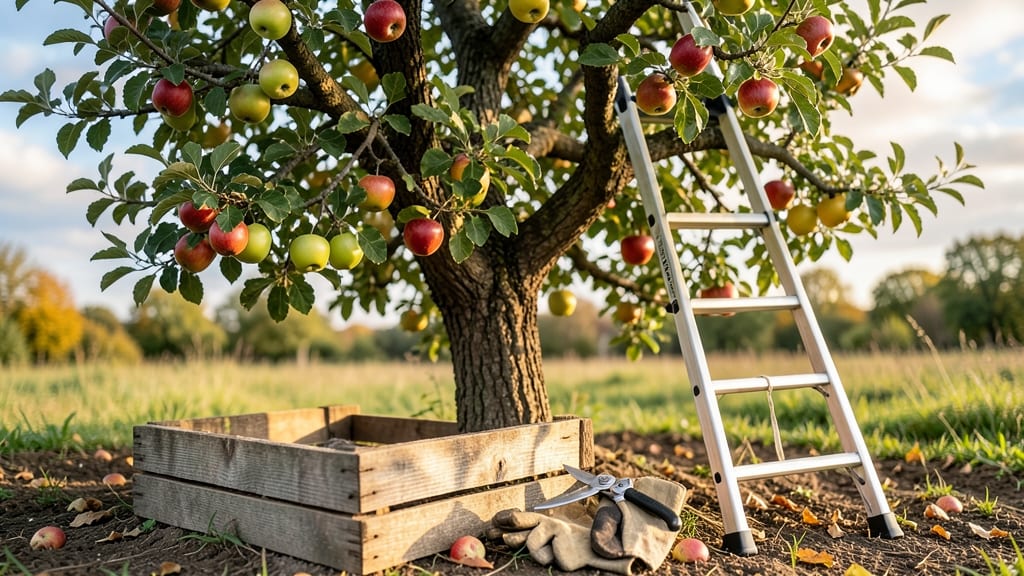
Harvesting apples at the right time during apple harvest season means the difference between sweet, crisp fruit and bitter, mealy disappointment.
Timing your apple harvest perfectly ensures juicy, sweet fruit—but wait too long, and you risk overgrowth, pests, or wasted labor. Mastering the art of picking apples at their peak flavor can transform your orchard into a year-round treasure trove.
Regional climate plays a huge role: in USDA Zone 6a, where many home growers live, apples typically ripen between late August and October, but early varieties like McIntosh might be ready as soon as July.
Understanding these variations saves you from picking too early or missing the window entirely.
Below, I’ll break down the key signs of ripeness—color, texture, and even the stem’s behavior—and share pro tips for storing your harvest so those 🍎 stay fresh for months. Ready to turn your orchard into a flavor-packed success?

How to determine the best time for apple harvest season
Picking apples at their peak ripeness transforms your orchard from a simple grove into a flavor-packed treasure. But timing is everything—harvest too early, and you miss sweetness; too late, and pests or overgrowth ruin your crop.
The key lies in understanding visual cues, texture tests, and how your local climate affects ripening. Let’s break down the science and secrets behind perfect apple harvest timing.
First, recognize that apple varieties ripen differently. A Honeycrisp might be ready in early September, while a Granny Smith could wait until October. Even within the same tree, some apples mature faster than others.
Ignoring these differences can lead to a mixed bag of underripe and overripe fruit. Always check individual apples rather than relying on a one-size-fits-all calendar.
Color change is your first clue, but it’s not foolproof. A red apple should deepen to its full hue, while green varieties like Granny Smith will shift to a vibrant, even color. Look for no green undertones—this signals the apple is ready. However, some varieties (like Golden Delicious) may stay pale yellow even when ripe, so don’t rely solely on color.
| Harvest Indicator | What to Look For | Action to Take |
|---|---|---|
| Skin Color | Fully developed hue (no green spots) | Check variety-specific color charts |
| Firmness Test | Firm but yields slightly when pressed | Gently squeeze—should feel springy, not mushy |
| Stem Separation | Stem twists off cleanly with slight pressure | Hold apple and twist—no tugging needed |
| Seed Browning | Seeds turn dark brown when sliced open | Cut one apple open—brown seeds = ripe |
| Aroma | Sweet, fruity scent near stem | Sniff the blossom end—intense aroma = ready |
| Regional Climate | Cooler areas ripen later (Sept-Oct) | Adjust 1-2 weeks earlier in warm zones |
The firmness test is non-negotiable. A ripe apple should feel firm but slightly yielding—like a ripe avocado. If it’s rock-hard, it’s underripe; if it’s mushy, it’s overripe. Press your thumb gently into the apple’s skin.
A ripe apple will leave a barely visible dent that springs back quickly. This test is especially critical for storage apples like Fuji or Gala, which need to hold their shape during cold storage.
Don’t overlook the stem test, a pro trick that saves hours of guesswork. Hold the apple firmly and twist it gently at the stem. A ripe apple’s stem should separate cleanly from the branch with minimal effort.
If you feel resistance or hear a popping sound, the apple isn’t ready yet. This method works best on mature trees where branches are sturdy enough to support the fruit’s weight.
Seed browning is a foolproof indicator for home growers. Slice an apple open and check the seeds: if they’re dark brown, the fruit is ripe. Pale or white seeds mean it’s too soon. This trick is especially useful for green-skinned varieties like Granny Smith, where color changes can be subtle. For red apples, combine this test with the firmness check to avoid mistakes.
Your local climate plays a huge role in harvest timing. Apples in cooler regions (like the Pacific Northwest) may ripen in late September or October, while warmer zones (such as California’s Central Valley) can harvest as early as August.
Even within the same state, a high-elevation orchard might be 2-3 weeks behind a lowland one. Always monitor frost forecasts—a sudden cold snap can ruin unharvested fruit overnight.
For storage apples, aim to pick them 1-2 weeks before their peak eating ripeness. Varieties like Honeycrisp or Cortland develop their signature sweetness after harvest. Store them in a cool (32-35°F), humid (90%) environment to slow ripening.
Check apples weekly and remove any that soften—this prevents ethylene gas from speeding up decay in nearby fruit.
If you’re unsure, harvest a few test apples and store them at room temperature for 3-5 days. The ones that soften and develop richer flavor are ready. This method works wonders for heirloom varieties with unpredictable ripening patterns.
Remember: patience pays off—a perfectly timed harvest means apples that taste sweeter, store longer, and impress everyone who bites into them.
🍏
Apple varieties and their ideal harvest timing guide
Choosing the right time to harvest apples depends heavily on the variety you're growing. Each type has unique flavor profiles, harvest windows, and storage lifespans that make them perfect for different uses—whether you're baking pies, enjoying fresh snacks, or storing for winter.
Let's break down four popular varieties: Fuji, Gala, Granny Smith, and Honeycrisp, so you can pick them at their peak.
Understanding these differences ensures you avoid common mistakes like harvesting too early (which leads to mealy fruit) or too late (risking pest damage or fruit drop). The color change, firmness, and even the aroma of apples are your best indicators for timing.
For example, a Honeycrisp apple won’t taste the same if picked before its crisp texture fully develops, while a Granny Smith needs that signature tartness to shine.
Regional climate also plays a role—cooler areas may have a shorter harvest window, while warmer climates can extend it. For instance, Fuji apples in California might ripen earlier than those in New York. Always check your local frost dates to avoid unexpected weather cutting your harvest short.
If you're growing Fuji apples, aim for late September to October when their skin turns a deep red and they release a sweet aroma. These apples are crisp and sweet, making them ideal for long-term storage—up to 6 months in a cool, dark place.
Their extended shelf life makes them perfect for winter baking or fresh eating.
Gala apples, on the other hand, are best picked in mid to late September. Their mild sweetness and soft texture make them a favorite for baking and quick snacks. However, they don’t store as long as Fuji varieties—only 3-5 months—so plan to use them sooner. Look for a golden-yellow hue and a slight give when gently squeezed.
Granny Smith apples are the tart lovers' choice, with their harvest season stretching from October to November. Their bright green skin and firm texture are unmistakable. These apples store well for up to 4 months, making them a great option for salads or pies later in the year. Wait until they’re fully colored and firm to the touch before picking.
Finally, Honeycrisp apples are a crowd-pleaser with their complex sweetness and explosive crispness. Harvest them in late September to October when their skin turns a rich red or yellow.
Like Gala apples, they store for 3-5 months, so enjoy them fresh or use them in recipes that highlight their natural sweetness.
Pro tip: Always harvest apples on a dry morning to prevent bruising. Use a fruit pick or pruning shears to avoid damaging the tree. Store them in a cool, humid environment (around 30-40°F) to preserve freshness and flavor until your next harvest rolls around.