
Picking
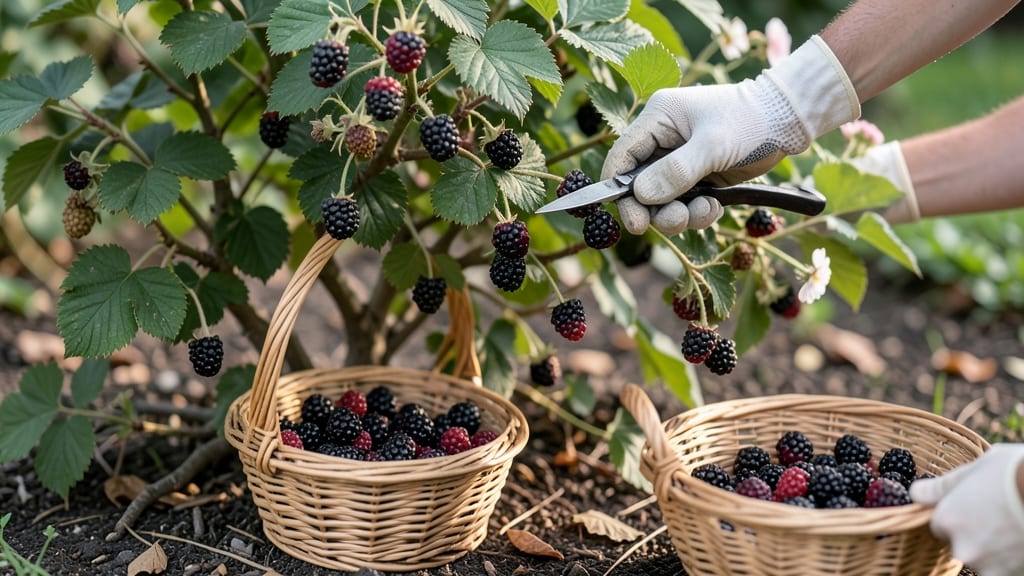
Summer’s blackberry harvest season is your chance to turn those glossy, deep 🫐 berries into jam, pies, or fresh snacks—but only if you time it right.
Picture this: you’re reaching for a blackberry, and it splits open just enough to reveal that juicy, dark center. That’s the moment you’ve been waiting for, the sweetest reward of a well-tended vine.
But miss that window, and you’re left with tart, underripe fruit—or worse, berries that rot before you can pick them.
In USDA Zone 6, where most home gardeners grow blackberries, the harvest typically peaks in June through August, but the exact timing depends on your variety and local climate. Some berries ripen faster in hotter summers, while others hold on longer in cooler years.
That’s why knowing the three key ripeness checks can mean the difference between a bountiful harvest and a handful of wasted berries.
Below, I’ll walk you through how to spot the perfect blackberry, the best times to pick in summer heat, and even how different varieties play by their own rules. By the end, you’ll be harvesting like a pro—and maybe even sharing your surplus with neighbors.

3 Key ripeness checks for blackberries before harvesting
Summer’s blackberry harvest season is all about precision—picking at the wrong time means tart, seedy berries or overripe mush. The difference between a perfectly ripe blackberry and a wasted one often comes down to three simple but critical checks.
I’ve learned the hard way that ignoring these cues can turn your summer bounty into a soggy disappointment within hours.
First, let’s address the biggest mistake gardeners make: assuming color alone determines ripeness. A deep purple or black hue is a start, but it’s not enough. Without the right tactile and visual cues, you risk harvesting berries that are still underdeveloped or already past their prime.
Mastering these checks will help you maximize your yield and enjoy the sweetest, juiciest blackberries your garden has to offer.
⚠️ NON-NEGOTIABLE: Never pick blackberries that still have a greenish tint or feel rock-hard. These are classic signs of immature fruit, and no amount of waiting will improve their flavor. The key is catching them at that sweet spot—just before they start to soften too much or attract pests.
Color Shift to Deep, Uniform Hue
Ripe blackberries turn a rich, glossy black (or deep purple/red for certain varieties). Avoid berries with uneven coloring or pale spots—these are still developing.
Gentle Yield When Pressed
Press a berry lightly—it should give slightly (not mushy). If it’s hard as a rock, it’s unripe. If it squishes easily, it’s overripe and prone to spoilage.
Split-Open Signal
The tell-tale sign of peak ripeness: the berry’s hull splits open just enough to reveal the juicy fruit inside. This happens 1-2 days before they’re ready to pick—so check daily!
Let’s break down the color shift first, because this is where most gardeners stumble. A ripe blackberry should be deep, uniform in color—no green undertones or patchy hues. For example, the Triple Crown variety turns a glossy black, while Natchez stays a deep purple-red.
If you’re unsure, compare it to a fully ripe berry from last year’s harvest—your eyes will adjust quickly to spot the difference.
The firmness test is equally important, and it’s a tactile skill you’ll develop with practice. Gently squeeze a berry between your thumb and forefinger—it should feel plump but yield slightly, like a ripe peach. If it’s firm like a tennis ball, it’s not ready.
If it leaves your fingers stained with juice, it’s past its prime. This test is especially critical in hot summer weather, when berries ripen faster and overripe berries can ferment within hours.
Now, here’s the split-open signal that separates experienced harvesters from beginners. When the hull (the outer skin) of the blackberry starts to crack open just slightly, that’s your cue to pick within 24 hours.
This happens because the fruit inside expands as it ripens, forcing the hull to split at the seams. If you miss this window, the berries will rot on the vine or attract birds and pests.
One common mistake I see is picking entire clusters instead of individual berries. Blackberries ripen asynchronously, meaning some may be ready while others on the same cluster aren’t. Always harvest one by one, checking each for ripeness.
Another pitfall is waiting too long because you think the berries will get sweeter. In reality, overripe blackberries lose flavor and become mealy, making them unappealing for eating fresh or preserving.
Pro tip: Harvest in the morning when temperatures are cooler. This ensures the berries are firmest and least prone to bruising.
Use a sharp pair of pruning shears or your fingers to twist the berry gently from the stem—never pull or tug, as this can damage the cane and reduce next year’s yield.
Store your freshly picked blackberries in the fridge for up to 3 days to preserve their peak flavor and texture.
If you’re growing multiple blackberry varieties, pay attention to their unique ripening patterns. Some, like Chester, ripen all at once, while others, like Ouachita, produce berries over an extended summer period.
Keeping a harvest journal can help you track when each variety reaches its ideal ripeness window in your specific climate.
Remember, the goal is to balance sweetness and texture. A perfectly ripe blackberry should be burst
Best practices for harvesting blackberries in summer heat
Summer heat can turn your blackberry harvest from abundant to disastrous if you’re not careful. The key is picking at the right time and using the right harvesting techniques to protect both your berries and plants.
I’ve learned the hard way—overripe berries attract pests, while underripe ones lack sweetness. Let’s dive into the best practices to ensure a bountiful, flavorful harvest every time.
First, always harvest on cool mornings or late afternoons to avoid heat stress on the berries. The ideal temperature for picking is between 60-75°F. If you must pick during peak heat, work quickly and store berries in the shade until you can process them.
Heat accelerates spoilage, so timing is critical for maintaining berry quality and shelf life.
⚠️ callout warning
- Picking wet berries: Moisture from dew or rain promotes mold growth. Always harvest dry berries.
- Overfilling containers: Use shallow, breathable containers to prevent bruising and heat buildup.
- Ignoring primocanes: New green canes (primocanes) signal the end of the fruiting season—stop picking once they appear.
Use the right harvesting tools to minimize damage to the canes. A pair of sharp pruning shears or a harvesting rake works best for large patches. Gently grasp the berry cluster and twist it slightly to detach the fruit from the stem.
Avoid pulling or yanking, which can damage the floricanes (the canes producing fruit this year) and reduce next year’s yield.
Once harvested, handle berries with care to extend their shelf life. Place them in shallow containers lined with paper towels to absorb excess moisture. Store them in the refrigerator at 32-36°F and use within 3-5 days for peak flavor.
For longer storage, freeze berries on a tray before transferring them to a sealed bag—this prevents them from sticking together and losing texture.
After harvesting, inspect your plants for signs of stress or disease. Remove any damaged canes or diseased leaves immediately to prevent the spread of pathogens. Apply a light mulch around the base of the plant to retain moisture and regulate soil temperature.
This step is especially important in hot climates where soil can dry out quickly, stressing the plant and reducing future fruit production.
Finally, don’t forget to prune old canes after the harvest season ends. Cut back the floricanes to the ground to encourage new growth from the primocanes, which will fruit next year.
This practice keeps your blackberry patch healthy and productive for years to come. With these tips, you’ll enjoy a sweeter, more abundant harvest every summer season.