
Picking
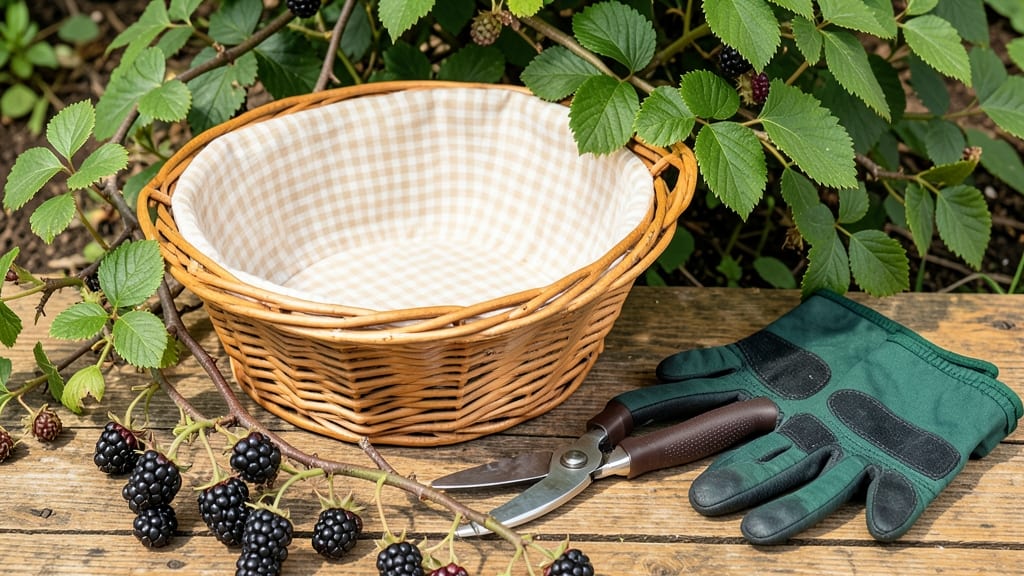
Summer in the Northern Hemisphere brings the blackberry harvest season, when your backyard transforms into a sweet, juicy treasure trove—but timing is everything.
Picture this: you’re reaching for a 🫐 that detaches with a gentle twist, its deep black color signaling peak ripeness. Miss that window, and you’re left with tart, underripe berries—or worse, a flock of birds beating you to the prize.
The secret? Two simple tests (pod color and stem flexibility) that turn guesswork into a foolproof routine.
Regional differences mean your harvest could start as early as June in warmer zones or stretch into September in cooler climates. Understanding these variations helps you plan ahead, whether you’re growing thornless varieties or classic brambles.
Here’s how to nail the harvest window: from tracking ripeness to maximizing yield, I’ll show you the exact cues to pick berries at their sweetest—and keep the bounty coming all summer long.

Blackberry harvest season timeline: when Northern Hemisphere summer berries ripen by region
Timing your blackberry harvest is all about understanding your local climate and variety. In the Northern Hemisphere, summer blackberries typically ripen between June and September, but exact dates vary dramatically by region.
Warmer southern climates like Florida or California often see harvests as early as May, while cooler northern zones like Canada or the Pacific Northwest may not reach peak ripeness until August or September. These variations mean gardeners must adjust expectations based on their USDA hardiness zone and microclimate.
Blackberries thrive in full sun (6-8 hours daily) and respond quickly to temperature shifts. A sudden heatwave can accelerate ripening by 5-7 days, while cooler summers may stretch the harvest window by 3-4 weeks. Tracking these shifts helps you anticipate when to monitor your plants closely.
For example, early varieties like 'Chester' ripen in late June in warm zones, while late varieties like 'Triple Crown' may not peak until mid-September in cooler areas.
| Region | Primary Harvest Window | Early Varieties | Late Varieties | Climate Note |
|---|---|---|---|---|
| Southern US (Zones 8-10) | Mid-May to early July | 'Chester', 'Arapaho' | 'Natchez', 'Ouachita' | Hot summers; harvest early to avoid sunburn |
| Midwest US (Zones 5-7) | Late June to August | 'Black Satin', 'Darrow' | 'Triple Crown', 'Prime-Ark Freedom' | Moderate summers; watch for early frosts |
| Pacific Northwest (Zones 6-8) | July to early September | 'Thornless Evergreen' | 'Boysenberry hybrids' | Cool, wet summers; extend season with shade |
| Northeast US/Canada (Zones 3-5) | Late July to September | 'Chewy', 'Kotata' | 'Black Diamond', 'Shawnee' | Short growing season; prioritize cold-hardy varieties |
| Europe (UK/France) | Late July to August | 'Loch Ness' | 'Bedford Giant' | Cooler summers; harvest before autumn rains |
To pinpoint your exact harvest window, use degree-day calculations, a gardening tool that tracks heat accumulation. Blackberries typically need 1,200-1,500 degree-days (50°F baseline) from bud break to ripeness. Tools like the National Weather Service or apps like GrowVeg can help you monitor this.
For example, in Zone 7, degree-days often hit the 1,200 mark by mid-July, signaling the start of harvest season for most varieties.
Regional microclimates also play a crucial role. A south-facing slope in the Rocky Mountains can ripen berries 2 weeks earlier than a nearby valley, while coastal areas like Oregon may experience delayed ripening due to cooler ocean breezes.
Pay attention to local weather patterns—heatwaves can cause berries to ripen unevenly, while prolonged rain may dilute flavor and spread diseases
The pod color shift & stem twist test: how to identify perfectly ripe blackberries every time
Summer in the Northern Hemisphere delivers blackberry harvest season in full force, but timing your pick is everything. Overripe berries turn mealy, while underripe ones stay tart and tough.
The key lies in two simple tests: the pod color shift and the stem twist test. These methods let you harvest at peak sweetness without damaging your plants.
Start with the pod color shift. Mature blackberries transition from deep red to fully black (or their variety's mature hue). Look for uniform coloration—no green or red patches.
Some varieties like 'Triple Crown' stay deep purple-black, while others like 'Arapaho' turn glossy black. This shift signals the berries are 90% ripe and ready for the final test.
🌱 Harvest Timing Pros & Cons
- Pod color shift ensures peak sweetness and flavor
- Stem twist test prevents plant damage during harvest
- Works for all blackberry varieties (thorned/thornless)
- No tools required—just visual inspection and gentle touch
- Overripe berries may split or attract pests if picked too late
- Underripe berries won't ripen off the plant—they stay tart
- Requires daily checks during peak harvest (June-August)
- Some varieties have gradual color changes, making timing tricky
Next, perform the stem twist test to confirm ripeness. Gently grasp a berry between your thumb and forefinger, then twist slightly. If it detaches cleanly with minimal force, it's ready to pick.
Resist the urge to pull hard—this can damage the plant's fruit-bearing canes. A berry that stays attached or requires force is underripe.
Common mistakes include picking berries based solely on size or ignoring color variations. For example, a large but red berry isn't ripe, while a small but fully black berry is.
Always check both the color gradient and stem flexibility together. This two-step method ensures you avoid the tart disappointment of underripe fruit or the mushy texture of overripe berries.
For thornless varieties like 'Natchez', the tests work the same, but handle berries with extra care to avoid bruising. If you're harvesting for jam or freezing, slightly underripe berries (still firm) are ideal—they hold their shape better during cooking.
But for fresh eating, fully ripe berries bursting with juice are the goal.
Protect your harvest by picking only what you'll use immediately or store properly. Leave some berries on the plant to ripen further—they'll continue maturing for 1-2 days post-harvest. With these tests, you'll transform your summer blackberry harvest into a season of sweet, juicy success every time. 🫐