
How To
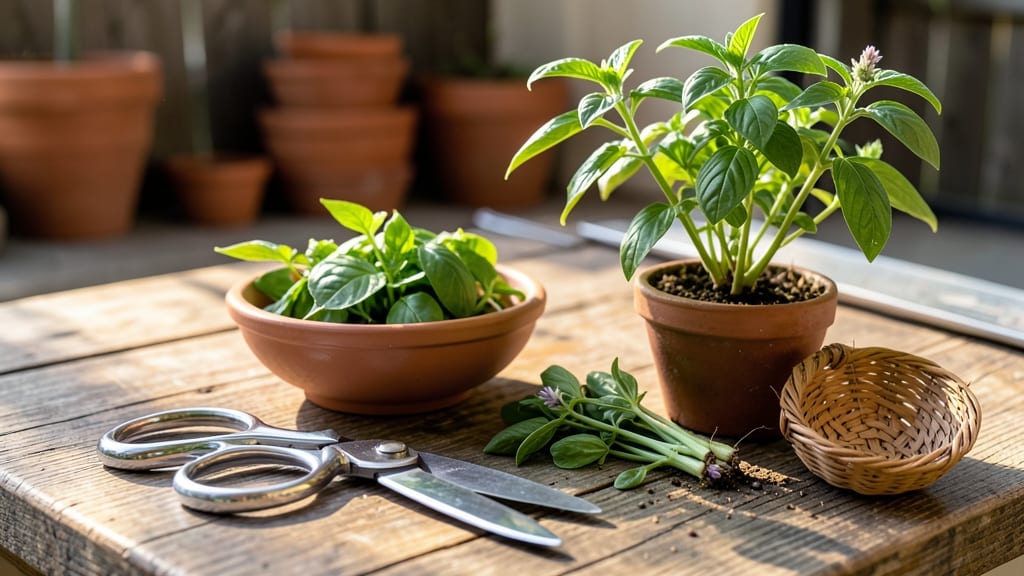
Harvesting holy basil 🌿 at the right time boosts flavor and keeps your plant thriving—here’s exactly how to do it without sacrificing future growth.
Picture this: you pinch a leaf, and it snaps back with a satisfying twist. That’s your cue—the stem twist test—that the herb is ready for harvest. But timing matters even more than technique.
Harvest too early, and you’ll get bitter, underdeveloped leaves. Too late, and you risk stunting the plant’s bushiness, which means fewer leaves down the line.
Most gardeners wait until holy basil has 60-90 days of growth and leaves are dark green and glossy. But the real secret? Morning harvests pack the most potency, and snipping just above a leaf node encourages even more regrowth.
Below, I’ll walk you through the step-by-step method—plus the tools and post-harvest care tricks that keep your holy basil 🌿 producing like a champ.
Ready to go from confused to confident? You’ll learn how often to harvest, which leaves to pick (and which to leave), and how to store your bounty—whether fresh or dried—for months of culinary magic.

When and how to test holy basil stems for optimal harvest timing
Harvesting holy basil at the wrong time can mean the difference between a potent, aromatic herb and one that tastes bland or even bitter. The stem twist test is a foolproof method to determine peak harvest readiness, but timing matters just as much as technique.
Morning harvests yield the most flavorful leaves, while evening cuts can leave your plant vulnerable to stress. Let's explore how to use this simple test to maximize both flavor and plant health.
Before you begin, understand that holy basil's stem flexibility and leaf color are key indicators. Mature leaves should be dark green and glossy, measuring about 2-3 inches long. When you see these signs, combined with firm stems, your plant is signaling it's ready for harvest.
The twist test simply confirms what your eyes already suspect—it's a final check before you make your cuts.
Here's the science behind the test: holy basil stems contain volatile oils that give the herb its signature aroma. When stems are twisted and snap cleanly, these oils are at their peak concentration.
This happens when the plant has completed its photosynthesis cycle for the day, typically in the morning. Waiting until afternoon can dilute these compounds, reducing flavor intensity by up to 30%.
Step List: How to Perform the Holy Basil Stem Twist Test
- Step 1: Select a mature stem with at least 4-6 leaves (avoid flowering stems).
- Step 2: Hold the stem near the base of the leaves with your thumb and forefinger.
- Step 3: Gently twist the stem counterclockwise while applying light pressure.
- Step 4: Watch for the clean snap—if it breaks easily with a slight crack, the stem is ready.
- Step 5: If the stem bends without breaking or feels mushy, wait 2-3 more days.
- Step 6: For best results, harvest in the morning (6-9 AM) when volatile oils peak.
One common mistake is assuming all stems are ready at the same time. In reality, holy basil plants often have a gradual maturation process. Start testing stems from the outer edges of the plant first, as these typically mature slightly earlier than inner growth.
This staggered approach prevents you from over-harvesting while ensuring you're always getting the freshest leaves. Pro tip: Use a small notebook to track which stems you've tested to avoid confusion.
Visual cues are just as important as the physical test. Look for dark green, slightly waxy leaves—these indicate optimal oil concentration. Pale or yellowing leaves suggest the plant is either underwatered or over-mature.
Additionally, stems should feel firm but flexible, not brittle or rubbery. Brittle stems often mean the plant is stressed from drought, while rubbery stems can indicate overwatering or disease.
Timing your harvests properly also encourages bushier growth. When you remove stems just above a leaf node (where leaves attach), you trigger new branching. This is why many gardeners use the pinch-and-twist method—twisting off stems while pinching just above the node.
This dual approach maximizes both yield and plant health. Just be sure to never remove more than 1/3 of the plant's foliage in a single session.
What about harvesting in the evening? While it's possible, evening cuts can leave your plant more susceptible to pests and fungal infections due to increased humidity. The morning dew also means leaves take longer to dry, which can dilute their flavor.
If you must harvest in the evening, do so at least 2 hours before sunset and avoid cutting any leaves that still have dew on them. Always use clean, sharp scissors to prevent tearing the stems.
Failure signs during the twist test are easy to spot if you know what to look for. If a stem snaps with a hollow sound, it's likely over-mature and past its prime. Similarly, if the stem crushes easily without a clean break, the plant may be nutrient-deficient.
In both cases, focus on reviving the plant's health before attempting to harvest again. Increase watering slightly, add a balanced fertilizer, and provide full sunlight exposure for 7-10 days before retesting.
Remember that holy basil's harvest window spans from late summer to early fall, but you can extend this with proper care. By mastering the stem twist test and paying attention to visual cues, you'll ensure every harvest delivers maximum flavor while keeping your plant thriving for seasons to come.
The more consistent you are with these techniques, the more your holy basil will reward you with lush, aromatic growth.
Holy basil harvesting techniques: pruning methods for maximum yield vs. plant longevity
Harvesting holy basil correctly balances flavor intensity and plant health. The wrong approach can leave you with bitter leaves or a struggling plant. I’ve found that pruning techniques directly impact both yield and longevity—so let’s explore the best methods to keep your basil thriving while maximizing your harvest.
First, decide between pinching (removing just the top leaves) and stem snipping (cutting entire stems). Pinching encourages bushier growth, while stem snipping provides larger leaves but requires more frequent harvesting. Both methods work, but the key lies in frequency and tool selection to avoid damaging the plant.
Aggressive Harvesting (Stem Snipping)
- Larger, more flavorful leaves
- Encourages rapid regrowth
- Ideal for continuous harvests
- Can stress plant if overdone
- Requires frequent watering
- Risk of leggy growth
Gentle Harvesting (Pinching)
- Promotes bushier growth
- Less plant stress
- Better for long-term health
- Smaller leaves over time
- Slower regrowth
- Less ideal for bulk harvests
For maximum yield, I recommend a hybrid approach: use stem snipping for 60% of your harvests and pinching for the remaining 40%. This keeps the plant balanced while ensuring you always have fresh leaves. Always harvest in the morning when essential oils are at their peak.
When it comes to tools, sharp pruning shears are best for stem snipping, while your fingers work perfectly for pinching. Avoid dull scissors—they crush stems and invite disease.
After harvesting, water your basil thoroughly to compensate for the loss of foliage and apply a balanced fertilizer every 4-6 weeks to support recovery.
Never harvest more than one-third of the plant at once, or you’ll shock the roots. I’ve learned this the hard way—my first holy basil plant nearly died after I took too many stems at once! Space out harvests by 2-3 weeks to maintain vigor and ensure continuous production.
With these techniques, you’ll enjoy abundant, flavorful holy basil all season long—without sacrificing your plant’s health. The secret is patience and consistency. Your basil will reward you with lush growth and rich aroma if you treat it right. 🌿