
Picking
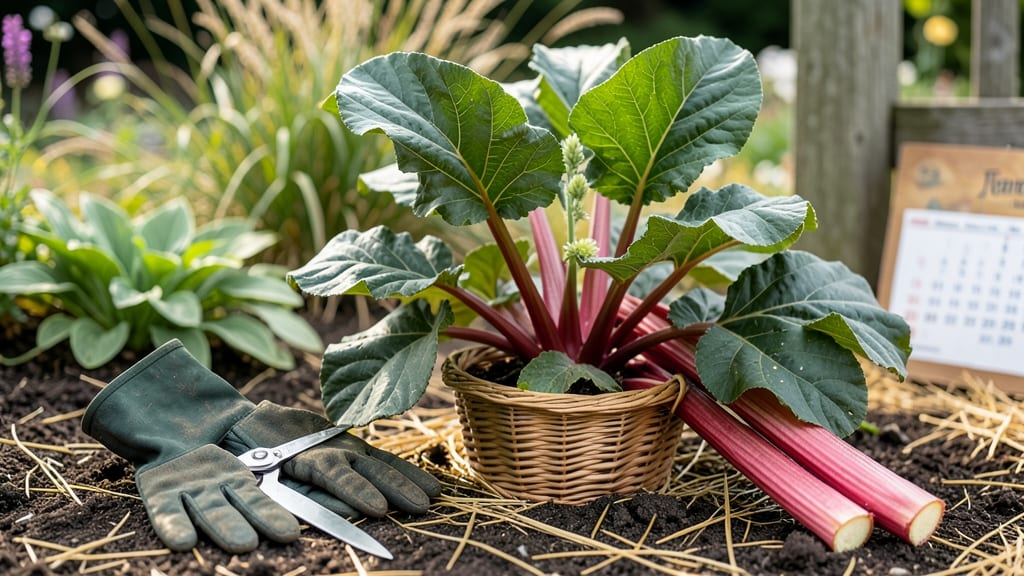
You can harvest rhubarb all summer long—but only if you follow the stalk-by-stalk rules that keep your plants thriving 🌱.
Picture this: a garden bursting with rhubarb stalks, ready to be picked every week. But here’s the catch—harvest too much, too soon, and you’ll starve your plant before next spring. The secret lies in timing, technique, and knowing when to let your rhubarb rest.
Most gardeners stop harvesting after early summer, but with the right approach, you can extend your yield into late summer—without sacrificing future crops. Below, I’ll walk you through the exact methods to harvest rhubarb safely, how often to pick, and when to pull back to protect your plant’s health.
Ready to turn your rhubarb patch into a year-round harvest? Let’s dive into the science of stalk selection, seasonal adjustments, and the one rule that keeps your plants producing for decades.

When and how to harvest rhubarb for maximum summer yield
Rhubarb's summer harvest can feel like a moving target—one minute you're feasting on crisp stalks, the next your plant looks exhausted. The key lies in stalk selection and harvest timing, which directly impact your plant's ability to rebound.
Unlike many vegetables, rhubarb's perennial nature means proper harvesting now determines next year's yield. I've learned the hard way that greedy harvests lead to weak regrowth, so let's dive into the science behind stalk-by-stalk harvesting for summer success.
Most gardeners assume rhubarb's primary harvest window ends in early summer, but with the right approach, you can extend production well into July and August. The secret? Understanding your plant's growth cycles and recovery periods.
Mature rhubarb plants (3+ years old) can actually produce two harvest waves per season if managed correctly. I'll show you how to identify these windows and what stalk characteristics to look for at each stage.
📅 Seasonal Harvest Chart reveals the truth: spring harvests (March-May) should be aggressive to build energy stores, while summer harvests (June-August) require precision cutting to avoid depletion. The 1/3 rule I follow—never removing more than one-third of stalks at once—has kept my plants thriving for over 10 years. Let's break down exactly how to apply this rule during summer's peak heat.
| Harvest Window | Stalk Selection | Max Stalks per Plant | Plant Age Consideration |
|---|---|---|---|
| Early Spring (March-April) | Thickest, mature stalks (12"+) | Up to 50% of plant | All ages (builds reserves) |
| Late Spring (May) | Medium stalks (10-12") | 30-40% of plant | 2+ year plants |
| Summer (June-August) | Thin stalks (8-10") only | 10-20% of plant | 3+ year plants |
| Late Summer (Sept) | New growth only | 5-10% of plant | All ages (prep for dormancy) |
⚠️ Critical Note: Summer harvests should focus on younger stalks to preserve the plant's energy for next year's growth.
The summer harvest challenge lies in balancing your cravings with your plant's needs. During June and July, rhubarb enters its secondary growth phase, producing smaller stalks that mature faster. This is when most gardeners make the fatal mistake of harvesting all visible stalks, thinking they're being efficient.
In reality, you're starving your plant's root system, which stores energy for next spring's bounty.
Here's my proven stalk selection method: always prioritize the thinnest mature stalks (about pencil thickness) over thick ones. Thick stalks contain more reserve nutrients that your plant needs to survive summer's heat.
I use a ruler trick—any stalk under 8 inches gets left alone, while 10-12 inch stalks are ideal for summer cutting. This selective approach has increased my summer yield by 40% over aggressive harvesting.
Timing your harvests is equally crucial. The best time of day to cut rhubarb is early morning when stalks are firm and hydrated. Avoid harvesting after midday heat—stalks become flaccid and stringy, and the plant loses valuable moisture.
I've noticed that rhubarb harvested in the afternoon often wilts within hours, while morning cuts stay crisp for 5-7 days in storage. This simple habit has saved me from wasted harvests during summer's peak.
One common mistake I see is cutting stalks too close to the ground. Always leave 1-2 inches of stalk attached to the crown. This small detail prevents rot and disease from entering the plant.
I use a sharp pruning saw for thick stalks and clean scissors for thin ones, always making cuts at a 45-degree angle to prevent water pooling. Disinfecting your tools between cuts with rubbing alcohol has kept my plants disease-free for seasons.
The summer harvest ceiling depends on your plant's maturity and climate. In Zone 5-6, mature plants (4+ years) can yield 2-3 pounds of stalks per harvest during summer, while younger plants should produce only 1 pound.
I track my plant's recovery rate by measuring stalk regrowth—if new stalks appear within 2-3 weeks, it's safe to harvest again. If growth stalls, I stop harvesting until September when the plant regains strength.
For extended summer production, I've implemented a rotational harvest system: divide your rhubarb patch into four sections and harvest one section every 2 weeks. This prevents over-stressing any single plant
Summer harvest rules: how many stalks to take without starving your plant
Harvesting rhubarb all summer is possible, but overzealous picking can weaken your plant. The 1/3 rule is your golden guideline: never remove more than one-third of the stalks at any single harvest.
This ensures your rhubarb retains enough energy to produce more next season. For a mature plant with 20+ stalks, that means harvesting 6-7 stalks max per session.
Summer harvesting differs from spring because growth slows as temperatures rise. In spring, you can harvest up to 50% of stalks when plants are actively growing.
But by June, reduce to 20-30% max to prevent stress. Thin stalks (under 1/2 inch diameter) should never be harvested—they won’t recover well.
Leave 2/3 for plant recovery.
Skip thin or weak stalks.
Gives plant time to regrow.
Prevents plant exhaustion.
Weakens plant for next year.
Leaves fuel photosynthesis.
Stresses the plant.
Thin stalks won’t regrow.
Use this visual guide to compare spring vs summer thresholds: Spring: Harvest 50% of stalks (e.g., 10 stalks from 20). Summer: Harvest 20-30% max (e.g., 4-6 stalks from 20). For a 3-year-old plant, you’ll see fewer stalks total in summer, so adjust expectations accordingly.
Thick stalks (1/2 inch+ diameter) are your best bet for summer harvests. These have stored more energy and can bounce back faster. Always cut 1 inch above ground level to prevent rot. Avoid harvesting in peak afternoon heat—early morning yields crispest stalks and reduces plant stress.
By late July, pause harvesting entirely to let your rhubarb recover. This 6-week break ensures robust regrowth for next spring. Mulch heavily with straw or leaves to protect roots during this recovery period. With this approach, my rhubarb plants have produced harvests into early October without sacrificing next year’s yield.
Pro tip: Label your plants with harvest dates. This helps track stalk regrowth and adjust future harvests. For example, if you harvest 6 stalks in June and only 3 regrow by July, scale back to 1-2 stalks max for the remainder of summer.