
Vegetables
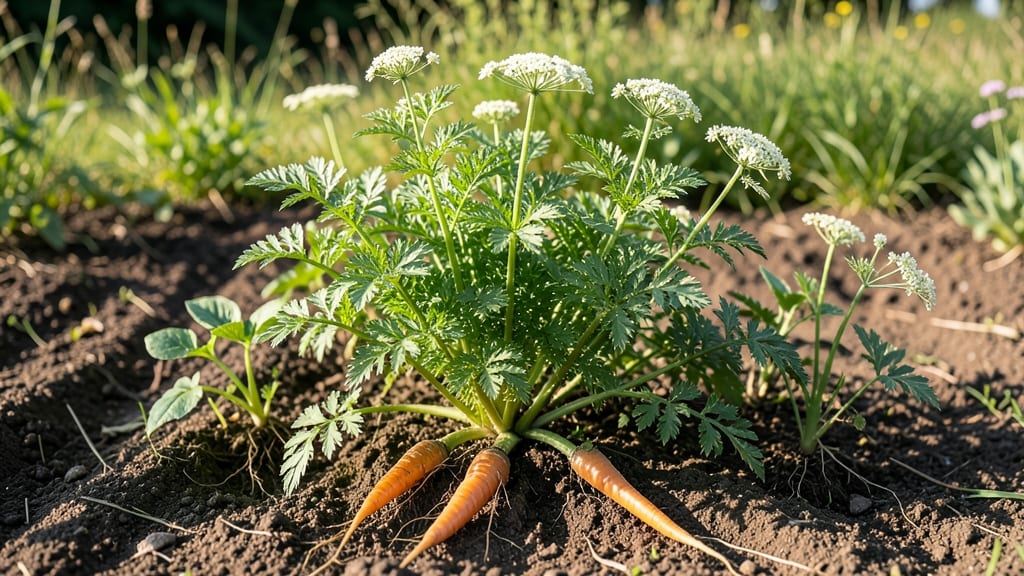
Growing carrots from seed to harvest takes about 70 days — but only if you nail the soil, spacing, and timing, or you’ll end up with forked, bitter roots instead of sweet, crisp rewards.
Picture this: you’ve sown your 🥕 seeds with high hopes, only to watch them struggle in compacted soil or bolt in the heat. The difference between a perfect harvest and a disappointing one often comes down to understanding each growth stage and adjusting for your climate.
In this guide, I’ll walk you through the exact timeline from seed to harvest, including how to prep your soil, thin seedlings properly, and spot the signs that your carrots are ready to pull.
You’ll also learn how to troubleshoot common issues like forking or stunted growth, so you can enjoy a bountiful harvest of homegrown carrots all season long.

Carrot growth stages from seed to harvest with exact timeline
Growing carrots from seed to harvest is a rewarding process that requires patience and attention to detail. Understanding each growth stage and its precise timeline helps you anticipate needs and troubleshoot issues before they arise.
From the first seed germination to the moment you pull a perfect crunchy carrot from the soil, every phase matters.
Carrots typically take between 50 to 85 days to reach harvest, depending on the variety and growing conditions. The journey begins with seed germination, which is highly sensitive to soil temperature and moisture.
Once sprouted, the plant transitions through leaf development and root expansion, each requiring specific care to ensure healthy growth.
Soil temperature is critical—carrot seeds need soil that's at least 50°F (10°C) to germinate. Planting too early in cold soil can delay germination by weeks, while ideal conditions (60-70°F or 15-21°C) ensure seeds sprout within 7 to 14 days. This stage sets the foundation for everything that follows.
Here’s a detailed breakdown of each growth stage, including key indicators and exact timelines to help you track progress:
During the seedling stage, your carrots will develop their first true leaves, which look like delicate ferns. This phase lasts roughly 2 to 4 weeks and is when you’ll need to thin seedlings to prevent overcrowding.
Use sharp scissors to snip unwanted sprouts at soil level, leaving the strongest plants spaced 2–3 inches apart for standard varieties.
As your carrots enter the root expansion phase (around 30 days after planting), focus on maintaining consistent moisture to prevent forking or woody roots. Loose, well-drained soil is essential—compacted soil forces roots to grow unevenly.
If you notice forked carrots, amend the soil with compost and avoid disturbing the roots during watering.
The final stage is maturity, where your carrots reach harvest size. Most varieties are ready in 70 to 85 days, but shorter varieties like Paris Market can be harvested in as few as 50 days.
Watch for firm skin and lush green tops—these are clear signs your carrots are ready to pull. For best flavor, harvest in the morning after watering to loosen the soil.
Pro tip: If your carrots bolt (send up flowers) before reaching maturity, it’s often due to temperature stress or drought conditions. Choose bolt-resistant varieties like Danvers or Nantes for longer harvest windows, especially in warm climates.
Mulching with straw helps regulate soil temperature and retain moisture, extending your harvest season.
🌱
Critical factors that speed up or delay carrot harvest time
Your carrots' journey from seed to harvest can vary dramatically based on four key factors: soil type, sunlight exposure, watering consistency, and temperature stability.
Each plays a crucial role in determining whether you'll enjoy crunchy carrots in 50 days or wait impatiently for 85 days or longer. As someone who's planted carrots in everything from heavy clay to sandy loam, I've learned these variables can make or break your harvest timeline.
Let's start with soil type, which is often overlooked by beginners. Carrots thrive in loose, well-draining soil that's free of rocks and clumps. Compacted or rocky soil forces roots to grow unevenly, creating forked or stunted carrots that take longer to mature.
I once planted in garden soil with hidden pebbles—my harvest was delayed by 2-3 weeks and the roots were misshapen. The fix? Amend your soil with compost or sand to create that perfect fluffy texture.
Now, let's talk sunlight exposure. Carrots need 6-8 hours of direct sunlight daily for optimal growth. In my Zone 6 garden, I've noticed that partial shade (like under apple trees) can extend the harvest time by 10-15 days while reducing yield.
The leaves need sunlight to photosynthesize and fuel root growth. If your garden is shady, consider container growing near a south-facing window or using reflective surfaces to maximize light.
Here's where many gardeners trip up: watering frequency. Carrots need consistent moisture, but they hate soggy soil. I learned this the hard way when I overwatered during a rainy spell—my carrots developed soft, pithy centers and took nearly 3 weeks longer to reach harvest size.
The golden rule? Water deeply 1-2 times per week (about 1 inch total) and always in the morning to prevent fungal issues. Mulching helps maintain even moisture without drowning the roots.
🚨 WARNING: Common Mistakes That Stretch Your Harvest Timeline 🚨
⚠️ Inconsistent Watering: Drought stress causes bitter, woody roots that take longer to recover. Fix: Use drip irrigation for steady moisture.
⚠️ Overcrowding: Planting seeds too close (less than 1 inch apart) leads to competition for nutrients, delaying growth by 10+ days. Fix: Thin seedlings to 3-4 inches apart when they're 2 inches tall.
⚠️ Temperature Fluctuations: Cold snaps below 50°F or heat waves above 85°F slow germination and growth. Fix: Use row covers in spring/fall and plant in early morning shade during summer.
Temperature fluctuations are another silent harvest time thief. Carrots germinate best in soil temperatures between 60-85°F. Below 50°F, seeds may rot in the soil, while consistent heat above 85°F can cause bolting (premature flowering).
In my experience, planting in late spring or early fall (when temps are moderate) consistently yields harvests 1-2 weeks faster than summer plantings. For summer gardens, I always mulch heavily to keep roots cool.
Let's talk about how to optimize these factors for faster results. Start by testing your soil pH (6.0-7.0 is ideal) and amending it with compost or lime if needed. For sunlight, consider reflective mulches like white plastic to bounce extra light to plants.
When it comes to watering, invest in a moisture meter—I keep mine buried near my carrot patch to avoid guesswork. And for temperature control, succession planting in 2-week intervals ensures a steady supply of fresh carrots throughout the season.
Remember, every garden is different. What works for my sandy loam soil in Zone 6 might need adjustments for your climate. The key is monitoring and adapting. Start a simple growth journal noting when you plant, soil conditions, and any deviations from the norm.
Over time, you'll spot patterns that help you predict—and control—your harvest timeline like a pro. 🥕