
Picking
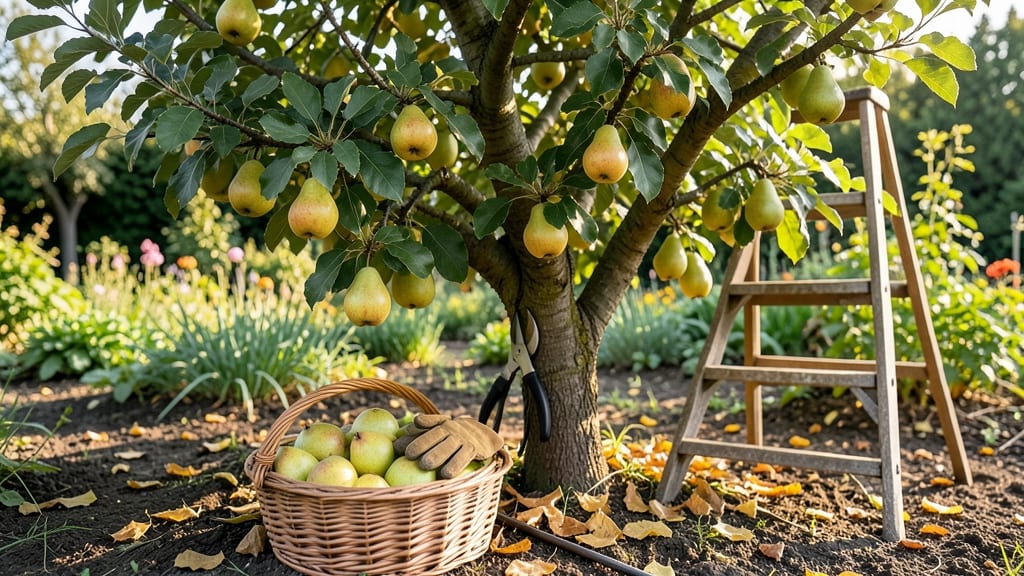
The time to harvest pears is when they’re ripe enough to eat fresh but still firm enough to store—a sweet balance that changes by variety and climate.
Picture this: you twist a pear from the branch, and it releases with a gentle plop—no tugging, no resistance. That’s the moment you’ve been waiting for, but it’s not just about the twist.
The real secret lies in three simple tests most gardeners overlook, like checking the stem’s readiness or the telltale shift in skin color.
If you’ve ever bitten into a pear that’s too firm or mushy, you know timing matters. In Zone 6a, where pears ripen between August and October, these tactile cues become your roadmap to peak flavor. Miss them, and you’re left with fruit that’s either bland or spoiled.
Below, I’ll walk you through the three key tests to pick pears at their sweetest, plus how to store them so they stay fresh for weeks—no guesswork, just science-backed tricks from orchardists.

3 Tactile tests to determine perfect pear ripeness
Picking pears at the perfect moment transforms a simple fruit into a juicy, flavorful masterpiece. But without knowing the exact signs, you risk harvesting too early—resulting in mealy, bland pears—or too late, leading to overripe mush.
The key lies in three simple tactile tests that reveal when pears are primed for picking. These methods work for 10+ common varieties, from Bartlett to Anjou, ensuring you never miss peak sweetness again.
First, let’s clarify: Pears don’t ripen on the tree like tomatoes. Instead, they reach a harvest-ready stage where they’ll soften and sweeten post-pick. The three tests below help you identify that exact moment—before they overripen or fall prey to pests.
Master these, and you’ll enjoy pears at their peak texture and flavor every time.
Why tactile tests matter: Visual cues alone (like color) can be misleading, especially in cloudy climates or for varieties with green skins. These hands-on checks account for internal ripeness, ensuring you pick pears that’ll deliver the best eating experience. For example, a Bartlett pear might look golden but still taste tart if harvested too soon.
The first test is the stem check, which reveals whether the pear is ready to separate from the tree. Gently grasp the pear near the stem and twist it slightly. If it detaches with minimal resistance and the stem doesn’t snap back, it’s ready.
A green stem or one that resists twisting means the pear needs more time. This test is especially critical for Bartlett pears, which often ripen earlier than other varieties.
Next, perform the gentle squeeze test to assess internal ripeness. Hold the pear firmly in your palm and apply light pressure. A ripe pear will yield slightly (about 1/4 inch) but won’t feel mushy. If it’s rock-hard, it’s underripe; if it’s too soft, it’s overripe.
For Bosc pears, which are firmer at harvest, a slight dent that doesn’t spring back is ideal. This test helps you avoid the mealy texture that plagues prematurely picked pears.
The third test focuses on color shift, though this varies by variety. Most pears develop a more uniform hue as they ripen—think golden-yellow for Bartletts or deep green-yellow for Anjou. However, don’t rely solely on color, as Asian pears stay green even when ripe.
Instead, combine this with the first two tests for accuracy. For example, a Bosc pear might have brown stripes but still need a few more days if the stem check fails.
Pro tip: Harvest Asian pears when they’re fully colored and pass the stem test, as they won’t soften further after picking. Unlike European pears, they’re crisp and sweet at harvest, so timing is everything.
For late-season varieties like Seckel, wait until the gentle squeeze shows a clear yield—these pears often ripen later in the season.
Environmental factors can throw off these tests. Hot, dry weather may cause pears to ripen faster, while
When and how to harvest pears for maximum flavor
Timing your pear harvest correctly is an art that balances science and patience. Unlike apples, pears won't ripen on the tree—once picked, they must complete ripening off the branch. This means knowing exact harvest windows by variety and using the right techniques to preserve their peak sweetness and texture.
Early-season varieties like Bartlett and Seckel typically ripen in late summer (August-September), while late-season types such as Bosc and Anjou reach harvest readiness in early to mid-fall (October-November). Regional climates also play a role—cooler areas may delay ripening by 1-2 weeks compared to warmer zones.
- 📅 Early Varieties: Harvest Bartlett and Seckel when skin turns yellow-green and fruit detaches easily.
- 📅 Late Varieties: Pick Bosc and Anjou when color deepens to golden-brown or reddish.
- ⏰ Time of Day: Harvest in morning hours when fruit is coolest and firmest.
- 🌡️ Temperature Check: Avoid picking after frost threats—pears won’t ripen properly afterward.
- 🤲 Gentle Twist Test: Ready pears should detach with slight pressure—no resistance needed.
For home gardeners, hand-picking is ideal because it allows you to inspect each fruit individually. Use pruning shears to cut stems 1/4 inch above the fruit to prevent bruising.
If you're dealing with a large commercial orchard, mechanical harvesters can work, but they require precise timing—pears must be at 75-85% ripeness to avoid damage during shaking.
Once harvested, store pears in a cool (32-40°F), humid (90-95%) environment like a root cellar or refrigerator. Ethylene-sensitive varieties (like Anjou) should be stored separately from ethylene-producing fruits (e.g., apples) to prevent premature softening. Check stored pears weekly—overripe fruit should be used immediately to avoid spoilage.
Pro tip: Label your harvest by variety and date. Some pears, like Asian pears, ripen faster than European types and may need separate storage. With the right timing and care, your homegrown pears will stay firm, sweet, and flavorful for weeks after harvest.
Remember, the earlier you harvest, the longer they’ll keep—but don’t wait too long, or you’ll end up with mealy, flavorless fruit. Balance is key, and your taste buds will thank you!