
Vegetables
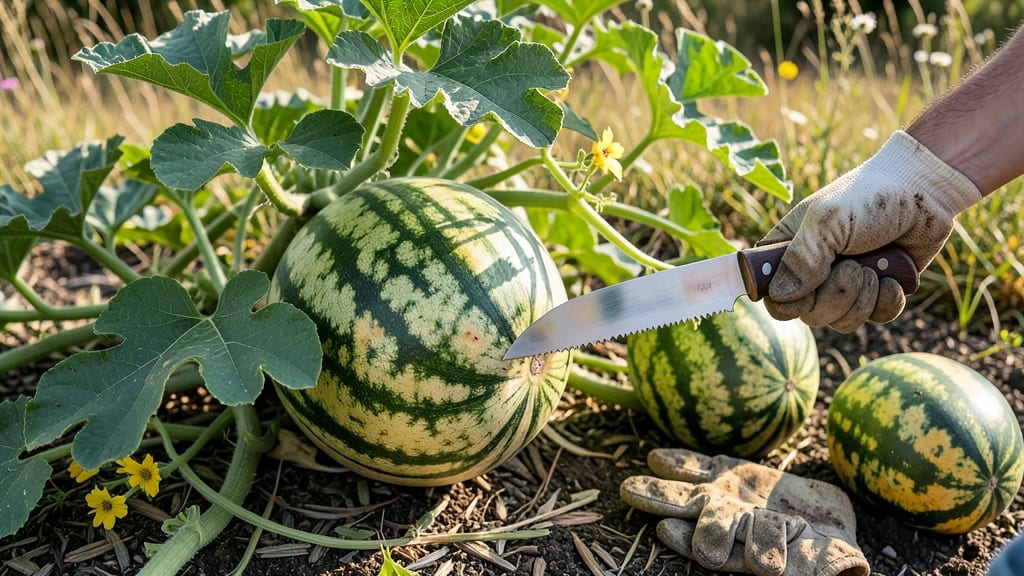
Timing your watermelon 🍉 harvest right means the difference between a sweet, juicy prize and a mealy disappointment — and the key is knowing when to pull the trigger based on your zone.
Picture this: you’ve waited months for those vines to sprawl, the fruit has swelled to the size of a small pumpkin, but you’re not sure if it’s ready. One wrong move, and you’ll either waste a perfectly good melon or miss the frost-free window entirely.
I’ve been there, and trust me, the thump test alone won’t cut it.
Beyond the classic 75-day rule, your USDA zone dictates when to harvest — whether you’re in the humid South or the shorter summers of Zone 6a. We’ll break down the exact frost-free deadlines by region, plus the sneaky visual cues (like that creamy underside or a hollow rattle) that tell you the melon is begging to be picked.
By the end, you’ll know not just when to harvest, but how to store your bounty so it stays crisp for weeks. No more guessing games — just a foolproof plan to turn your garden into a watermelon goldmine.

Watermelon harvest time by USDA plant hardiness zones: exact frost-free deadlines
Timing your watermelon harvest correctly depends on your USDA hardiness zone and local frost dates. Watermelons need 75-90 days to mature, but a single light frost (32°F) can ruin unripe fruit. Knowing your zone’s frost-free window helps you avoid bitter, underripe harvests and ensures maximum sweetness.
In cooler zones (3-5), watermelons are high-risk crops due to short summers. Gardeners here often opt for earlier-maturing varieties like 'Sugar Baby' (70 days) or use row covers to extend the season.
Meanwhile, warmer zones (9-11) enjoy longer harvest windows, allowing for larger varieties like 'Crimson Sweet' (85 days) without frost concerns.
Use this table to find your frost-free deadline and calculate your ideal harvest window. Planting dates and variety choices vary dramatically by zone—adjust your schedule to avoid late-season frost damage.
In Zones 3-5, your watermelon harvest must finish by early August to avoid frost damage. Plant heat-tolerant varieties like 'Black Diamond' (75 days) and use black plastic mulch to warm the soil faster. If your first frost arrives early, consider container growing to move plants indoors during cool nights.
Gardeners in Zones 6-8 have the most flexibility, with harvests spanning July through September. This is ideal for larger varieties like 'Charleston Gray' (80 days) or 'Moon and Stars' (90 days). Monitor soil temperatures—watermelons need 70°F+ to thrive, so wait until late April or early May to plant.
For Zones 9-11, frost is rarely a concern, but heat stress can become an issue. Plant shade-tolerant varieties like 'Triple Crown' (75 days) in early spring or fall to avoid peak summer temperatures.
In these zones, you can even harvest two crops per year if you plant in March and August.
Always check your local microclimate—valleys and low-lying areas frost earlier than hills. Use a frost calendar from your local Cooperative Extension Service for precise dates. Adjust your planting schedule if you experience unusually hot springs or cool summers.
Pro tip: In Zones 3-5, plant watermelon seeds indoors 4-6 weeks before your last frost date. Transplant seedlings after soil warms to 70°F to give vines a head start. This extends your harvest window by 2-3 weeks.
If you’re unsure about your exact frost dates, use a frost prediction app like FrostWatch or check historical data from NOAA’s Climate Data. Watermelons are frost-sensitive—even a light freeze (28°F) can damage leaves and stunt fruit development.
Plan ahead: Start with fast-maturing varieties in cooler zones, and save larger, slower varieties for warmer climates. Your harvest timing should align with your zone’s frost-free window—not just the seed packet’s days-to-maturity.
How to time your watermelon harvest for peak ripeness (not just size)
Counting days to maturity on the seed packet is a great starting point, but watermelons don't ripen overnight. The real secret to harvesting at peak sweetness lies in reading your plants—and understanding how soil temperature triggers ripening.
Even if your watermelon hits the minimum 60 days, it might still be rock-hard inside if you ignore these key signals.
First, let's debunk a common myth: size alone doesn't guarantee ripeness. I've seen 10-pound melons that tasted like water because they were harvested too early. Meanwhile, smaller melons—sometimes as small as 5 pounds—can be bursting with flavor if all the right conditions align.
Your harvest timing should focus on a combination of visual cues, physical tests, and environmental factors.
Here’s my foolproof system for nailing the perfect harvest window, no guesswork required:
Pro tip: If you planted early in the season, your first melons might take longer to ripen because cooler spring soils delay sugar development. In these cases, I recommend covering vines with black plastic mulch 2-3 weeks after planting to warm the soil faster.
For late plantings, focus on shorter-day varieties (like 'Sugar Baby') that mature in 60-65 days to avoid fall frost.
One mistake I see often is harvesting based on color alone. While dark green rinds with stripes are classic, some varieties (like yellow-fleshed watermelons) may never develop those stripes. Instead, rely on the underside color and the thump test—these never lie.
And remember: Overripe watermelons lose sweetness and develop a grainy texture, so don’t wait too long after these cues appear.
Once you’ve mastered these signs, you’ll never again guess whether your watermelon is ready. The first time I used the thump test and cut into a melon that was perfectly sweet, I felt like a watermelon whisperer. Now it’s your turn to try—your taste buds will thank you!