
Vegetables
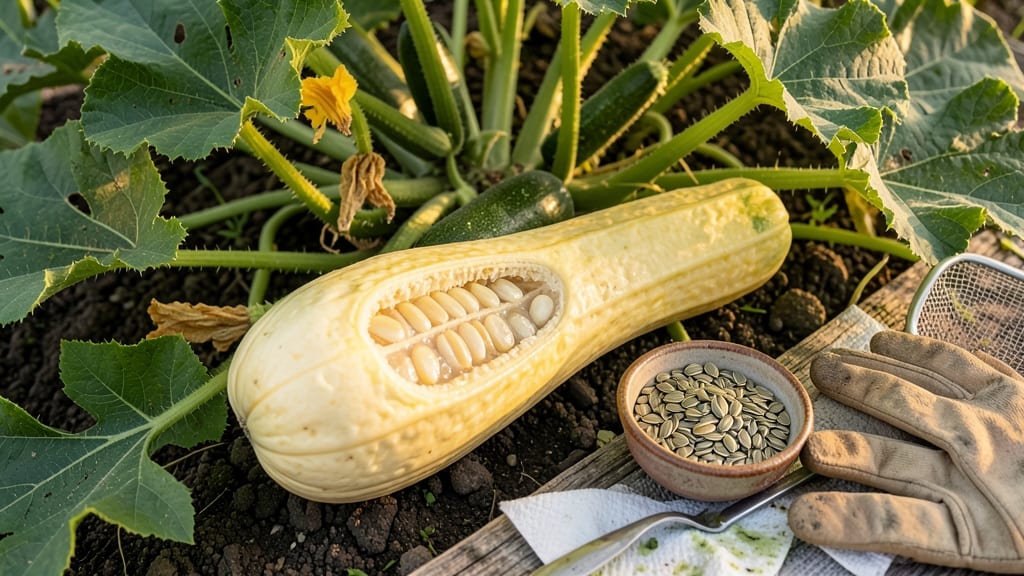
Harvesting zucchini seeds from your garden is one of the simplest ways to save money and preserve heirloom quality for next year’s plants 🎃.
But if you’ve ever opened a zucchini only to find mushy seeds or struggled with drying techniques, you know how frustrating it can be to get reliable results.
This guide covers the exact steps to extract and dry seeds—whether you prefer fermentation or air-drying—so you end up with high-germination seeds ready for planting.
You’ll also learn the best storage methods to keep seeds viable for years, plus troubleshooting tips for common challenges like mold or low germination rates.
When and how to harvest zucchini seeds for maximum viability
Harvesting zucchini seeds at the right time ensures high germination rates and strong heirloom quality for next year’s garden. The key is selecting overripe zucchini—those that have turned yellow or brown and feel soft when pressed.
These fruits signal that the seeds inside are fully mature and ready for extraction. If you miss this window, seeds may not sprout properly, wasting your effort and resources.
Start by choosing heirloom varieties for seed saving, as hybrid zucchini may not produce true-to-type plants. Look for zucchini that have yellowed stems and a slightly mushy texture. These are clear signs that the seeds inside are fully developed and ready to be harvested.
Avoid picking zucchini too early, as immature seeds won’t germinate well, leaving you with disappointing results.
Once you’ve identified the perfect zucchini, cut them from the vine using clean pruners or a sharp knife. Leave a small portion of the stem attached to help with drying later.
Place the zucchini in a well-ventilated area out of direct sunlight to prevent mold growth. This step is crucial for preserving seed quality and ensuring a smooth extraction process.
Now, let’s dive into the step-by-step process for harvesting zucchini seeds. Follow these proven techniques to maximize seed viability and make the most of your garden’s bounty.
Cut the zucchini in half lengthwise using a sharp knife. Scoop out the seeds and gel into a bowl, being careful not to puncture the skin.
Place the seeds and gel in a fine-mesh strainer and rinse under cool water to remove excess pulp. Swirl gently to avoid damaging the seeds.
For higher viability, ferment the seeds in water for 3 days. This removes the gel and helps separate viable seeds from non-viable ones. Stir daily to keep seeds submerged.
Spread seeds on a paper towel or screen in a warm, dry place (like a sunny windowsill). Stir occasionally to ensure even drying, which typically takes 3-5 days.
Once completely dry, store seeds in a paper envelope or airtight container in a cool, dark place. Label with the variety name and harvest year for future reference.
After drying, your zucchini seeds should be hard and wrinkled to the touch. If they still feel soft or sticky, give them a few more days to dry completely. Properly dried seeds can last 3-5 years when stored correctly, giving you a reliable supply for future plantings.
This method ensures you’re always ready to grow your favorite heirloom varieties without relying on store-bought seeds.
One common mistake is overlooking seed viability tests. Before storing, conduct a simple float test: place a handful of seeds in water. Viable seeds sink, while non-viable ones float.
Discard the floaters to improve your germination success rate. This small step can save you from disappointment when planting next season.
For best results, harvest seeds from multiple zucchini plants to ensure genetic diversity. This practice helps maintain strong, healthy plants in your garden and reduces the risk of disease or pests affecting your entire crop.
By following these steps, you’ll create a self-sustaining seed supply that keeps your garden thriving year after year.
Remember, the earlier you start saving seeds, the more you’ll learn about your plants’ unique traits. Over time, you’ll refine your techniques and even develop your own heirloom varieties tailored to your climate. Happy seed saving!
Best drying techniques for zucchini seeds: fermentation vs. air-drying compared
Once you’ve extracted your zucchini seeds, the next critical step is drying them properly to ensure high germination rates. Two popular methods—fermentation and air-drying—each have unique benefits.
Fermentation removes seed coatings and reduces mold risks, while air-drying is simpler but requires patience. Let’s break down both techniques so you can choose the best fit for your garden.
Fermentation, also called the 3-day method, mimics natural processes to clean and dry seeds efficiently. This technique is especially useful for hybrid zucchini varieties, where seed coatings can hinder germination.
Meanwhile, air-drying is a low-tech approach that works well for heirloom seeds and requires minimal equipment. Both methods yield viable seeds, but germination rates and ease of use differ significantly.
To ferment your zucchini seeds, start by placing them in a jar with water, covering them completely. Let them soak for 3 days, stirring daily to prevent mold.
The seeds will sink to the bottom, and any bad seeds or debris will float to the top—simply skim these off. After fermentation, rinse the seeds thoroughly and spread them on a paper towel to air-dry for 1-2 days.
This method is ideal if you’re dealing with hybrid zucchini or want to maximize germination rates.
For air-drying, rinse your cleaned seeds and pat them dry with a paper towel. Spread them in a single layer on a screen or mesh in a warm, dry place, away from direct sunlight. Stir them occasionally to ensure even drying.
This process can take 7-14 days, depending on humidity levels. While slower, air-drying is perfect for heirloom varieties and requires no special equipment beyond what you already have at home.
If you’re short on time, fermentation wins for its faster results and higher germination rates. However, if you prefer a hands-off approach and have the patience, air-drying is a reliable alternative.
Both methods work well, but fermentation is especially effective for removing seed coatings that can block moisture absorption during germination. Test both techniques with a small batch to see which yields the best results for your garden.
Once your seeds are fully dry—when they’re hard and rattle inside their pods—store them in a cool, dark place like a sealed envelope or jar. Label them with the variety name and date to track their viability.
With proper drying, your zucchini seeds can last for years, ensuring a bountiful harvest season after season.