
How To
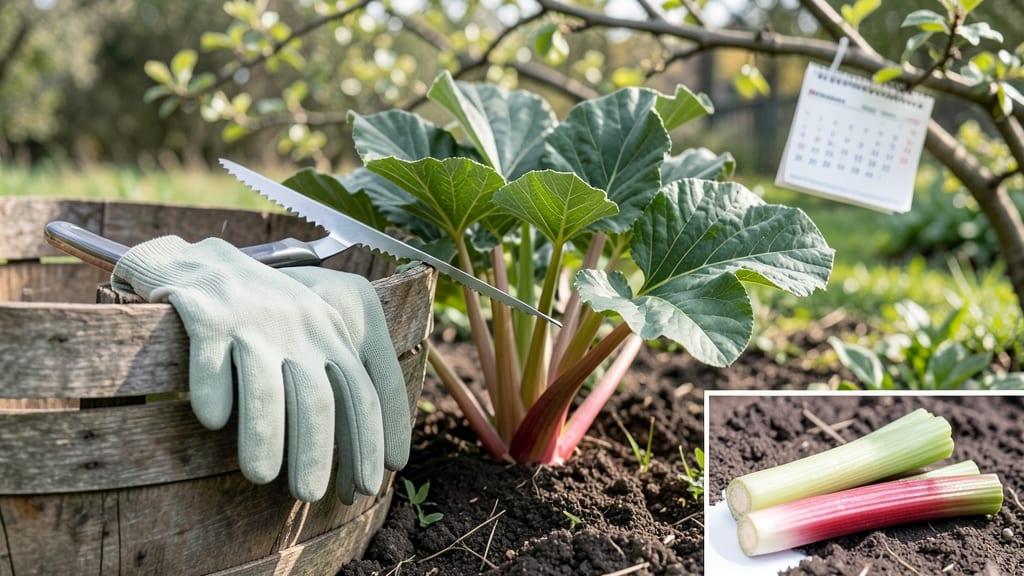
To harvest rhubarb at its peak tartness, wait until stalks reach 8-12 inches and develop vibrant color—whether deep pink, red, or green—because timing makes all the difference.
Picture this: you’ve nurtured your 🍃 rhubarb all winter, and now the stalks are thick and snappy, practically begging to be picked. But harvest too soon, and the flavor falls flat; wait too long, and the texture turns woody.
That’s the tightrope every gardener walks—and the key to turning your patch into a kitchen staple.
In Zone 6a, where spring frosts linger into April, the ideal window opens after the last frost, usually by mid-April. Younger plants (Year 1) need gentle handling, while mature crowns can yield 1/3 of their stalks without stress.
Below, I’ll break down the exact color and size cues to watch for, plus how to cut stems to keep your rhubarb thriving for years.
You’ll also discover how to store your harvest to preserve that bright acidity, avoid the 3 biggest mistakes that ruin flavor, and even tweak your timing for early or late varieties. Ready to turn your rhubarb into a season-long star?

Rhubarb harvesting timeline: when to pick by stem color and size
Timing your rhubarb harvest is an art—cut too soon, and you’ll get bland, woody stalks. Wait too long, and the stems turn stringy or tough. The secret lies in watching for three key cues: stem color, stalk thickness, and seasonal readiness.
Early varieties like 'Early Red' may be ready in late April, while late types like 'Victoria' peak in June. I’ve learned that patience pays off: a 10-inch pink stalk in May tastes far superior to a 6-inch green one in March.
Most gardeners focus on stem color, but size matters just as much. A thick, fleshy stalk (about 1.5 inches in diameter) signals peak sweetness. Thin stalks under 1 inch are still developing their signature tartness.
I once harvested a batch of pale green stalks in early spring, only to discover they lacked the vibrant flavor of their deeper-colored siblings later in the season.
Here’s the golden rule: never harvest more than one-third of the stalks in the first year. This protects the rhubarb crown and ensures a bountiful harvest for years to come.
In my garden, I mark stalks with a soft cloth tag to track which ones I’ve already picked, preventing over-harvesting.
Color isn’t just about aesthetics—it’s a flavor indicator. Deep red or pink varieties like 'Cherry Red' develop richer sugars when fully mature, while green types like 'Green Stem' stay milder but crispier.
I always prioritize stalks with uniform color and no green streaks near the base, as these are the sweetest. Pro tip: Cut stalks at a 45-degree angle just above a leaf junction to encourage new growth.
Regional timing varies dramatically. In Zone 5, I harvest as early as late April, while in Zone 8, I wait until May to avoid frost damage.
Early varieties like 'Timperley Early' often produce harvestable stalks by late April, but they’ll never match the flavor of June-picked 'Victoria' stalks. I’ve found that morning harvests yield the crispest stalks, as evening heat can make them limp.
One mistake I made early on was harvesting leaves along with stalks—a common error! Rhubarb leaves contain oxalic acid, which is toxic. Always cut only the stalks, leaving the large leaves intact to photosynthesize and feed the plant.
I now use a sharp pruning shear to make clean cuts, which also reduces the risk of disease entering the plant.
For extended harvests, I’ve experimented with mulching in early spring to warm the soil and jumpstart growth. This can push the season back by 1-2 weeks, giving me more time to enjoy fresh stalks.
Conversely, late-season mulch can protect tender stalks from early frosts, preserving them for a few extra weeks of harvest.
Store harvested rhubarb in the crisper drawer of your fridge for up to 2 weeks. Wrap stalks in a damp paper towel to retain moisture, and avoid washing until you’re ready to use them.
I’ve also found that freezing stalks in their peak condition works well for winter recipes—just blanch them for 2 minutes first to preserve texture.
Remember: rh
Step-by-step rhubarb harvesting technique to preserve plant health
Harvesting rhubarb correctly ensures a bountiful yield for years to come. The key lies in timing, cutting technique, and plant preservation. Unlike many vegetables, rhubarb’s stems are the edible part, but over-harvesting can weaken the crown and reduce future productivity.
Start harvesting in the second year after planting, once stalks reach 8–12 inches tall and develop vibrant color. Early harvesting—before the plant is fully established—can stunt growth, so patience is critical. Use a sharp knife or pruners to avoid tearing stems, which invites disease.
⚠️ callout warning
⚠️ Avoid These Harvesting Mistakes
1. Cutting too close to the crown: Leave 1–2 inches of stem attached to protect the plant’s energy reserve. Severing the crown weakens future growth.
2. Harvesting in the first year: Let young plants focus on establishing roots. Over-harvesting can kill the crown before it matures.
3. Pulling stalks instead of cutting: This damages the plant and leaves ragged stems. Always use clean, sharp tools to make precise cuts.
4. Ignoring stalk thickness: Thin, pencil-sized stalks are underdeveloped. Wait until they’re at least 1 inch thick at the base for peak flavor.
5. Harvesting after a hard frost: Cold snaps make stalks mushy. Wait for temperatures to stabilize before picking.
To harvest, hold the stalk firmly and cut it at a 45-degree angle, about 1–2 inches above the leaf. This angle prevents water from pooling on the stem, reducing rot. Never remove leaves—they photosynthesize to fuel the plant’s growth.
Aim to harvest no more than one-third of the stalks at a time to avoid stressing the plant.
After harvesting, store rhubarb in the refrigerator for up to 2 weeks, wrapped in a damp paper towel to retain moisture. For long-term storage, freeze stalks after washing and drying.
To revive wilted stems, soak them in cool water for 30 minutes before use. This technique restores crispness for baking or cooking.
Post-harvest care is just as important as the cutting process. Apply a light layer of mulch around the base to retain moisture and protect roots. In late summer, reduce watering slightly to encourage dormancy. By fall, stop harvesting entirely to let the plant recover for next year’s harvest.
With the right technique, your rhubarb plant will thrive for decades, producing sweeter, more abundant stalks each season. The secret? Respect the plant’s rhythm—harvest wisely, and it will reward you with vibrant, tart stems year after year. 🌱