
How To
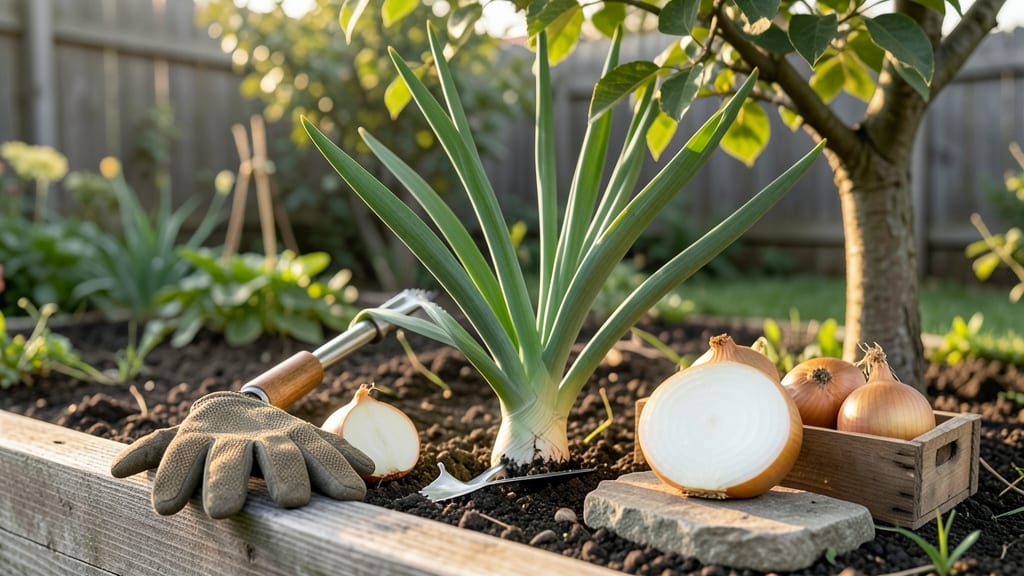
Knowing when to harvest onions comes down to watching for three key signs—leaf color, bulb firmness, and neck shrinkage—that tell you the bulbs are sweetest and ready to store.
Harvesting onions at the wrong time means bitter bulbs or wasted effort—yet most gardeners miss the subtle clues that signal peak sweetness and maturity.
In Zone 6a, where spring-planted onions mature between late summer and early fall, a simple topsoil test can reveal whether bulbs are fully developed without digging up the entire plant.
Below, I’ll walk you through the exact visual cues to look for, how to perform the topsoil test, and why timing matters for both flavor and storage life.

5 Visual and physical signs your onions are ready to harvest
Harvesting onions at the wrong time can turn your sweet, flavorful bulbs into bitter, tough disappointments. The key to success lies in recognizing the subtle but unmistakable signs of maturity—most gardeners overlook these clues and end up with onions that are either too small or past their prime.
I’ve learned the hard way that waiting for the perfect moment makes all the difference between a harvest you’ll savor and one you’ll regret.
Onions mature gradually, and their readiness isn’t always obvious. Unlike tomatoes or peppers, which change color dramatically, onions signal their peak through leaf color shifts, neck thickness, and bulb firmness.
Ignoring these cues often leads to bulbs that split open during storage or develop hollow centers—a gardener’s nightmare. My goal is to help you spot these signs early so you can pull your onions at their sweetest, just before they start to decline.
🌱 5 Signs Your Onions Are Ready to Harvest
- 1. Papery Leaf Tips – The tops begin turning yellow-brown and develop dry, papery tips (about 1/3 of the way down).
- 2. Flattened or Drying Foliage – Leaves yellow and flop over (a classic sign of maturity in storage onions).
- 3. Thickened Neck – The stem shrinks and hardens where it meets the bulb (ideal for long-term storage).
- 4. Bulb Size (Topsoil Test) – When gently uncovered, bulbs should be 2-3 inches wide (size varies by variety).
- 5. Firm Texture – Press a bulb—if it feels solid and heavy, it’s ready; if soft, it needs more time.
Let’s start with the most obvious clue: leaf color changes. When about 50-60% of the onion tops turn yellow-brown and start drying out, that’s your first green light. I always check this first because it’s the easiest way to spot maturity without digging.
For example, my Yellow Granex onions develop these papery tips around 100-120 days after planting, while red storage onions might take slightly longer. Pay attention to the progression of color—it’s not an overnight change.
Next, focus on the neck of the onion, the area where the bulb meets the stem. When this neck shrinks and dries, it’s a clear signal that the bulb has finished growing.
This is especially critical for storage onions, as a dry neck helps prevent rot during curing. I’ve found that onions with thick, papery necks store for months, while those harvested too early (with soft necks) spoil within weeks.
If you’re unsure, gently tug on the foliage—if it pulls away easily, the bulb is ready.
The topsoil test is my favorite trick for confirming bulb size without damaging the plant. Simply loosen the soil around one onion and expose about half the bulb. If it’s 2-3 inches in diameter (or larger, depending on the variety), it’s harvest-ready.
I use this method for storage onions because it lets me check maturity without uprooting the entire plant. For green onions (scallions), skip this step—they’re ready when the bulb is pencil-sized and the tops are tender.
Avoid the mistake of harvesting based on plant height alone. Tall, lush onions aren’t necessarily mature—they could just be overcrowded or over-fertilized. Instead, combine leaf color, neck thickness, and bulb firmness for the most accurate assessment.
I once harvested a batch of onions because they were tall, only to find they were hollow and pithy inside. Since then, I’ve made it a rule to wait for all three signs before pulling any bulb.
Timing is everything when it comes to storage onions. If you harvest too early, the bulbs won’t store well; if you wait too long, they’ll split or rot in the ground.
The best time to harvest is on a dry, sunny day when the soil is slightly moist but not soggy. I like to harvest in the morning after dew has dried—this gives the onions time to dry properly before storage.
For green onions, you can harvest as soon as the bulbs are 1/4-inch thick, but storage onions need that extra time to develop.
One common mistake I see is harvesting onions after a frost. While some varieties (like Winter Storage onions) can tolerate light frosts, others become soft and mushy if exposed to cold.
If your area is forecasted for frost, harvest your onions 2-3 days before the first freeze and cure them indoors. I’ve had great success with Yellow Sweet Spanish onions harvested just before frost—they cure beautifully and last through winter.
Finally, never skip the curing process after harvest. Whether you’re storing onions for months or using them fresh, proper curing extends shelf life and enhances flavor. Lay harvested onions in a dry, shady spot for 1-2 weeks to let the necks dry completely.
This step is non-negotiable for storage onions—skipping it leads to mold and spoilage. I cure my onions on a mesh rack in my garage, where they get good airflow but stay protected from direct sunlight.
By mastering these five visual and physical signs, you’ll never again guess whether your onions are ready for harvest. The next time you’re standing in your garden, unsure if it’s time to pull, just check the leaf color, neck thickness, and bulb firmness.
Trust me, your future self (and your taste buds) will thank you for the perfectly timed harvest. 🧅
When to harvest green vs. storage onions (and how it affects flavor)
Harvesting onions at the wrong stage transforms sweet, flavorful bulbs into bitter, tough disappointments. The key difference between green onions (scallions) and storage onions lies in their growth cycles and intended use. Green onions thrive when harvested young—typically 30-50 days after planting—while storage onions need 90-120 days to mature fully.
Your climate, soil type, and onion variety (short-day vs. long-day) all dictate the perfect harvest window.
For green onions, you want tender leaves and minimal bulb development. These are perfect for fresh use in salads or cooking. In contrast, storage onions require full maturity—bulbs should be 2-3 inches wide, tops yellowed, and necks dried.
The flavor profile shifts dramatically: green onions offer mild, fresh notes, while storage onions develop deeper, sweeter complexity when cured properly.
Soil type plays a surprising role in timing. Sandy soils dry out faster, often accelerating maturity by 1-2 weeks, while clay soils keep onions growing longer. In cooler climates (USDA Zones 3-5), storage onions may need an extra 2-3 weeks to reach full sweetness.
Meanwhile, long-day varieties (like Yellow Granex) mature later in northern regions, while short-day varieties (like Texas Early White) bulk up faster in southern heat.
| Factor | Green Onions (Scallions) | Storage Onions |
|---|---|---|
| Harvest Time | 30-50 days after planting | 90-120 days after planting |
| Bulb Size | Under 1 inch diameter | 2-3 inches diameter |
| Top Color | Bright green, upright | Yellow/brown, flopping |
| Neck Condition | Tender, no drying | Papery, shriveled |
| Flavor Profile | Mild, fresh, grassy | Sweet, complex, pungent |
| Best Use | Fresh cooking, salads | Storage, long-term cooking |
| Climate Note | Harvest before bolting in heat | Wait for tops to fully yellow |
If you're growing green onions for continuous harvests, snip leaves 2-3 inches above the base every 2-3 weeks. This encourages regrowth while keeping the flavor fresh. For storage onions, wait until 50-60% of tops have yellowed before pulling.
Premature harvest leads to small, pithy bulbs, while overripe onions split or rot. Pro tip: In hot climates, storage onions may mature faster—monitor closely to avoid bolting.
Soil moisture also signals readiness. Gently loosen the soil around mature onions to check bulb size—this is called the topsoil test. If bulbs are 2+ inches wide and tops are drying, it's time to harvest.
For storage, cure onions in a dry, shaded area for 1-2 weeks before braiding or storing. This step develops sweetness and extends shelf life to 6-8 months. Skipping curing results in short-lived, flavorless onions.
Remember: Day length matters. Long-day onions (like Sweet Spanish) need 14+ hours of daylight to bulk up, while short-day varieties (like Red Creole) mature faster in shorter days.
Adjust your harvest timing based on your region—northern gardeners should plan for later harvests, while southerners may need to act quickly before summer heat stresses the plants.