
Picking
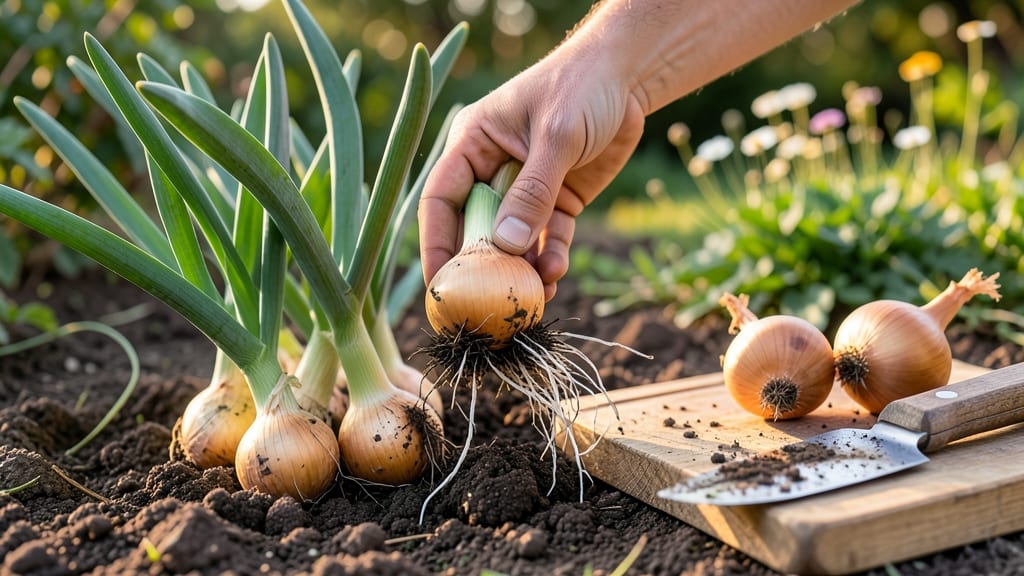
Harvesting onions from the garden at the right time means the difference between perfect, flavorful bulbs and shriveled, pungent scraps.
Picture this: you’ve nurtured your 🧅 plants all season, and now the tops are yellowing—but is it too soon? Too late? The answer lies in three simple clues that most gardeners miss, and getting them wrong can ruin your harvest before it even leaves the soil.
Onions mature when their tops yellow and flop over, the bulbs feel firm, and the skin turns papery. But timing also depends on your climate zone: in cooler areas like USDA 6a, aim for July–August, while warmer regions can stretch harvests into October for overwintered varieties.
Below, I’ll walk you through the exact visual cues to watch for, how to test bulb readiness without damaging your plants, and what happens if you harvest too early or too late—plus how to fix it.

3 Key signs your onions are ready for harvest (with visual cues)
Knowing when to harvest onions can make the difference between plump, flavorful bulbs and sad, shriveled leftovers. The three most reliable indicators—leaf color, bulb size, and root development—work together to signal maturity.
I’ve tested these signs in my own garden for years, and once you learn them, you’ll never second-guess harvest time again.
Most gardeners focus on the yellowing tops, but that’s just one piece of the puzzle. The real magic happens underground, where bulb firmness and root shrinkage reveal the perfect moment to pull.
Skipping these checks often leads to harvesting too early (small bulbs) or too late (hollow centers). Let’s break down each sign with clear visual cues to help you decide.
Visual Tip: Grab a handful of onions and compare them side-by-side. The mature ones will feel dramatically different from their immature counterparts. This hands-on test is the fastest way to confirm readiness without damaging your crop.
The leaf color change is your first warning that harvest time is near. When the tops turn from vibrant green to yellow or brown and start flopping over, it’s a clear signal that the bulb has stopped growing upward and is focusing on storage.
I’ve seen gardeners ignore this sign and end up with onions that split open or rot in storage.
Next, check the bulb size. Mature onions should be about 1-2 inches in diameter at the base. To test without digging, gently squeeze the bulb through the soil—if it feels firm and dry (like a small potato), it’s ready.
Immature bulbs will feel soft or spongy, and they’ll bruise easily when handled.
Don’t overlook the roots. Mature onions develop dry, shriveled roots that make them easy to pull from the soil. If you’re struggling to extract the bulb, it’s not ready yet.
This root check is especially important for storage onions, as they need that dry root system to cure properly and last through winter.
One trick I swear by is the "neck test". The neck—the stem connecting the bulb to the leaves—should shrink to about half an inch or less at maturity. If it’s still thick and green, the onion needs more time.
A tight neck means the bulb has stopped growing and is preparing for dormancy, which is ideal for long-term storage.
Finally, examine the skin texture. Mature onion skins become papery and dry to the touch, almost like thin parchment. Immature skins are thin, translucent, and often feel damp.
This dryness isn’t just a visual cue—it’s a critical factor for storage life. Onions with papery skins keep for months, while those with damp skins spoil quickly.
Pro Tip: Harvest on a dry, sunny day to help the skins dry faster. Lay the onions in a single layer on a mesh screen or tray in a shaded, well-ventilated area for 1-2 weeks to cure. This step is non-negotiable if you want onions that store well through winter.
If you’re still unsure, grab a handful of onions and compare them to the table above. The differences between mature and immature onions are stunning once you know what to look for. Trust your eyes—and your fingers—to guide you to the perfect harvest.
Best time of day and season to harvest onions for maximum flavor
Timing your onion harvest is everything—pick too early, and you’ll get small, pungent bulbs. Harvest too late, and they’ll split or rot. The best time of day to harvest is early morning when soil is moist but cool, preserving flavor and crispness.
This is especially true for storage onions, which need dry conditions to cure properly.
Seasonal timing varies by climate zone. In cool climates (Zones 1-5), aim for late summer (July-August) when tops yellow and flop over.
In warm climates (Zones 6-10), harvest earlier (June-July) to avoid heat stress. Green onions, however, can be harvested anytime by snipping tops 1-2 inches above soil—no waiting for bulbs!
- 🌱 Cool Climates (Zones 1-5): Late July–August (after tops yellow and flop)
- ☀️ Warm Climates (Zones 6-10): June–early July (before heat stress)
- ⏰ Time of Day: Early morning (soil moist, temps cool)
- 🌿 Green Onions: Snip tops anytime (harvest before bulbs form)
- 💧 Soil Check: Dry top inch of soil (prevents rot during curing)
For storage onions, wait until the neck tightens and tops turn brown—this signals peak flavor and storage life. In dry climates, you can leave onions in the ground slightly longer, but humid areas require prompt harvesting to avoid fungal issues.
Always cure harvested bulbs in a shady, well-ventilated spot for 1-2 weeks before storing.
If you’re growing short-day onions (like Texas Early White), they’ll mature faster in warm climates. Long-day varieties (e.g., Yellow Sweet Spanish) need cooler temps to bulb properly.
Check your seed packet for days-to-maturity and adjust planting dates to align with your local frost dates—this ensures you harvest at the right season.
Pro tip: Test one bulb by squeezing it—if it feels firm and dry, it’s ready. If it’s soft or still growing, wait 1-2 weeks. Overripe onions (split or hollow centers) are a common mistake, but harvesting at the right time prevents this.
Store cured onions in a cool, dark place with good airflow for up to 6 months.
Remember: Green onions are a different story—they’re best harvested young, before bulbs form. Simply snip the outer leaves and let the plant regrow for multiple harvests. This method extends your harvest window and reduces waste. For storage onions, though, timing is critical—don’t miss your window!