
How To
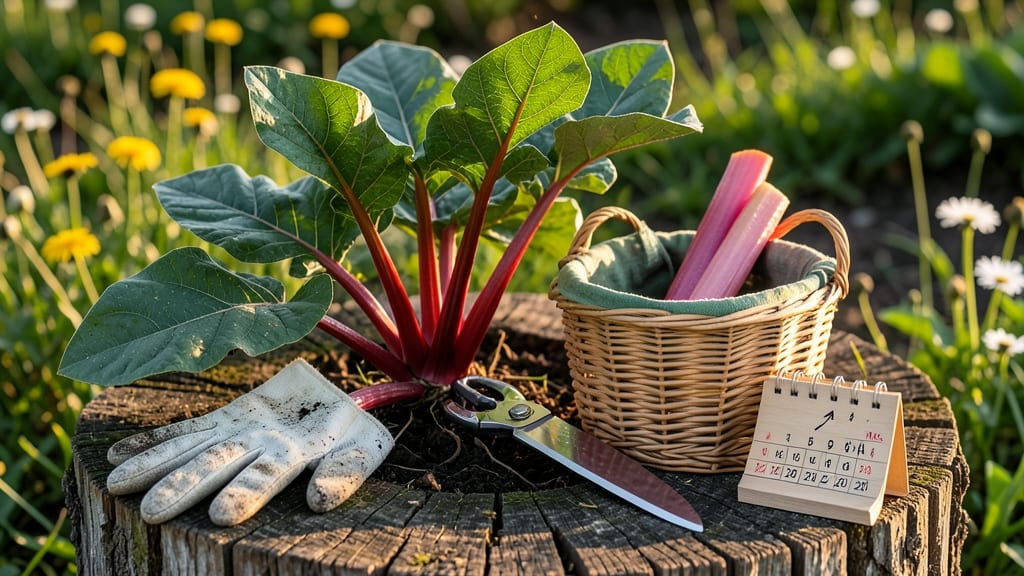
You can harvest rhubarb stems for up to 10 years once the plant matures, but the key is timing—cut too early or too often, and you’ll stunt its growth.
Wondering how long you can harvest rhubarb before overdoing it? The answer lies in the plant’s two-year cycle: Year 1 is all about foliage, while Year 2+ delivers those prized tart stalks. Miss the window, and you risk weakening your 🌱 rhubarb for future harvests.
Spring is prime time, but frost risk and plant age matter. A mature plant in Zone 6a can yield stems from April through June, but overharvesting in one go stresses the roots. Here’s how to balance yield and plant health—without sacrificing next year’s crop.
Inside, I’ll break down the exact harvest window by season, how many stems to cut per plant, and the telltale signs your rhubarb needs a rest. Plus, pro tips to extend your harvest and store stems for months ahead.

Optimal harvest window for rhubarb stems: when to pick for maximum yield
Timing your rhubarb harvest correctly is the key to a bountiful crop that lasts for decades. Unlike annuals, rhubarb is a perennial plant that rewards patience—once established, it can produce for 10-20 years if cared for properly.
But knowing when to harvest and how long to harvest ensures you don’t weaken the plant or miss its peak flavor.
The best harvest window for rhubarb typically spans from late spring to early summer, but this varies slightly based on your USDA zone and climate. In most regions, you’ll start seeing harvest-ready stalks around April or May, with the season winding down by June or early July.
This 6-8 week window is when rhubarb produces its most tender, flavorful stalks.
Here’s the critical detail: First-year plants should never be harvested. All their energy goes into establishing roots, and cutting stalks will stunt growth. Year 2+ plants are where the magic happens—this is when you’ll enjoy your first real harvest.
After that, with proper care, your rhubarb can give you abundant yields for years.
🌱
Spring is the prime harvest season for rhubarb, but you might wonder if you can extend it into fall or even winter. The short answer? No—rhubarb goes dormant in late summer, and forcing it to produce will weaken the plant.
However, with proper soil prep and mulching, you can encourage a second, smaller flush of stalks in late summer, but this is risky and not recommended for beginners.
To identify the perfect stem for cutting, look for stalks that are 8–12 inches long, firm to the touch, and have a red or pink base. Avoid stalks that are green at the base—these are immature and tough.
Also, never harvest more than 1/3 of the plant in a single season to avoid stressing the roots. Use a clean, sharp knife or pruners to cut stalks at the base, leaving the leaf crown intact.
One common mistake is harvesting too early in the season or too aggressively. If you cut stalks when the plant is still dormant or when new growth is just starting, you’ll delay the main harvest and reduce yields.
Similarly, harvesting late in the season (after June) often results in woody, less flavorful stalks. The goal is to balance yield and plant health, ensuring your rhubarb thrives for future seasons.
🌿
Pro tip: Mark your calendar for the first frost in your area (usually October). This is your cue to stop harvesting entirely and allow the plant to enter dormancy. In USDA Zone 6a and colder, protect the crown with mulch or straw to insulate it from freezing temperatures.
With this approach, your rhubarb will rebound stronger each spring, giving you even bigger harvests year after year.
✂️
How many stems to harvest per plant: avoiding over-picking mistakes
Harvesting rhubarb correctly is all about balance—cut too much, and you’ll weaken your plant for years to come. For first-year plants, resist the urge to harvest at all.
Their energy goes into establishing roots, not producing stalks. Focus on letting them grow 12-18 inches tall before considering any cuts next spring.
By year two, mature rhubarb plants can handle limited harvesting, but never exceed 1/3 of the stems in a single season. A good rule of thumb is to leave at least 6-8 healthy stems uncut to maintain the plant’s energy reserves. This ensures your rhubarb keeps producing for decades.
- Yellowing leaves (nutrient deficiency)
- Stunted growth (less than 12" new stalks)
- Empty flower stalks (plant diverts energy to blooms)
For mature plants (3+ years old), you can harvest 3-5 stems per plant every 2 weeks during peak season (April-June). Always cut stems at the base with a clean knife—never pull or twist, which damages the crown.
Prioritize the thickest, reddest stalks first, as these are the most mature and flavorful.
Frequency matters just as much as quantity. Harvesting too often stresses the plant, while weekly cuts in early spring can encourage a second flush of stalks by mid-summer. However, avoid harvesting after mid-July, as this forces the plant into dormancy prematurely, reducing next year’s yield.
Watch for warning signs like wilted leaves or hollow stalks—these indicate the plant is exhausted. If you see these, pause harvesting for 4-6 weeks and focus on watering deeply (1-2 inches of soil) and mulching to protect roots.
A well-rested rhubarb plant rewards you with bigger, sweeter stalks the following spring.
Pro tip: Mark harvested stems with a toothpick or flag to track what you’ve cut. This helps you visualize how much you’re taking and ensures you never exceed the 1/3 rule. Patience pays off—rhubarb can live for 10-20 years if cared for properly!