
How To
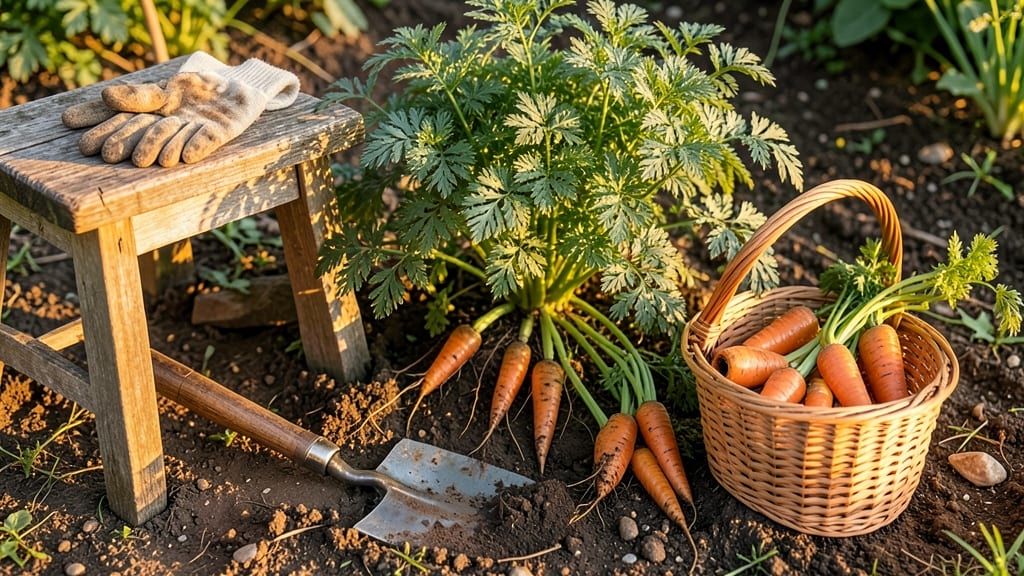
Harvesting carrots from seeds takes about 60 to 80 days—but timing isn’t just about counting weeks. 🥕 The real secret lies in soil temperature, which can speed up or stall growth, turning your patient wait into either sweet, crisp rewards or tough, woody disappointment.
Picture this: you’ve sown your seeds, watered them carefully, and now you’re staring at lush green tops wondering, Why aren’t my carrots growing? The answer might be hiding in your soil’s temperature—too cold, and germination stalls; too hot, and the roots bolt before they’re ready.
I’ve made that mistake more times than I’d like to admit.
Most gardeners assume carrots are ready when the tops hit 3–4 inches, but that’s only part of the story. The perfect harvest depends on soil staying between 55–85°F, root diameter reaching ½ to 1 inch (or thicker for full-size), and skin that resists gentle pressure.
Skip these checks, and you’ll end up with roots that are either too small or bitter.
In this guide, I’ll break down the exact days to expect harvests, how to monitor soil temperature like a pro, and the telltale signs your carrots are finally ready to pull—so you can go from seed to supper without a single regret.

Carrot seed germination to harvest timeline: days, weeks, and soil temperature rules
Growing carrots from seed is a rewarding process, but timing is everything. If you plant too early or too late, your carrot seeds may fail to germinate—or worse, your harvest turns out tough and woody instead of sweet and crisp.
Understanding the carrot seed germination timeline and soil temperature rules ensures you get the perfect harvest every time.
From the moment you drop those tiny seeds into the soil to the day you pull out fully grown carrots, the journey takes about 60 to 80 days.
But before you can even think about harvesting, you must navigate the germination stage, which can take anywhere from 5 to 14 days, depending on soil conditions. Let’s break down the full timeline, including the critical soil temperature factors that make or break your success.
🌱
| Stage | Days to Complete | Soil Temp (°F) | Key Actions |
|---|---|---|---|
| Seed Germination | 5–14 days | 55–85°F | Keep soil moist; avoid crusting |
| Seedling Growth | 14–21 days | 60–75°F | Thin to 2–3" apart; monitor pests |
| Root Development | 30–50 days | 65–75°F | Water deeply; avoid nitrogen overload |
| Harvest Readiness | 60–80 days | 55–80°F | Check leaf size (3–6"); test root firmness |
| Baby Carrots | 45–55 days | 60–75°F | Harvest when roots reach ½–1" diameter |
The germination stage is where most gardeners stumble. Carrot seeds need soil temperatures between 55°F and 85°F to sprout reliably. If your soil is too cold (<55°F), germination can take 3 weeks or longer, or the seeds may rot.
Conversely, temperatures above 85°F can cause seeds to dry out before sprouting. That’s why spring and fall planting in cooler climates is ideal.
Once your carrot seedlings emerge, they enter the root development phase, which lasts roughly 30 to 50 days. During this time, consistent moisture and full sun exposure are critical. If the soil dries out or gets too hot, your carrots may develop forked or misshapen roots.
To prevent this, mulch around your plants to retain moisture and protect against temperature swings.
By day 60, your carrots should be ready for harvest if grown in optimal conditions. Look for these visual cues: leaves should be 3–6 inches tall, and the roots should feel firm when gently squeezed.
If you’re growing baby carrots, you can harvest as early as 45 days when roots reach about ½ to 1 inch in diameter. For full-sized carrots, wait until they’re 1 to 1.5 inches thick and have a vibrant color.
🥕
One common mistake is harvesting too late. Carrots left in the ground past their prime become woody and tough, losing their sweet flavor. If you notice your carrot tops yellowing or bolting (sending up flower stalks), it’s a sign the plant is stressing and may produce bitter roots.
Always check the soil temperature and adjust your planting schedule accordingly—cool-season varieties like 'Danvers' or 'Nantes' thrive in 55–70°F soil, while heat-tolerant types like 'Chantenay' can handle up to 80°F.
Pro tip: Use a soil thermometer to monitor conditions. If your soil is too cold, consider starting seeds indoors or using a seedling heat mat to speed up germination.
With the right timing and care, you’ll go from seed to harvest in just 2 months, enjoying crisp, flavorful carrots straight from your garden.
☀️
5 Soil temperature triggers that determine carrot harvest success (and how to control them)
Carrots are finicky about soil temperature, and getting it wrong can turn your crisp, sweet harvests into tough, woody disappointments. The difference between perfect carrot roots and failed crops often comes down to understanding these five critical triggers—and knowing how to adjust your garden to meet them.
First, let’s tackle the minimum germination temperature. Carrot seeds won’t sprout below 45°F, and even then, they’ll take 14-21 days to break through the soil. If your soil is cooler, like in early spring or fall, your seeds might rot before sprouting—or worse, never sprout at all.
This is why many gardeners wait until the soil warms to at least 55°F before planting.
🌱
- Trigger 1: 45°F minimum for germination
- Trigger 2: 55-60°F for steady sprouting
- Trigger 3: 70-75°F for rapid growth
- Trigger 4: Above 85°F causes bolting
- Trigger 5: Below 50°F stunts growth
Once your seeds sprout, the ideal growth temperature jumps to 70-75°F. This is when carrots bulk up fastest, developing those crisp, sweet roots we all love. If your soil stays below 60°F for too long, growth slows dramatically, and you’ll end up with small, underdeveloped carrots.
On the flip side, if temperatures climb above 85°F, your carrots may bolt—sending up flower stalks and leaving you with bitter, inedible roots.
To control these triggers, start by testing your soil temperature with a simple soil thermometer. Plant deeper in cooler climates—½ inch deeper can add 5-10°F of warmth. Use black plastic mulch or straw mulch to trap heat, especially in early spring or late fall.
If your soil is too cold, consider extending your season with row covers or a cold frame until temperatures rise.
Watch for warning signs of temperature stress: slow growth, forked roots, or yellowing leaves all signal trouble. Adjust your planting schedule or use shade cloth if temperatures spike unexpectedly. With these triggers in mind, you’ll avoid the most common pitfalls and enjoy a bountiful, sweet harvest every time.
☀️