
How To
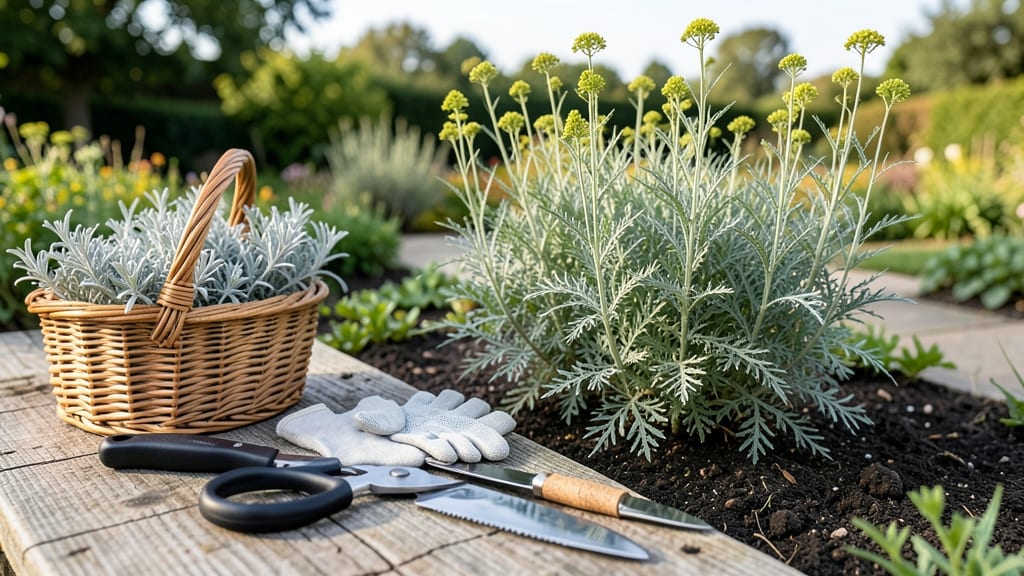
To harvest wormwood at its peak flavor, time your cuts for July through September when the leaves are fully developed and aromatic 🌿.
Picture this: you’ve nurtured your wormwood all season, but if you snip too early or too late, you’re left with bitter, underwhelming leaves that ruin your recipes.
The secret lies in knowing the three key signs—leaf size, flower buds, and that signature herbal scent—that tell you when to grab your shears.
Harvesting wormwood isn’t just about cutting stems—it’s about preserving that bold, earthy flavor. Whether you’re drying it for teas, freezing for soups, or using fresh in cocktails, the right technique makes all the difference.
I’ll walk you through the tools, timing, and storage tricks that keep your wormwood potent and ready for action.
From avoiding over-pruning to recognizing when your plant is begging for a break, this guide covers the common mistakes that turn a great harvest into a wasted effort. Let’s make sure your wormwood shines in every dish.

When to harvest wormwood for maximum flavor and minimum bitterness
Timing is everything when harvesting wormwood—this hardy perennial packs its most potent, least bitter flavor when picked at the right moment. Harvest too early, and your leaves will lack depth; wait too long, and bitterness peaks while potency fades.
The ideal window falls between late June and early September, but environmental factors like sunlight and temperature can shift this timeline by weeks.
Wormwood thrives in full sun (6+ hours daily), and its flavor intensity correlates directly with sunlight exposure. Plants grown in cooler climates (USDA zones 3-5) may need an extra 2-3 weeks of growth before reaching peak harvest readiness compared to their warmer-zone counterparts.
Even a 5°F temperature drop can delay maturity by 7-10 days, so always check your local frost dates.
Here’s the science-backed breakdown of when to harvest for that perfect balance of aromatic complexity and mild bitterness, using three key indicators:
🌿 3 Key Signs Your Wormwood Is Ready to Harvest
- 📏 Leaf Size & Maturity: Leaves should be 1-2 inches long, fully unfurled, and deep silver-green. Immature leaves (under 1 inch) lack the terpenes that create wormwood’s signature aroma.
- 🌸 Flower Bud Formation: Harvest just as 10-20% of stems develop yellow-green flower buds. Buds signal the plant’s shift from leaf growth to seed production—past this point, bitterness spikes and flavor dulls.
- 👃 Aroma Intensity: Crush a leaf between your fingers—if it releases a strong, piney-citrus scent (not just "green"), it’s prime. Weak or musty smells mean it’s past its peak or stressed (e.g., underwatered or overcrowded).
Pro Tip: Morning harvests (before 10 AM) preserve the most volatile oils—the compounds that define wormwood’s flavor. Avoid harvesting after rain, as moisture dilutes these oils by up to 30%.
Seasonal timing matters just as much as plant maturity. In USDA Zone 6 (where wormwood is most commonly grown), aim for harvests between July 15 and August 20.
Early-season harvests (June) yield tender but less aromatic leaves, while late-season harvests (September-October) risk increased bitterness as the plant prepares for dormancy. If you’re in a warmer zone (7-9), extend your window by 2-3 weeks.
Environmental stress can throw off your wormwood’s schedule. For example, high humidity (above 70%) slows growth, delaying maturity by up to 10 days. Conversely, drought conditions accelerate flowering, forcing you to harvest earlier—or risk a bitter, woody harvest.
Monitor your plant’s response to local weather: if stems become brittle or yellow, it’s either overripe or stressed.
Don’t overlook the stem condition—this is your secret weapon for predicting flavor. At the perfect harvest window, stems should be firm but not woody. If you can snap a stem cleanly (without bending), it’s ready.
Woody stems indicate the plant is past its prime, while soft stems mean it’s not mature enough. This simple test saves you from harvesting underripe or overripe leaves.
For culinary use, prioritize leaves over flowers. While wormwood flowers are edible, they’re 30% more bitter than leaves and lack the same aromatic depth.
If you’re growing wormwood for medicinal purposes (e.g., absinthe production), you can include a few buds—but always harvest them at the bud stage, not when fully open.
One common mistake? Assuming all wormwood varieties mature at the same rate. Common wormwood (Artemisia absinthium) typically reaches harvest readiness in 90-120 days, while Roman wormwood (Artemisia pontica) matures in just 60-80 days.
Check your variety’s specific growth timeline—this can shift your harvest window by 3-4 weeks. Always start with a small test harvest (a few leaves) to gauge flavor before committing to a full cut.
Finally, remember that regular harvesting encourages bushier, more productive plants. If you harvest every 3-4 weeks during the growing season, your wormwood will produce 2-3 times more leaves than if left unpruned.
Just avoid cutting more than one-third of the plant at once—this prevents stress and ensures a steady supply of flavorful leaves all season.
Step-by-step wormwood harvesting techniques: tools, methods, and storage tips
Harvesting wormwood at the right time and with the proper tools ensures you capture its aromatic potency without overpowering bitterness. Start by gathering your harvesting tools, including sharp pruning shears (for thicker stems) and clean scissors (for delicate leaves).
Avoid dull tools, as they crush stems and release bitter compounds prematurely.
The best time to harvest is in the morning after dew dries, when essential oils are most concentrated. Focus on harvesting younger leaves first—they’re less bitter and packed with flavor.
For whole stems, cut just above a leaf node to encourage bushier growth, while individual leaves can be plucked directly from the stem.
How to Harvest Wormwood
- 1 Gather Tools: Use sharp pruning shears for stems and clean scissors for leaves. Wear gloves if sensitive to oils.
- 2 Harvest in Morning: Pick leaves or stems after dew dries (8–10 AM) for peak aromatic oils.
- 3 Cut Strategically: Snip whole stems 2–3 inches above soil or pluck individual leaves from tips.
- 4 Avoid Over-Harvesting: Never remove more than 1/3 of plant at once to prevent stress.
- 5 Store Properly: Use drying, freezing, or oil infusion methods within 2 hours of harvest.
After harvesting, rinse leaves briefly in cool water to remove debris, then pat dry with a paper towel. For drying, bundle stems and hang upside down in a dark, well-ventilated area (like a closet) for 1–2 weeks.
Store dried leaves in airtight containers away from light to preserve flavor for up to 1 year.
For freezing, spread leaves on a tray and freeze for 1 hour before transferring to a sealed bag. This method retains 80% of essential oils for up to 6 months.
Alternatively, infuse fresh wormwood in carrier oils (like olive oil) for 2–4 weeks in a cool, dark place.
Never harvest wormwood flowers for culinary use—they’re extremely bitter. Instead, focus on leaves and young stems. If your plant bolts (sends up tall flower stalks), trim it back by 1/2 to encourage leafy regrowth. With proper care, your wormwood plant will reward you with multiple harvests per season.
🌿