
How To
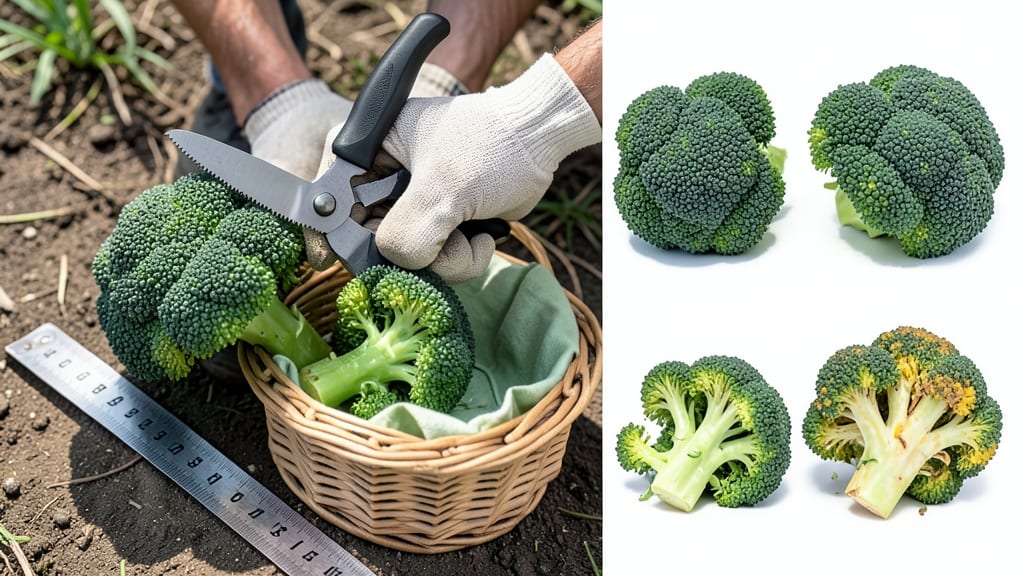
Knowing when to harvest broccoli 🥦 means capturing its peak flavor and texture before it turns bitter or woody.
Picture this: you’ve waited weeks for your spring-planted broccoli to mature, only to cut the head too late and end up with tough, yellowing florets. That’s the difference between a crisp, sweet harvest and a disappointing bite.
Fortunately, broccoli gives clear visual and tactile cues—tight buds, a firm stem, and vibrant green color—that signal the perfect moment to pick. Miss these signs, and you’ll sacrifice both taste and future side shoots.
In this guide, I’ll walk you through three foolproof tests to determine ripeness, plus how to extend your harvest by harvesting side shoots correctly. No more guesswork!

3 Visual signs broccoli is ready for harvest (with photos guide)
Knowing exactly when to harvest your broccoli can mean the difference between a sweet, tender floret and a bitter, woody mess. The key lies in three visual cues that reveal peak ripeness.
First, focus on the head size, which should be compact but substantial—typically 4 to 8 inches in diameter. Second, check the color of the florets; they should be a vibrant deep green, not yellowing or browning.
Finally, examine the tightness of the buds—they should remain closed and firm, not loosening into individual stems.
One common mistake is harvesting too late, which happens when you ignore these visual markers. Overripe broccoli loses its nutritional value and becomes tough, making it less enjoyable to eat.
For example, I once waited too long to harvest my Calabrese broccoli, and the florets turned yellow and woody—definitely not the crisp, flavorful harvest I’d hoped for! The good news is that these visual clues make it easy to avoid that fate.
Here’s a quick visual checklist to keep in mind while inspecting your plants: look for a firm stem that snaps cleanly when bent, bright green florets that haven’t started to open, and a compact head that hasn’t outgrown its ideal size.
These three signs work together to confirm your broccoli is ready for the kitchen—or the freezer, if you’re planning ahead.
| Visual Cue | What to Look For | Action |
|---|---|---|
| Head Size | 4–8 inches in diameter | Harvest when firm and compact |
| Floret Color | Deep, vibrant green | Avoid yellowing or browning florets |
| Bud Tightness | Tight, closed buds | Do not harvest if buds start opening |
| Stem Firmness | Snaps cleanly when bent | Avoid woody or fibrous stems |
| Leaf Health | Large, healthy base leaves | Yellow or wilted leaves signal stress |
Let’s break down each of these visual cues in more detail. The head size is your first clue—if it’s smaller than 4 inches, it’s not ready yet. Think of it like waiting for a perfectly ripe fruit: patience pays off.
For example, Romanesco broccoli often matures slightly smaller than Calabrese, so adjust your expectations based on the variety you’re growing. The color is equally important; any hint of yellow or brown means the florets have started to break down, and the flavor will suffer.
Another critical visual marker is the tightness of the buds. If the florets begin to loosen or spread apart, your broccoli is past its prime. This is a clear sign that the plant has shifted its energy from growth to seed production.
I’ve learned this the hard way—once, I ignored the bud tightness in my De Cicco broccoli, and by the time I realized it, the florets had already started to flower. The result? A meal that tasted more like hay than the sweet, nutty flavor I’d anticipated.
Don’t overlook the stem condition either. A healthy broccoli stem should feel firm and crisp when you gently bend it. If it snaps cleanly, you’re in the clear. However, if the stem feels tough or fibrous, it’s a sign your broccoli has overstayed its welcome.
This is especially true for older plants or those growing in poor soil conditions. In my garden, I’ve noticed that broccoli grown in sandy soil tends to develop woody stems faster than those in well-amended, loamy soil.
Finally, pay attention to the leaves at the base of the plant. Healthy, vibrant leaves indicate that the plant is still thriving and has the energy to produce a quality harvest.
If the leaves are yellowing or wilting, it could signal nutrient deficiency, disease, or even overwatering. For instance, I once saw my broccoli leaves turn yellow because I was watering too frequently, which led to root rot.
Adjusting my watering schedule saved the plant, but the harvest window had already passed.
To make this even easier, I’ve found that taking daily photos of my broccoli plants helps track progress. This way, I can compare the current state of the florets to earlier stages and spot the visual cues more quickly.
If you’re growing broccoli in containers, keep an eye on the root ball as well—roots growing out of the bottom of the pot can signal that the plant is ready to be harvested sooner rather than later.
One pro tip I’ve picked up from fellow gardeners is to harvest in the morning when the florets are at their crispest.
This not only ensures the best flavor but also gives you a chance to check for pests like aphids or cabbage worms, which can damage your broccoli if left unchecked. If you notice any
Touch and taste tests: how to confirm broccoli’s perfect ripeness
After checking the visual cues like floret size and color, it’s time to rely on your senses to confirm broccoli’s ripeness. A simple touch-and-taste test can reveal whether your broccoli is at its peak—or past it.
I’ve learned that even the most experienced gardeners sometimes harvest too late, resulting in bitter, woody stems instead of tender, flavorful florets.
Your fingers and taste buds are your best tools for nailing the perfect harvest window. The snap test and firmness check are foolproof ways to avoid overripe broccoli. And yes, you should taste-test a small floret—it’s the only way to truly know if your broccoli is ready for the table.
Let’s break down the sensory signals you shouldn’t ignore.
- 1 Firmness Check: Gently squeeze the main floret head. It should feel solid and dense, like a tightly packed bundle of green fingers. If it feels squishy or hollow, it’s overripe.
- 2 Snap Test: Bend a small stem near the base of a floret. If it snaps cleanly with a slight resistance, it’s ready. A woody or tough stem means it’s past prime.
- 3 Taste Test: Snip off a small floret and taste it raw. Perfect broccoli should be crisp, slightly sweet, and fresh-tasting. If it’s bitter or bland, harvest another day.
- 4 Avoid Side Shoots: Don’t confuse side shoots (smaller florets that grow after harvesting the main head) with the primary head. Side shoots are smaller and less flavorful—harvest them only if the main head is gone.
One common mistake I see is waiting too long to harvest because the broccoli looks "bigger." But size isn’t everything—overripe broccoli becomes tough and bitter. I once left my broccoli in the garden for a week past its prime, and the florets turned yellow and woody.
Lesson learned: Harvest early when the florets are still bright green and tightly packed.
If you’re unsure, cut one floret and check its texture and taste. This quick test saves you from harvesting too early (when florets are underdeveloped) or too late (when they’re past their peak). Remember, broccoli continues to grow even after it’s ready—so don’t wait for it to "get bigger."
Pro tip: Harvest in the morning when temperatures are cooler. This ensures your broccoli stays crisp and fresh longer after picking. Store it in the fridge for up to 5 days or cook it immediately for the best flavor. Your taste buds—and your dinner guests—will thank you!
🌱