
How To
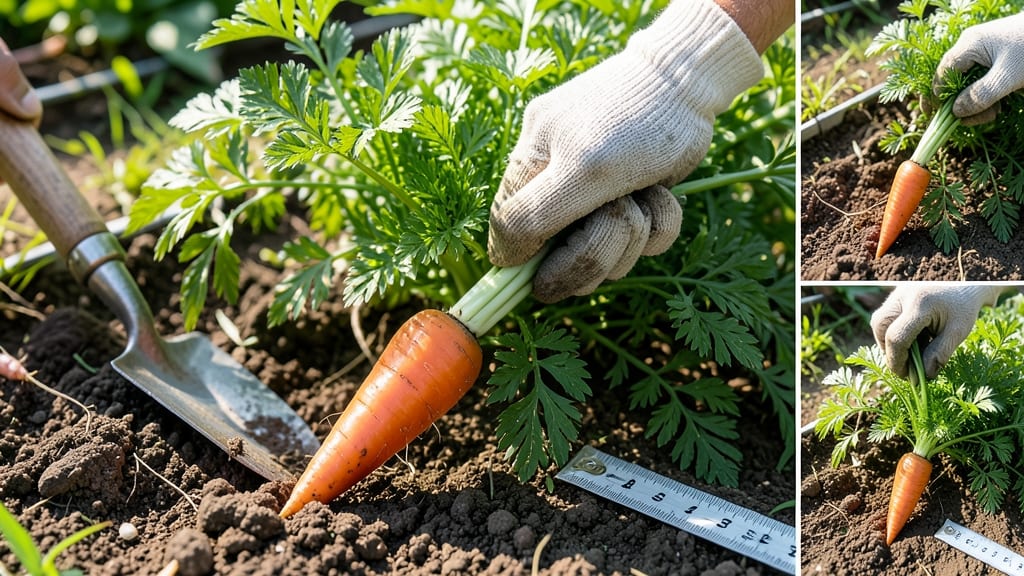
To know when to harvest carrots, watch for 1- to 3-inch roots with firm, smooth skin and lush 4- to 6-inch foliage—these are the telltale signs of peak crunch and sweetness.
Pulled a carrot too early and got a bitter, woody mess? Or left them in the ground too long and ended up with tough, stringy roots? Knowing the perfect harvest time transforms your garden from guesswork to gourmet—here’s how to nail it every time.
Carrots 🥕 don’t wait for a calendar; they signal readiness through size, texture, and leaf health. A simple finger-dip test reveals whether the roots are tender or still hardening, while variety matters—baby carrots need pulling at 50 days, while heirlooms can wait until 85 days.
Below, I’ll break down the visual cues, soil checks, and seasonal tweaks to ensure you harvest at the ideal moment—no more sad, overgrown roots or underwhelming bites.

The finger-dip test: 3 signs your carrots are harvest-ready
There’s nothing worse than sinking your fingers into the soil to find baby carrots when you expected full-sized roots—or worse, pulling a woody, stringy mess that’s past its prime.
The finger-dip test is my go-to method for determining carrot maturity, combining soil resistance, root size, and leaf health into one foolproof check. Unlike guessing by days since planting, this tactile approach accounts for variety differences, soil conditions, and even weather delays.
Let’s break it down so you never harvest too soon (or too late) again.
The secret to perfect timing lies in three key indicators: root diameter, shoulder visibility, and foliage vigor. Most gardeners focus on one or two, but combining all three gives you 90% accuracy—no more bitter surprises.
For example, Nantes varieties mature faster than Danvers, but the finger-dip test works for both. Start checking when your carrots hit 50 days (minimum for most types), then reassess every 5-7 days until you see all three signs.
How to Use the Finger-Dip Test
- 1 Check Soil Depth: Gently press your finger 1-2 inches deep into the soil around the plant. If the soil feels firm but not compacted, roots have room to grow. Avoid testing after rain—waterlogged soil makes roots spongy and prone to rot.
- 2 Test Root Resistance: Wiggle your finger side-to-side near the base of the plant. If you feel gentle resistance (like pressing a ripe avocado), the root is mature. If it feels too loose, wait 5-7 days; if it’s rock-hard, you’ve missed the window.
- 3 Inspect Leaf Health: Look for 4-6 inch tall leaves with a deep green color. The top shoulder of the root (where leaves meet soil) should be 1/2–3/4 inch above ground. Yellowing leaves or stunted growth mean it’s underripe; brown, crispy leaves signal overmaturity.
- 4 Verify with a Sample: Carefully dig up one test carrot per plant. If it’s 1–3 inches wide, has a smooth orange skin, and snaps cleanly when bent, it’s ready. If the core looks hollow or woody, harvest immediately—flavor declines fast after peak ripeness.
One of the biggest mistakes I see is relying solely on days since planting. Seed packets often list a harvest range (e.g., 60–80 days), but soil temperature, daylight hours, and variety traits can shift that window by 2+ weeks.
For example, Paris Market carrots (round, short types) mature in 50–60 days, while Chantenay (longer, cylindrical) take 70–80 days. Always cross-reference the finger-dip test with your variety’s ideal size—some gardeners prefer baby carrots (harvest at 30–40 days) for salads.
Another common pitfall is over-harvesting when carrots bolt (send up flower stalks). If your plants suddenly shoot up tall, thin stems, they’re shifting energy to seeds. This happens in hot weather or when days get shorter (common in short-day varieties like Danvers).
Harvest these immediately—the roots become bitter and fibrous within 3–5 days of bolting. To prevent this, succession-plant carrots every 2 weeks for a continuous harvest.
For container-grown carrots, the finger-dip test works too—but with a twist. Since pots dry out faster, check soil moisture first (stick your finger 1 inch deep; if dry, water before testing).
Also, shallow-rooted varieties (like Paris Market) are better for containers because they won’t hit the pot’s bottom. If you’re growing longer types (e.g., Nantes), use pots 12+ inches deep to avoid forked or stunted roots.
Seasonal timing matters too. In cool climates (USDA Zones 3–5), aim to harvest by late summer to avoid woodiness from cold snaps. In warm zones (6–10), you can extend harvests into fall or winter by mulching heavily with straw or leaves to insulate roots.
Just remember: frost turns carrots mushy, so plan to harvest before first-frost dates (check your local USDA zone for specifics).
If you’re still unsure, try the twist test: Gently grasp a carrot at the top
Carrot variety harvest times: when to pull short-day vs. long-day types
Not all carrots mature on the same schedule—daylength sensitivity divides them into short-day and long-day varieties, with harvest windows that can vary by 4-6 weeks. Understanding these differences helps you time your harvests perfectly, whether you're growing Nantes for crisp texture or Danvers for storage potential.
Climate also plays a role: cooler northern regions may need to adjust timing by 10-14 days compared to warmer southern zones.
Short-day varieties like Paris Market thrive in 12-14 hours of daylight and reach harvest in 50-60 days, making them ideal for spring or fall plantings in most USDA zones.
Long-day types such as Chantenay or Imperator need 14+ hours of light and take 70-85 days to mature—perfect for summer gardens in Zone 5 and warmer. Even within these groups, soil temperatures below 50°F can delay maturity by 1-2 weeks.
📊 Here’s how to match your variety to your climate and harvest window:
| Variety | Daylength | Days to Harvest | Best Harvest Months | Climate Notes |
|---|---|---|---|---|
| Nantes | Short-day | 60-70 | June-July (spring) / Sept-Oct (fall) | Ideal for Zones 3-7; avoid heatwaves |
| Danvers | Long-day | 70-85 | July-August | Best in Zones 5+; needs consistent warmth |
| Paris Market | Short-day | 50-60 | May-June (spring) / Aug-Sept (fall) | Great for cool seasons; store well |
| Chantenay | Long-day | 75-90 | August-September | Heat-tolerant; best in Zones 6-10 |
For short-day varieties, I always plant a second crop 6-8 weeks after the first harvest to extend my season—especially in Zone 5 where summers are short.
Long-day types, like Imperator, reward patience with longer storage life (up to 6 months in cool conditions), but they demand consistent moisture during their extended growth cycle. If your carrots are stunted, check your soil temperature: below 55°F slows growth by 30%.
Pro tip: Use row covers in early spring to give short-day varieties extra warmth and 14+ daylight hours, speeding up their harvest by 10-14 days. For long-day types, I’ve found that succession planting every 2 weeks in late spring ensures a steady supply through late summer.
Always test soil 1 week before harvest—if it’s dry, water deeply to prevent woody roots.
Remember, harvest timing isn’t just about days—it’s about root size, leaf health, and soil conditions. For example, Paris Market carrots are ready at 1-2 inches, while Danvers can grow to 3 inches before pulling.
Use a soil thermometer to monitor temperatures: 60-75°F is ideal for both growth and sweetness development. 🥕