
How To
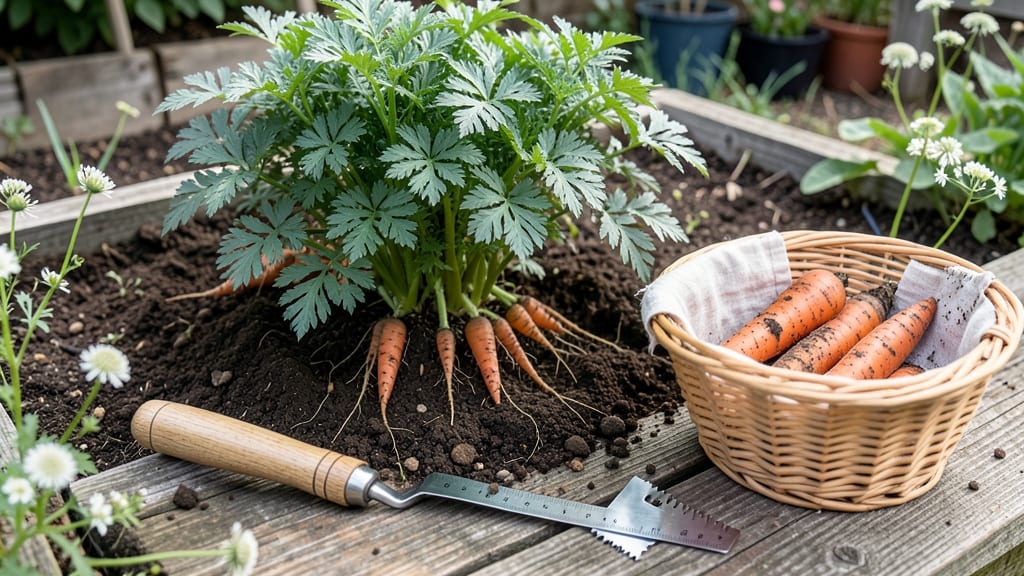
Telling when to harvest carrots 🥕 means catching them at peak sweetness and crunch—before they turn woody or split.
Picture this: you’ve nurtured your rows for 70 days, but how do you know if they’re ready? Pulling too early leaves you with tiny, underdeveloped roots, while waiting too long means tough, bitter carrots.
The trick is in the leaves, the soil, and a simple finger test that guarantees perfect texture every time.
Most gardeners miss the window because they focus on size alone, but color, leaf health, and even the time of day you harvest can make or break the flavor.
Below, I’ll walk you through the five foolproof signs—plus the one tool you already have in your pocket to test for sweetness without guessing.
By the end, you’ll know exactly when to pull your carrots for that restaurant-quality crunch, how to avoid common mistakes, and even how to store them to keep that fresh-picked taste for weeks.

Visual and physical signs your carrots are ready for harvest
Knowing when to harvest carrots can feel like guessing, but the truth is, your garden gives you clear signals. The key is learning to read these visual and physical cues—from leaf size to soil exposure—that reveal when roots are at their sweetest and crispest.
Miss these signs, and you might end up with tough, woody carrots that lack flavor. But get it right, and you’ll enjoy the perfect balance of crunch and sweetness that makes homegrown carrots unbeatable.
Carrots mature at different rates depending on the variety you’re growing. Baby carrots, like 'Paris Market' or 'Little Finger,' reach harvest size in just 50–60 days and are ready when they’re about 1–1.5 inches in diameter.
On the other hand, standard varieties like 'Danvers' or 'Nantes' take 70–90 days to reach their full 2–3 inch length. The good news? Both types give you unmistakable clues about when they’re ready to pull.
Here’s the breakdown of the 5 key indicators to watch for, plus how to distinguish between baby carrots and mature roots for that ideal harvest window:
The leaf size is your first clue—when the tops reach 4–6 inches tall and look full and bushy, the roots below are likely nearing maturity. But don’t rely on foliage alone.
The shoulder of the carrot (the part just below the green stems) should be 0.5–1 inch below the soil line. If you see the green stem still poking out, the root isn’t ready yet.
This is especially critical for baby carrots, where even a slight exposure means they’re not fully developed.
Color is another dead giveaway. Mature carrots develop a deep, even hue—whether that’s classic orange, purple, or yellow—while underripe roots often look pale or patchy. For example, 'Purple Haze' carrots will deepen to a rich violet, while 'Nantes' turn a bright, uniform orange.
If you’re unsure, dig up one carrot to check its color and texture—this is your test harvest moment.
Root size is straightforward but varies by variety. Short varieties like 'Paris Market' are perfect at 1–1.5 inches in diameter, while long varieties like 'Chantenay' should reach 2–3 inches in length.
Pro tip: If your carrots are growing in rocky or compacted soil, they might stay small or fork. Loosen the soil at planting time to encourage straight, full-sized roots.
Finally, the crown thickness tells you whether the carrot is tender or still firm. Gently press your thumb against the exposed shoulder—if it feels crisp but not hard, it’s ready.
A soft crown means it’s underripe, while a rock-hard feel suggests it’s overmature and woody. This finger-dip test is my go-to trick for avoiding either extreme.
One common mistake is waiting too long, especially in hot summer months. Carrots left in the ground past their prime can become woody or split, losing their sweetness.
If you’re growing a fall crop, aim to harvest before the first frost—typically by mid-October in Zone 6a. For spring plantings, watch for those <
The finger-dip test: a step-by-step guide to perfect carrot crunch
If you've ever bitten into a carrot that's either woody and tough or underdeveloped and bland, you know timing is everything. The finger-dip test is my go-to method for determining when carrots reach their peak sweetness and crunch.
This simple technique works for all varieties—whether you're growing Danvers, Nantes, or Paris Market types—and requires just your fingers and a little patience.
Before diving in, ensure your carrots have been growing for 60–90 days and show the classic visual cues: 4–6 inch tops with deep soil coverage and firm roots.
The finger-dip test refines these clues by assessing tenderness and sweetness directly. It’s especially useful for loose, sandy soils where roots might not show obvious signs of readiness.
How to Perform the Finger-Dip Test
- 1 Gently loosen the soil around one carrot using your fingers or a small trowel. Avoid disturbing the root itself.
- 2 Dip your finger into the soil about 1–2 inches deep near the carrot’s shoulder (where the top narrows). Press lightly to feel for resistance.
- 3 Assess resistance: If the carrot feels firm but yields slightly (like ripe fruit), it’s ready. If it feels hard or spongy, wait 3–5 days and retest.
- 4 Check soil type: In clay-heavy soil, roots may feel firmer—dig deeper to confirm size. In sandy soil, they’ll feel ready sooner; harvest a few to test.
- 5 Pull and taste a test carrot. If it’s sweet, crisp, and snaps easily, harvest the rest. If it’s bland or fibrous, wait another week.
For baby carrots (harvested at 50–60 days), the finger-dip test still applies but with a softer touch. These smaller roots should feel tender like al dente pasta—not hard. Overlooking this can lead to misshapen or split roots, especially in dense soils.
Pro tip: Perform the test on a cool morning after watering. Carrots absorb moisture overnight, making them firmer and easier to assess. Avoid testing after heavy rain, as the soil may feel deceptively soft, masking the root’s true readiness.
Once you’ve mastered the finger-dip test, you’ll never guess again. The difference between a perfectly sweet carrot and one that’s tough or bitter is just a few days of patience—and a little finger work. Happy harvesting! 🥕