
Vegetables
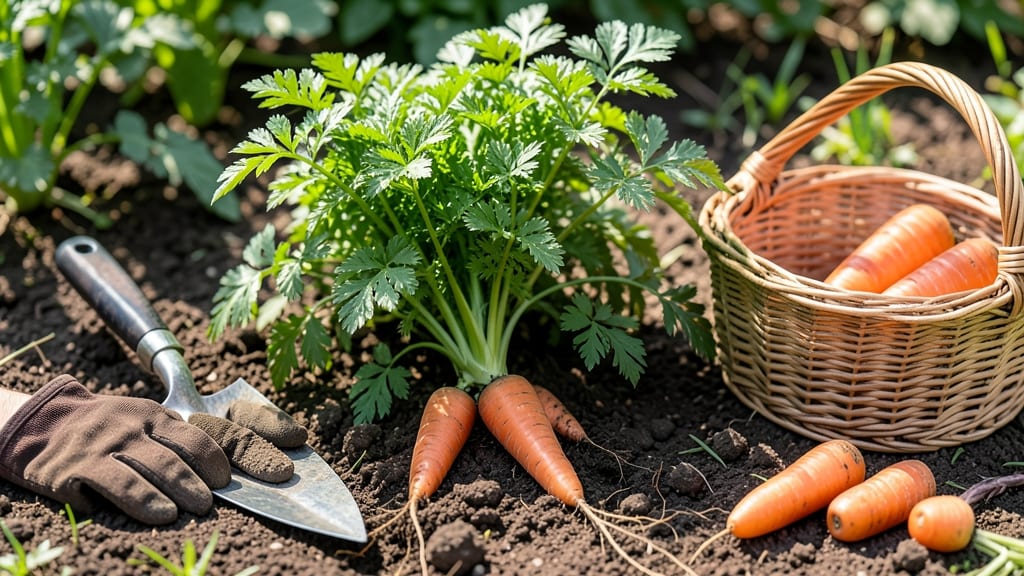
Harvesting carrots at the right time ensures you get sweet, tender roots instead of tough, woody ones — and the secret lies in checking the soil and size.
Picture this: you’ve spent weeks tending to your 🥕 patch, only to pull a carrot that’s split, bitter, or still tiny. That’s the difference between a perfect harvest and a wasted effort.
Most gardeners wait too long, but the truth is, carrots are ready when their tops reach about 3-4 inches tall. The soil should also show the carrot’s shoulder peeking above ground — a sure sign it’s time to pull.
Below, I’ll walk you through the best ways to test for maturity, how to adjust for different varieties, and the one mistake that turns sweet roots into tough, inedible sticks.

How to check carrot maturity using soil & fingerwidth tests
Knowing exactly when to harvest your carrots ensures you get the sweetest, tenderest roots possible. Unlike many vegetables, carrots don’t ripen after picking, so timing is everything.
The two most reliable methods I use are the soil depth check and the fingerwidth test, both of which give clear visual cues without damaging your crop.
Start by checking the shoulder of the carrot—the rounded top that should be visible above the soil. When about 1/2 inch is exposed, that’s your first sign of maturity.
This happens naturally as the root grows downward while the top stays at ground level. For me, this is the moment I begin testing with my fingers.
For the fingerwidth test, gently brush away soil around a few carrots. Compare the diameter of the root to your index finger. Most varieties should match when fully mature. Short varieties like 'Paris Market' will be pencil-thin, while long types like 'Danvers' may reach your middle finger's width.
This method works best on loose, well-drained soil where roots grow straight.
Don’t overlook the leaf size and color as secondary indicators. Mature carrot tops should be 3-4 inches tall with dark green, feathery foliage. If leaves are still small (2 inches or less) or pale, the roots need more time.
Yellowing leaves can signal either maturity or stress—so always check the roots first.
Pro tip: For continuous harvests, plant carrots in succession every 2 weeks during your growing season. This way, you’ll always have fresh carrots ready when the soil and finger tests confirm maturity. I plant my first batch in early spring and follow with summer plantings for fall harvests.
When checking maturity, avoid pulling carrots by their greens—this can break the root. Instead, use a hand fork or garden trowel to loosen soil around the base, then gently twist.
If the carrot resists, it’s not ready yet. For me, this gentle approach prevents damage and ensures I only harvest at the perfect moment.
Watch for weather conditions too. Carrots grown in cool temperatures (50-70°F) develop the best flavor. If your area experiences a heatwave, harvest sooner—roots may become tough and woody. I’ve found that morning harvests in cool weather preserve sweetness better than afternoon picking.
One common mistake I see is waiting until the entire plant looks mature. While the tops might look ready, the roots can still be small. Always check the soil and fingerwidth first, even if the foliage looks perfect.
This two-step verification has saved me from harvesting underdeveloped carrots more times than I can count.
Finally, remember that carrot varieties mature at different rates. Short types like 'Paris Market' may be ready in 50-60 days, while long varieties like 'Danvers' need 70-80 days. Always check the seed packet for specific guidance, but use the soil and finger tests as your final confirmation.
Best times to harvest carrots by variety (short, long, and intermediate types)
Not all carrots mature at the same time—some varieties are ready in 50 days, while others need 85 days to reach peak sweetness. Knowing your carrot type ensures you harvest when flavor and texture are perfect.
Short varieties like Nantes are quick to harvest, while Danvers and Chantenay take longer but store better. Let’s break down the best harvest windows for each type so you never pull a carrot too early or too late.
For short varieties, such as Nantes and Paris Market, the harvest window is tight. These carrots reach maturity in 50-60 days and should be pulled when their shoulders are visible above the soil.
Waiting too long can turn them woody, so check them every 5-7 days once they’re close to size. These varieties are perfect for quick harvests and baby carrots, but they won’t store as long as their longer counterparts.
| Variety Type | Days to Maturity | Best Harvest Time | Key Harvest Cue |
|---|---|---|---|
| Short Varieties | 50-60 days | Late spring to early summer | Shoulders visible, tops 3-4" tall |
| Intermediate Varieties | 60-70 days | Mid to late summer | Firm skin, 1-1.5" diameter |
| Long Varieties | 70-85 days | Late summer to fall | 2-3" diameter, deep orange color |
| Nantes (e.g., 'Paris Market') | 50-60 days | Late spring | Baby carrots, 2-3" long |
| Danvers (e.g., 'Danvers Half Long') | 70-85 days | Fall | 2-3" diameter, conical shape |
| Chantenay (e.g., 'Autumn King') | 70-80 days | Late summer | 1.5-2" diameter, cylindrical |
Intermediate varieties, like Golden Ball and Sugar Snax, strike a balance with a 60-70 day harvest window. These carrots are great for continuous harvesting because they mature gradually. Look for a 1-1.5 inch diameter and firm skin—these are your cues to pull them. They’re ideal for succession planting, so you can stagger harvests throughout the growing season.
Long varieties, such as Danvers and Chantenay, take the longest to mature, often 70-85 days. These are the classic storage carrots, so timing is crucial for both flavor and long-term storage. Harvest when they reach 2-3 inches in diameter and have a deep, vibrant color. Their slower growth means you can wait longer without sacrificing quality, but don’t push it—overripe carrots become tough and bitter.
Pro tip: For fall harvests, plant long varieties like <