
Picking
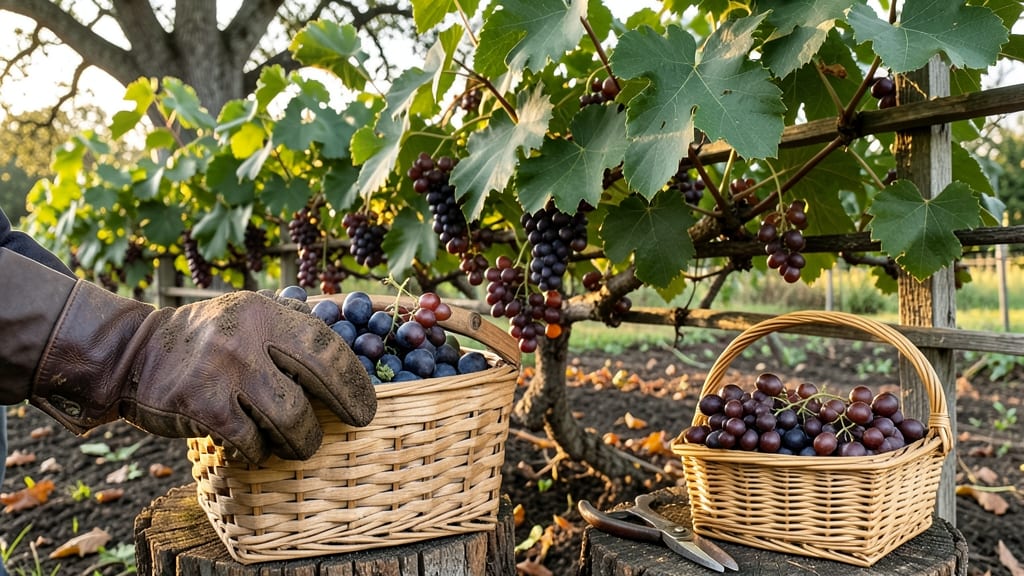
Harvesting muscadine grapes at the right time ensures deep purple skin and a sweet, flavorful taste 🍇 — and missing that window can leave you with tart, underripe clusters.
If you’ve ever waited patiently for your vines to darken, only to pick grapes that still taste like summer’s end, you know the frustration. The difference between a perfect harvest and a disappointing one often comes down to knowing exactly when those berries reach peak ripeness.
In this guide, I’ll walk you through the three key signs to watch for—from color shifts to sugar content—and how regional climate zones can shift your harvest window by weeks.
Whether you’re in the Southeast or California, you’ll learn how to test ripeness like a pro and avoid common mistakes that ruin flavor.
By the end, you’ll know not just when to harvest, but how to ensure every grape is at its sweetest, juiciest, and most ready to enjoy—or preserve for later.

3 Key signs your muscadine grapes are ready for harvest (skin color included)
Harvesting muscadine grapes at the right time ensures sweet, flavorful fruit packed with that signature musky aroma. Unlike table grapes, muscadines rely on deep purple skin and tactile cues rather than uniform size.
I’ve learned the hard way—waiting too long means overripe fruit that loses flavor, while harvesting too early gives tart, seedy grapes. The key is watching for these three visual and tactile signs that signal peak ripeness.
First, the berry color transformation is your most obvious clue. Muscadines start green but gradually deepen to purple-black hues as they ripen. This isn’t just surface-level—cut open a grape, and you’ll see the flesh mirrors this color shift.
In my USDA Zone 8 garden, I’ve noticed the skin turns a rich eggplant purple about 2 weeks before harvest, but full ripeness takes patience. Don’t rush—wait until the color is consistent across the cluster.
- 1 Deep Purple Skin: Grapes should be uniformly dark purple/black with no green patches. Use a color chart if unsure—some varieties like 'Scuppernong' stay lighter.
- 2 Brix Level ≥18: Test sugar content with a refractometer. Muscadines should read 18-22 Brix—any lower means they’re not sweet enough. I use a digital refractometer for accuracy.
- 3 Seed Firmness: Squeeze a grape gently—seeds should feel soft but not mushy. If they’re hard, the grape needs more time; if they’re squishy, it’s overripe. Pro tip: Twist the stem—it should separate cleanly from the vine.
Beyond color, tactile tests are non-negotiable. Gently press a grape between your thumb and forefinger—it should yield slightly but not squish like overripe fruit. I’ve found that cluster separation is another game-changer: ready-to-harvest grapes detach easily when you twist the stem with your fingers.
If the grape stays attached, it’s not ripe yet. This test is especially critical for loose-skinned varieties like 'Cowart,' which bruise easily if harvested too early.
Don’t overlook the aroma test, either. A ripe muscadine emits a sweet, musky scent—almost like a mix of grapes and honey. If your grapes smell neutral or sour, they’re not ready. I’ve trained my nose to detect this by comparing ripe and unripe clusters side by side.
For home growers without refractometers, this is your best free tool. Pair it with the taste test: bite into one grape. If it’s tart or seedy, wait a few days.
Regional differences play a role, too. In hotter climates like Zone 9 or 10, grapes ripen faster—sometimes by 2-3 weeks earlier than in cooler Zones 7-8. I’ve seen early September harvests in Florida but mid-October in North Carolina.
Pay attention to your local first frost date—muscadines won’t ripen post-frost, so plan accordingly. If you’re in doubt, harvest a few clusters early and taste-test them daily until you hit perfection.
One mistake I’ve made? Harvesting based on size alone. Muscadines don’t grow uniformly like table grapes, so big isn’t always better. Focus on the color, texture, and sugar content instead.
I now use a small notepad to track cluster colors and Brix levels over 7-10 days leading up to harvest. This helps me spot the sweet spot before the grapes overripe. For large-scale growers, this method ensures consistency across hundreds of vines.
Finally, morning harvests are ideal. Grapes are coolest and firmest first thing, making them easier to handle and less prone to bruising. Avoid harvesting after rain or in midday heat, as the skins can split or soften too quickly.
I’ve learned this the hard way—once, I harvested a batch in the afternoon, and by evening, half were bruised and fermenting. Store harvested grapes in shaded, well-ventilated crates and eat them within 3-5 days for the best flavor.
Mastering these three key signs—deep purple skin, Brix level, and tactile tests—will transform your muscadine harvest from hit-or-miss to consistently delicious.
Start checking your clusters now, and soon you’ll be enjoying homegrown grapes at their peak. Trust the process, and your taste buds will thank you! 🍇
Muscadine grapes harvest time by region: climate zones & ideal months
Timing your muscadine grapes harvest depends heavily on your USDA climate zone and local weather patterns. In Zone 7, harvests typically begin in late August, while Zone 10 growers may wait until October.
Humidity and temperature shifts can delay or accelerate ripening, so always check berry color and seed softness before picking. Southern states like Georgia and South Carolina often enjoy the earliest harvests due to their warm, humid climates.
California's cooler coastal zones (8-9) may see harvests as late as early October, while inland areas in Zone 10 can extend into November. The key is monitoring sugar content (aim for 16-20 Brix) and avoiding frost, which can damage tender grapes.
In Zone 7, early frosts in November may force a rushed harvest, while Zone 10 growers have more flexibility.
| USDA Zone | Primary Harvest Months | Key Climate Factors | Regional Examples |
|---|---|---|---|
| 7 | Late August - Early September | Moderate humidity, warm days, cool nights | Virginia, North Carolina |
| 8 | Mid-August - Late September | High humidity, hot summers | Georgia, South Carolina |
| 9 | Late August - October | Warm coastal climates | Florida, California Coast |
| 10 | September - November | Tropical heat, minimal frost risk | Texas, Southern California |
If you're in a transition zone (e.g., Zone 8a/8b), watch for early morning frost warnings in September. In these areas, harvests may start as early as mid-August for early-ripening varieties like 'Scuppernong'.
For late-season varieties like 'Carlos', wait until September-October to ensure full flavor development. Always harvest on dry mornings to prevent disease spread from wet grapes.
California growers in Zone 9-10 often extend harvests into October due to cooler coastal breezes. However, inland areas like Central Valley may finish harvests by mid-September to avoid heat stress.
Test sugar levels with a refractometer—18+ Brix indicates peak ripeness. In humid zones (8-9), harvest slightly earlier to prevent rot from excess moisture.
Pro tip: Shade-cloth can help delay ripening in hot zones (10) if you need extra time. Conversely, mulch around vines in Zone 7 can accelerate ripening by 1-2 weeks by warming the soil. Always adjust your harvest timeline based on local weather forecasts and berry development—not just the calendar!
For first-time growers, mark your harvest calendar with 2-3 weeks before the expected window. This gives you time to test ripeness and adjust for unexpected weather. In Zone 7, early frosts can arrive by October 15, so plan accordingly.
With the right timing, you'll enjoy juicy, flavorful muscadines that shine in jams, wines, or fresh eating!