
How To
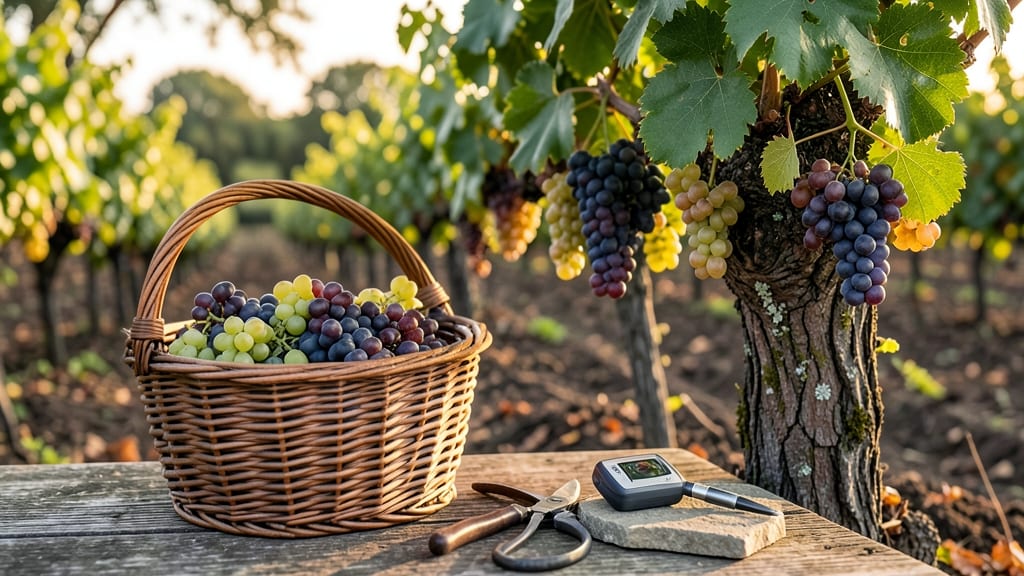
Harvesting grapes at the right time ensures sweet, juicy clusters 🍇 — and missing that window can turn your labor into a tart, underwhelming mess.
I’ve watched homegrown grapes go from tart and seedy to perfectly ripe in just a few days, and the difference in flavor is night and day. The key? Knowing when those clusters are ready to pick.
You’ll learn how to test for ripeness using the berry slip method, when to check sugar levels (and what tools to use), and how weather or variety can shift your harvest timeline.
By the end, you’ll avoid the most common mistakes—like harvesting too early for sugar or too late for acidity—and walk away with a foolproof plan for perfectly timed grapes every season.

How to test grapes for perfect ripeness using the berry slip method
When it comes to harvesting grapes, the berry slip method is one of the most reliable tricks I’ve learned. This simple test helps determine if your grapes are ready to pick by checking how easily they separate from the vine.
Unlike relying solely on color or size—which can be deceiving—this method gives you a clear, tactile signal that your grapes are at peak ripeness.
Grapes that are ready for harvest will slip easily from the stem when gently pulled. This happens because the cell walls soften as sugars develop, making the berry detach with minimal force. But here’s the catch: not all grapes should be harvested just because they slip.
Some varieties, especially wine grapes, need to stay on the vine longer for proper flavor development, even if they pass the slip test.
Before you start harvesting, grab a small cluster of grapes and give them a gentle tug. If they come off with little resistance, they’re likely ready. However, if they’re still firmly attached, they need more time on the vine.
This method works best when combined with other visual cues, like deep color and plumpness, for a foolproof result.
Step-by-Step Berry Slip Test for Grapes
-
Step 1: Choose a Representative Cluster
Select a small cluster of grapes from the middle of the vine (avoid edges, which may ripen unevenly). -
Step 2: Gently Grasp the Grape
Hold a single grape between your thumb and forefinger and give it a firm but gentle pull away from the stem. -
Step 3: Assess the Slip
If the grape detaches easily (slips off with minimal force), it’s ready. If it resists or the stem snaps, it needs more time. -
Step 4: Check for Consistency
Test 3-5 grapes from different parts of the cluster. If most slip easily, the cluster is harvest-ready. -
Step 5: Verify with Color and Taste
Confirm with deep color and a quick taste. Sweetness should be balanced with slight tartness (varies by variety). -
Step 6: Harvest Timing Adjustments
For table grapes, harvest when most grapes slip. For wine grapes, wait 1-2 weeks longer even if they slip early.
While the berry slip method is incredibly useful, it’s not the only factor to consider.
For example, Thompson Seedless grapes should slip easily and turn a deep golden hue, while Concord grapes may need to stay on the vine slightly longer to develop their signature rich, purple color and complex flavors.
Always pair this test with a quick taste to ensure the grapes meet your flavor preferences.
One common mistake I see is harvesting grapes too early just because they slip. Some varieties, like Cabernet Sauvignon, benefit from staying on the vine longer to build tannins and acidity.
If you’re growing grapes for wine, wait until the berries slip and the sugar levels reach your target Brix range (typically 22-26 for reds). For table grapes, aim for 18-22 Brix and a fully developed slip.
Another pro tip: Test grapes in the morning when they’re coolest. Heat can make grapes appear riper than they are, leading to premature harvesting. If you’re unsure, wait a day or two and retest. Patience is key—overripe grapes can become mushy or attract pests like birds and wasps.
For organic growers, the berry slip method is especially valuable because it reduces the need for chemical ripening agents. By trusting the natural signals of the grapevine, you ensure your harvest is both flavorful and chemical-free.
Plus, it’s a great way to avoid the disappointment of underripe grapes that lack sweetness or overripe ones that are too soft.
Remember, the berry slip method is just one piece of the puzzle. Combine it with visual cues (color, size), taste tests, and even a refractometer reading for the most accurate harvest timing.
When done right, this method will give you grapes that are perfectly ripe, sweet, and bursting with flavor—every single time.
Sugar content and acid balance: the science behind grape ripeness
Understanding the sugar content and acid balance in your grapes is the secret to achieving that perfect flavor profile. A refractometer becomes your best friend here, measuring Brix levels—the percentage of sugar in the grape juice.
For table grapes, aim for 18-22 Brix, while wine grapes often need 22-26 Brix to develop rich flavors. But sugar isn't the only factor; acidity plays a crucial role in balancing that sweetness.
Acidity gives grapes their bright, refreshing taste, especially in varieties like Concord or Cabernet Sauvignon. If grapes are too sweet but lack acidity, they can taste flat or even cloying. Testing both Brix levels and pH balance ensures your grapes are perfectly ripe.
For example, a Thompson Seedless grape should have a pH of 3.2-3.8, while a Muscat might lean slightly lower for that signature tang.
Here’s how to use a refractometer: crush a grape between your fingers, place the juice on the prism, and read the Brix level. Pair this with a simple pH test strip for acidity.
If your grapes are at 20 Brix but the pH is too high (above 4.0), they’ll taste dull. Adjust by letting them ripen longer on the vine—or harvest earlier if acidity is perfect but sugar is lagging.
| Grape Variety | Ideal Brix Range | Target pH | Best Harvest Time |
|---|---|---|---|
| Thompson Seedless (Table) | 18-22 | 3.2-3.8 | Late August-September |
| Concord (Wine/Juice) | 20-24 | 3.0-3.6 | Late September-October |
| Cabernet Sauvignon (Wine) | 22-26 | 3.2-3.8 | Mid-October |
| Muscat (Sweet/Eating) | 16-20 | 3.0-3.5 | Early September |
| Flame Seedless (Table) | 20-23 | 3.3-3.9 | Mid-September |
Don’t forget that weather conditions can impact ripening. Hot, dry summers often push grapes to higher Brix levels faster, while cool, wet seasons may slow sugar development.
If a heatwave hits, grapes can concentrate sugars too quickly, leading to overripe or even sunburned fruit. Monitor your vines closely during extreme weather.
For wine grapes, patience is key. Let them linger on the vine until they reach the upper end of their Brix range, even if that means waiting until October. The extra time allows flavors to develop complexity.
Meanwhile, table grapes should be harvested just before peak sweetness to preserve their crisp texture. A quick berry slip test (gently pulling a grape—if it slips easily, it’s ripe) can confirm readiness alongside your refractometer readings.
Balancing sugar and acidity isn’t just about numbers—it’s about crafting the perfect flavor. Use your refractometer and pH strips as your guides, but trust your palate too. The best grapes are those that satisfy both the data and your taste buds.