
Picking
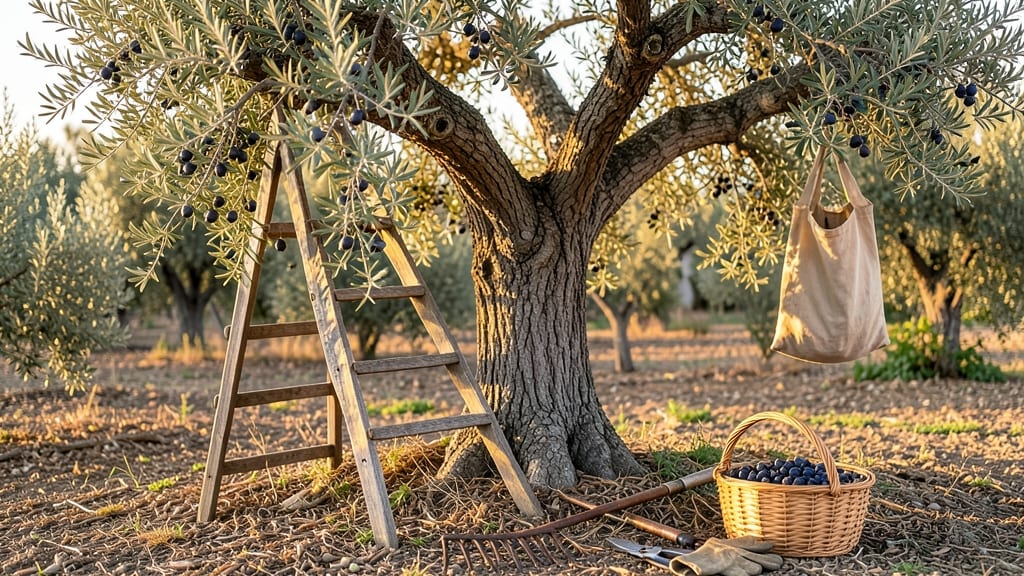
Harvesting olives at the right time in the olive harvest season determines whether you end up with bitter, underripe fruit or rich, flavorful olives perfect for curing or oil.
Picture this: you’ve waited months for your 🫒 olive tree to ripen, only to pick too early and end up with olives that taste sharp and unripe.
Or worse, you wait too long, and the fruit becomes overripe and mealy. The difference between these two outcomes? Timing—and knowing the signs of ripeness.
In Mediterranean climates like California, Spain, or Italy, the harvest typically falls between October and January, but the exact window depends on your olive variety and local weather.
For home gardeners in USDA zones 8a-10b, this means paying close attention to color shifts, natural fruit drop, and even the firmness of the pit.
Below, I’ll walk you through how to spot the perfect moment to harvest, whether you’re hand-picking or using mechanical methods, and how to preserve that freshness for curing or oil extraction. No more guesswork—just peak flavor and yield every time.

How to determine the perfect olive harvest season timeline
Harvesting olives at the right time ensures maximum flavor, optimal oil content, and longer shelf life. But unlike apples or tomatoes, olives don’t ripen after picking—they must be harvested when perfectly ripe on the tree.
The key lies in watching for three critical indicators: color shifts, fruit drop patterns, and skin toughness. Each olive variety also has its own ideal window, often tied to regional climates and historical harvest traditions.
In Mediterranean climates, harvests typically run from October through January, while U.S. growers in California often pick between September and December. These timelines shift based on temperature fluctuations, rainfall patterns, and even elevation changes.
For home gardeners, understanding your local microclimate is just as important as knowing your olive variety. For example, Arbequina olives ripen earlier than Manzanillo, meaning you might harvest the former in late October while the latter peaks in December.
Before diving into specifics, let’s break down the universal signs of olive ripeness that apply to all varieties. These visual and tactile cues are your best tools for determining the perfect harvest moment. Once you master them, you’ll never risk picking olives that are too green or overripe again.
| Olive Variety | Color Shift | Harvest Window | Key Ripeness Test | Best For |
|---|---|---|---|---|
| Arbequina | Green → deep purple | Late October–November | Skin resists nail press | Table olives, high-quality oil |
| Manzanillo | Green → black | December–January | Natural drop begins | Dual-purpose (oil/table) |
| Frantoio | Green → deep violet | November–December | Pit separates easily | Oil production |
| Kalamata | Green → deep purple-black | Late November–January | Skin toughens significantly | Brine-cured olives |
| Mission | Green → brownish-purple | September–October (cooler zones) | Fruit softens slightly | Fresh eating, oil |
The color shift is your first clue that olives are nearing harvest. Most varieties transition from bright green to deep purple or black, but some, like Mission olives, develop a brownish-purple hue.
Pay close attention to individual fruit coloration—even within one tree, olives may ripen at slightly different rates. If you’re growing multiple varieties, harvest each one separately to avoid mixing underripe and overripe fruit.
Next, watch for natural fruit drop, a sign that olives are ready to be picked. When olives begin falling to the ground on their own, it’s a clear signal that the tree is releasing them at peak ripeness.
However, don’t wait until they’re littering the ground—this can lead to overripe olives, which may split or attract pests. Instead, start harvesting when you notice 10–20% of the crop dropping naturally. This window is typically 2–4 weeks before full drop, depending on your climate.
For precise timing, use the skin toughness test. Gently press an olive between your thumb and index finger. If the skin resists pressure and doesn’t dent easily, it’s likely ripe. Overripe olives will feel soft and mushy, while underripe ones will be firm but thin-skinned.
Pro tip: Cut an olive open to check the pit separation. In ripe olives, the pit should detach cleanly from the flesh, indicating optimal oil content and flavor.
Don’t overlook the role of oil content measurements, especially if you’re growing olives for oil production. While home gardeners may not have access to professional refractometers, you can still gauge ripeness
Best practices for harvesting olives at peak flavor and oil quality
Once you've identified your olive harvest season, the next critical step is harvesting at the exact moment when flavor and oil quality peak. This requires understanding both hand-picking techniques and mechanical harvesting methods, as well as recognizing subtle signs of ripeness that distinguish premium olives from mediocre ones.
For most olive varieties, the ideal harvest window spans just 4-6 weeks. Missing this window can result in olives that are either too green (bitter) or overripe (soft and prone to spoilage).
I've learned through experience that color changes are the most reliable indicator—look for olives transitioning from vibrant green to deep purple or black, depending on the variety.
🚨
⚠️ Harvest Too Late = Lost Oil Quality
Overripe olives (black and mushy) contain 30% less oil and develop rancid flavors. The perfect harvest occurs when olives are 70-80% ripe—firm to touch but with color changes. Test a few by pressing gently: if the pit separates easily, they're ready!
For hand-picking olives, I recommend using a long-handled rake or net to gently shake branches over a tarp. This method preserves fruit integrity and is ideal for small orchards or home gardens.
Always harvest on dry, sunny mornings to prevent fungal growth—wet olives left in the sun can develop mold within hours.
In commercial settings, mechanical harvesters (vibrating shakers or combs) are often used, but these can damage branches if not operated carefully. I've seen operations lose 20% of yield due to improper timing—always harvest before heavy rains, as wet olives bruise easily and spoil faster.
After harvesting, immediate storage is crucial. Spread olives in a single layer on trays in a cool, dark place (50-60°F) for 24-48 hours to allow moisture to evaporate. For long-term storage, use ventilated containers and refrigerate—properly stored olives maintain quality for up to 6 months.
One common mistake I've seen is overestimating ripeness based solely on color. Always perform the "pit test": squeeze an olive firmly—if the pit moves freely, it's ready. For oil production, harvest earlier (70% ripe) than for table olives (80-90% ripe) to maximize oil yield and quality.
Finally, never harvest olives that have natural pests like olive fruit flies. These insects lay eggs inside the fruit, and even a few infested olives can ruin an entire batch.
Inspect a sample of 50 olives before full harvest—if you find more than 2-3 with holes or signs of infestation, delay harvesting by 1-2 weeks.