
Picking
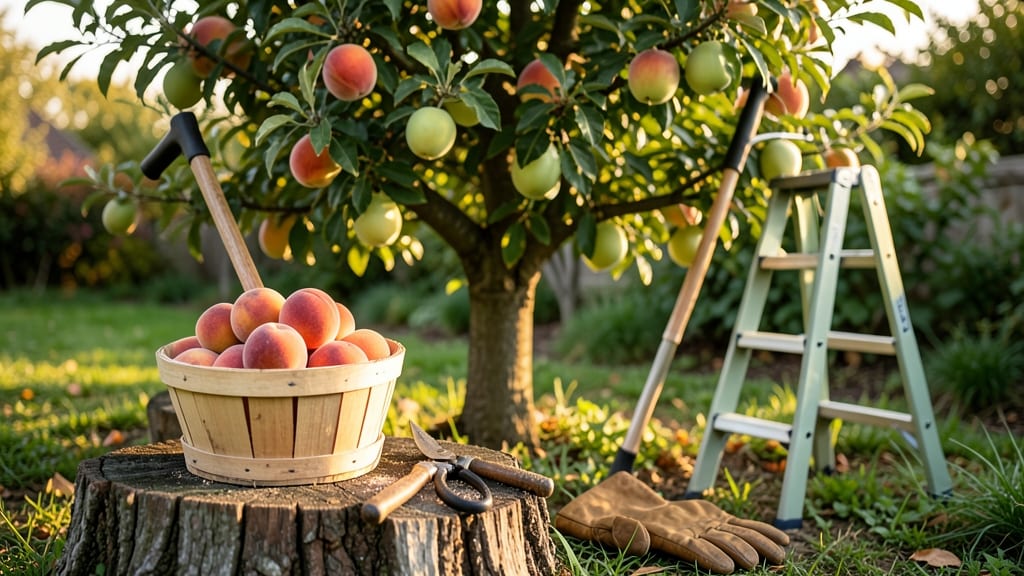
Peaches ripen at the perfect harvest time when they pull free from the branch and blush deep yellow 🍑 — a moment that separates a great crop from a mediocre one.
There’s nothing quite like the moment you pluck a perfectly ripe peach from your tree—juicy, sweet, and ready to eat straight from the branch. But knowing exactly when that moment arrives can mean the difference between a perfect harvest and a disappointing one. Timing is everything, and peaches demand precision.
In USDA Zone 6a, where spring planting begins in March and April, peaches typically reach their peak ripeness between July and August. However, regional climate variations—like early heatwaves or late frosts—can shift that window by weeks.
Learning to read the fruit’s color, firmness, and scent is the key to avoiding overripe or underripe mistakes.
Below, I’ll walk you through the exact visual cues to watch for, how to adjust for your local climate, and the simple post-harvest care tricks that keep your peaches tasting fresh for days. No more guessing—just perfect, ready-to-eat peaches every time.


How to determine the best peach harvest time by color, firmness, and smell
Peaches are finicky fruits—pick them too early, and they’ll lack sweetness; too late, and they’ll turn mealy or attract pests. The key lies in mastering three visual cues: skin color, fruit firmness, and aromatic signals.
These clues work together to tell you when your peaches are at their peak, ready to burst with flavor. Understanding these signs ensures you harvest at the optimal ripeness window, typically between mid-July and early August in most U.S. growing zones.
First, focus on the skin color transition. Ripe peaches develop a deep yellow-blush hue (or red, depending on the variety) that covers at least 50% of the fruit. The blush should be even and vibrant, not patchy or dull.
For example, Elberta peaches turn a golden-yellow with a faint red blush, while Redhaven varieties develop a bold red overlay. Avoid picking fruit that’s still mostly green—this means it’s underripe and won’t sweeten further off the tree.
Next, perform the gentle pull test to check fruit detachment. Gently grasp the peach near the stem and twist it slightly. If it freestones (separates cleanly from the pit) or yields with minimal resistance, it’s ready.
A ripe peach should detach easily but not fall off when you jostle the branch. If the fruit resists, it’s not ready yet—wait 2–3 more days for full ripeness. This test is especially critical for clingstone varieties, where the pit stays attached to the fruit.
Don’t overlook the scent test, a subtle but foolproof indicator. A ripe peach emits a sweet, floral aroma near the stem. Hold the fruit close to your nose and sniff—if you detect a honey-like fragrance, it’s ready to pick.
Skip this step at your peril: peaches that smell neutral or sour are either underripe or overripe. Pro tip: Check for scent early in the morning when aromas are strongest due to cooler temperatures.
| Ripeness Cue | What to Look For | Action to Take |
|---|---|---|
| Skin Color | Deep yellow-blush or red hue covering 50%+ of fruit | Check for even color, not patchy or green |
| Firmness | Yields slightly when pressed near stem; not hard or mushy | Perform pull test—fruit should detach easily |
| Scent | Sweet, floral aroma near the stem | Sniff early morning for strongest scent |
| Fruit Size | Reached full variety size (e.g., 2.5–4 inches in diameter) | Compare to similar ripe peaches on the tree |
| Blossom End | Softens slightly with possible blush near stem | Gently press—should feel yielding, not hard |
Climate plays a surprising role in peach ripening. In warmer southern zones (8–10), peaches may ripen 2–3 weeks earlier than in cooler northern regions (5–7). For example, Florida peaches often hit peak ripeness by late June, while Pacific Northwest trees may not reach harvest until early September.
Heat waves can also speed up ripening, so monitor your fruit closely during unseasonably hot spells. Conversely, cool, cloudy weather can delay color development—don’t rush to pick if the blush is slow to appear.
Regional variations also affect harvest timing consistency. In dry climates like Arizona or California, peaches may concentrate sugars faster, leading to earlier ripening. Meanwhile, humid eastern states like Georgia or South Carolina might see peaches ripen more slowly due to moisture stress.
To account for these differences, track your tree’s specific variety and adjust your expectations. For instance, Jubilee peaches typically ripen 1–2 weeks later than Redhaven, even in the same climate.
Once you’ve confirmed ripeness, harvest on a dry, sunny morning to minimize bruising. Use clean pruning shears or your hands to avoid damaging the fruit. Place peaches in a single layer in shallow containers to prevent crushing during transport.
Store them at room temperature for 2–3 days to ripen further if needed, or refrigerate for up to 2 weeks to slow the process. Overripe peaches will develop a fermented smell and soft, mushy flesh—so act quickly once they’re off the tree!
Pro tip: If you’re unsure about ripeness, pick a few test peaches and let them ripen indoors. This way, you’ll learn your tree’s unique ripening patterns and refine your future harvest timing.
With practice, you’ll develop an almost instinctive sense for when your peaches are perfectly ripe—ready to be enjoyed fresh, canned, or turned into jam. The reward? A bounty of juicy, sweet peaches that taste like summer in every bite.
Peach variety harvest timing: when to pick freestone vs clingstone types
Not all peaches ripen at the same time, and their freestone or clingstone classification plays a huge role in harvest timing and post-picking plans.
Freestone peaches (like Elberta) release easily from their pits, making them ideal for fresh eating, while clingstone varieties (like Redhaven) cling tightly to their pits, better suited for canning or cooking.
Knowing your tree’s type—and the exact harvest window—ensures you don’t miss peak ripeness or end up with underripe fruit.
The USDA Zone 6a average harvest spans from late July to mid-August, but varieties like Jubilee (a freestone) ripen earlier, while Suncrest (clingstone) lingers later. Climate, tree age, and even sunlight exposure can shift these windows by 1-2 weeks.
For example, a dwarf peach tree in full sun may ripen 10 days earlier than a standard tree in partial shade.
Here’s how to match your peach variety to the right harvest strategy, including storage tips to keep your fruit fresh longer.
If you’re growing freestone peaches, prioritize daily checks in late July, as they ripen faster and soften quickly once picked. Use a gentle twist to avoid bruising the fruit—if it pulls free with minimal force, it’s ready.
For clingstone types, wait until the skin develops a deep, uniform color (no green patches) and the fruit feels firm but slightly yielding near the stem. These varieties often ripen 1-2 weeks later than freestones, so patience pays off.
Storage strategies differ dramatically between types. Freestone peaches like Jubilee should be eaten within 3-5 days of harvest or frozen for long-term use, as their flesh becomes mushy if left at room temperature.
Meanwhile, clingstone varieties like Redhaven hold up better for 7-10 days in the fridge, making them perfect for meal prep. For both types, avoid stacking fruit in single-layer containers to prevent ethylene gas damage, which speeds up spoilage.
One critical mistake I’ve seen gardeners make is assuming all peaches ripen simultaneously. Even on the same tree, freestone and clingstone varieties can have overlapping but distinct harvest windows. For example, a mixed orchard might yield Jubilee freestones in mid-July while Suncrest clingstones aren’t ready until late August.
Plan your harvest in 2-week blocks to avoid missing peak ripeness on any variety.
🍑