
Vegetables
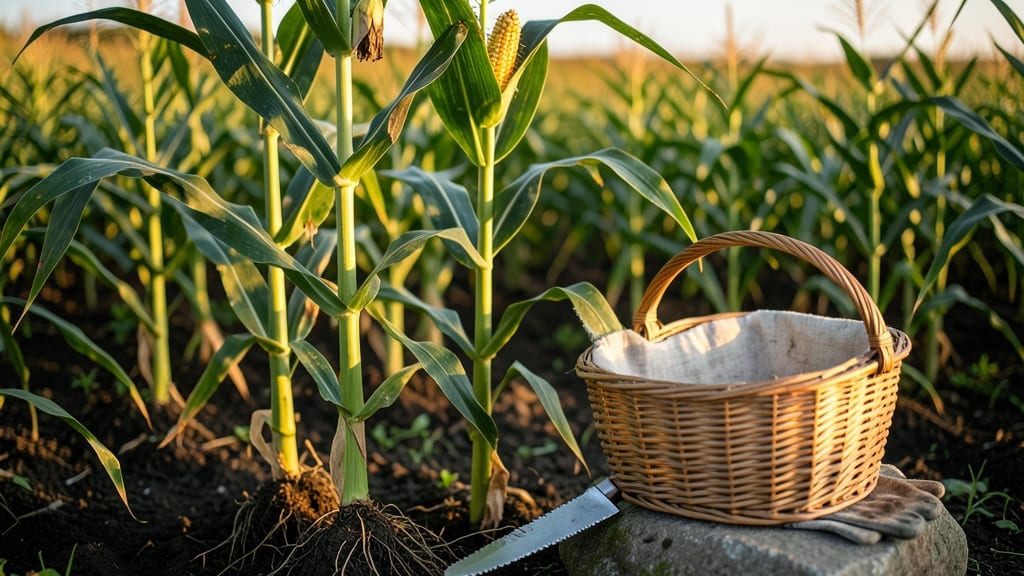
Harvesting sweet corn at the right time turns your garden into a treasure trove of tender, juicy kernels 🌽 — the difference between a meal-worthy ear and a tough, starchy disappointment.
Picture this: you’ve nurtured your corn all season, but one wrong move at harvest can ruin weeks of hard work. The key? Watching for silks that turn brown and kernels that ooze milky liquid when pierced — these are your green thumbs’ secret weapons.
In USDA Zone 6a, where most home gardeners grow sweet corn, peak harvest falls between July and August, but timing isn’t just about the calendar. Regional heat waves, soil moisture, and even the time of day you pick can shift when your corn reaches its sweetest moment.
Below, I’ll walk you through the exact visual cues to look for, how to test ripeness like a pro, and the 3 biggest mistakes that turn perfect ears into disappointing leftovers. Ready to go from garden to table with flawless flavor?

When to harvest sweet corn: silk color & kernel plumpness guide
There’s nothing worse than biting into sweet corn that’s tough, starchy, and lacking that perfect juicy sweetness. The secret? Harvesting at the exact right moment—when the silks, kernels, and husks all send you the right signals.
I’ve learned through years of gardening that timing is everything, and mastering these three key indicators will guarantee your corn is at its peak flavor and texture.
Most gardeners focus only on the silk color, but the real magic happens when you combine that with kernel plumpness and husk tightness. Each variety has slight variations, but these universal cues work for sugar-enhanced hybrids, bicolor varieties, and even heirloom types.
Let’s break down what to look for—and when to grab your pruners!
| Indicator | Ready for Harvest | Not Ready | Pro Tip |
|---|---|---|---|
| Silk Color | Brown and crispy | Bright green or yellow | Silks dry within 24-48 hours of pollination |
| Kernel Plumpness | Firm but milky when pierced | Hard or dented | Press a kernel—milky liquid means perfect sweetness |
| Husk Tightness | Fits snugly around ear | Loose or pulling away | Peel back husks gently—if kernels are exposed, it’s past prime |
| Ear Weight | Feels heavy for size | Light and hollow-sounding | A heavy ear = moisture-rich kernels |
The silk color is your first clue—when those golden threads turn brown and crispy, it’s a sign pollination happened 1-2 days ago. But don’t stop there! Some varieties, like Silver Queen or Peaches and Cream, have silks that stay green longer.
That’s why you must also check the kernels: press one gently with your fingernail. If a milky white liquid oozes out, you’ve hit the sweet spot. No liquid? Wait another day.
Here’s where most gardeners go wrong: they harvest based on days after planting. While 60-90 days is the general range (depending on variety), environmental factors like temperature swings or drought stress can delay maturity.
For example, my Early Sunglow corn matured in 65 days this year because of consistent morning watering, but last summer’s heat wave stretched it to 78 days. Always trust the visual cues, not the calendar!
Don’t overlook the husk tightness—this is your final check. The husks should wrap the ear snugly without gaps. If they’re loose or pulling away, the kernels may already be converting starches into sugars and turning mealy or tough.
Pro tip: Give the ear a gentle squeeze. A ripe ear feels heavy for its size, while an underripe one feels light and hollow. This trick works even for bush corn varieties like Bodacious, which mature faster.
Regional differences matter too! In hotter climates (Zones 8-10), sweet corn often matures 10-14 days faster due to longer daylight. Meanwhile, in cooler zones (4-6), you might need to wait an extra week.
Last year, my neighbor in Zone 5 harvested her Country Gentleman corn 12 days later than my Zone 7 plants—same variety, different timelines! Always adjust your expectations based on your local microclimate.
One mistake I see often? Harvesting too early because the silks are brown but the kernels aren’t plump. This leads to underdeveloped ears with tiny, watery kernels. Conversely, waiting too long turns the corn starchy and dry.
The golden window is just 24-48 hours after the silks brown. Set a reminder to check your plants daily during peak harvest season—July and August for most regions—to catch that perfect moment.
For super-sweet varieties like Ambrosia or Honey & Pearl, the kernels may stay tender for 3-4 days post-harvest if stored properly. But for standard types, harvest in the morning when temperatures are coolest to preserve sweetness.
And here’s a trick I learned from my grandpa: Harvest a few ears at different stages—you’ll taste the difference immediately!
If you’re growing multiple varieties, mark your plants with flags or labels. Some, like Golden Bantam (a dwarf variety), mature in just 60 days, while others like Kandy Korn take up to 85 days
Sweet corn harvest mistakes that ruin your crop (and how to avoid them)
Harvesting sweet corn at the wrong time or mishandling it after the pick can turn your juicy kernels into tough, starchy disappointments. Even experienced gardeners make these common mistakes—like ignoring silk color or storing ears improperly—that drastically reduce flavor and texture.
The good news? Avoiding these pitfalls is simple once you know what to watch for.
One of the biggest mistakes is harvesting too early. Bright green silks mean your corn isn’t ready yet, and picking it then results in underdeveloped kernels that lack sweetness. On the flip side, waiting too long turns kernels hard and starchy, ruining that perfect milky texture.
Timing is everything, and small details like kernel plumpness and husk tightness make all the difference.
Kernels that turn yellow or dented are past their prime. Once silks dry completely and ears feel light for their size, the window closes fast. Overripe corn loses 90% of its natural sugars within 24 hours—so act fast when silks turn brown and crispy!
Improper handling after harvest is another silent killer. Twisting ears off the stalk instead of cutting them with a sharp knife can damage the ear base, speeding up spoilage.
Always use clean, sterilized tools to prevent bacterial contamination. Even worse? Storing corn with the husks removed—this causes kernels to dry out 3x faster and lose moisture.
Storage mistakes are equally damaging. Sweet corn should never sit at room temperature for more than 2-3 days—even in the fridge. Instead, blanch freshly harvested ears for 4-5 minutes before shocking them in ice water.
This preserves sugar content and extends freshness by up to 2 weeks in the refrigerator. For longer storage, freeze blanched corn in airtight bags for up to 12 months.
Regional climate also plays a role. In hotter zones (USDA 9-10), corn matures faster—sometimes in as few as 60 days—while cooler areas (USDA 4-5) may take 90 days.
Always check your seed packet for days-to-maturity and adjust your harvest watch accordingly. Pro tip: Keep a harvest journal to track silk color and kernel development in your specific microclimate.
Finally, don’t overlook the time-of-day factor. Morning harvests yield the sweetest corn because sugars peak after a cool night. Avoid picking in the heat of the day—kernels lose sweetness quickly when exposed to temperatures above 85°F.
With these tips, you’ll go from starchy disappointments to garden-fresh perfection every time. 🌽