
Vegetables
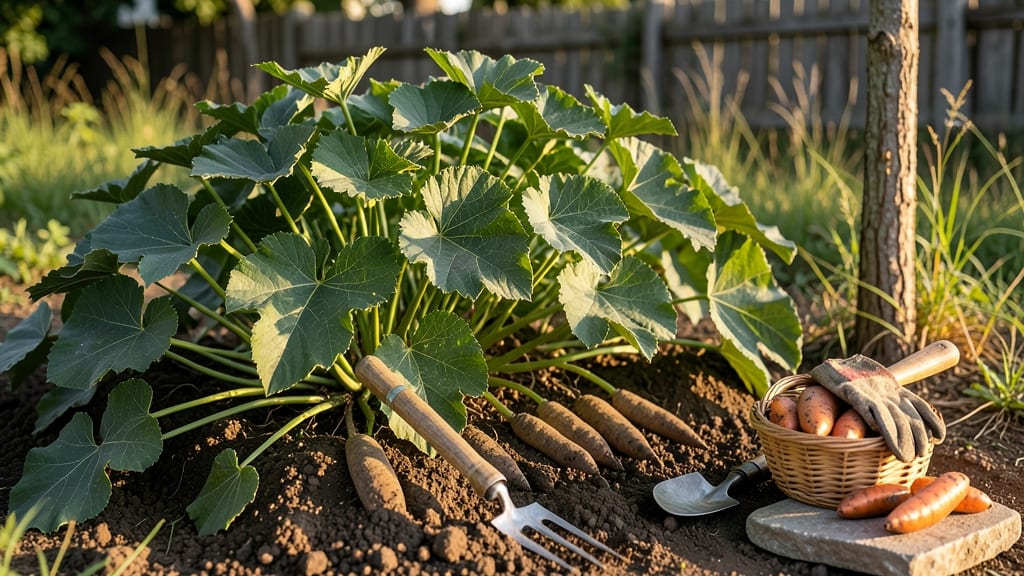
Harvesting sweet potatoes at the right time determines whether you end up with perfectly sweet, tender tubers or tough, woody disappointments.
Picture this: you’ve nurtured your 🍠 plants all summer, only to dig up small, starchy potatoes that taste bland—or worse, leave them in the ground too long and watch them turn hard and inedible. The difference between success and frustration often comes down to timing.
Most varieties reach peak ripeness 90 to 150 days after planting, but frost risk, leaf color, and soil conditions all play a role in your zone. Below, I’ll walk you through the foolproof finger-press test and other key signs to know when to pull them from the soil.
From warm climates to short-season gardens, you’ll learn how to adjust your harvest window, store your crop properly, and avoid the most common mistakes that ruin a bountiful yield.

How to Use the finger-press test to determine sweet potato harvest time
Timing your sweet potato harvest correctly is the difference between sweet, moist tubers and tough, woody disappointments. While most gardeners wait for vines to yellow, the finger-press test gives you an instant, foolproof way to check ripeness without digging up every plant.
This simple method combines skin toughness with finger pressure resistance to pinpoint the exact moment to harvest.
The finger-press test works by evaluating how much resistance the sweet potato's skin offers when pressed with your fingernail. Unlike other root vegetables, sweet potatoes don't soften as they mature—they actually harden.
When the skin becomes too tough to pierce easily, it's time to harvest before they become over-mature and develop a woody texture.
Step-by-Step Finger-Press Test
- Step 1: Wait for vine signals – Begin testing when 50-70% of vines show yellowing or wilting (usually 90-120 days after planting). This narrows your window to the final 2-3 weeks of harvest readiness.
- Step 2: Choose test spots – Select 3-5 healthy plants across your patch. Press the soil gently near the base of vines to locate tubers without damaging them. Aim for the largest leaf clusters, where tubers tend to develop.
- Step 3: Perform the finger press – Use your fingernail to press firmly into the soil where you suspect a tuber. If the skin resists penetration and feels thick and leathery, the tuber is ready. If it gives way easily, wait 5-7 more days and retest.
- Step 4: Check skin color – When ready, the skin should be deep orange, purple, or tan (depending on variety) and free of blemishes. Immature tubers have thin, pale skin that’s easy to pierce.
- Step 5: Confirm with size – Gently brush away soil to expose the tuber. It should be at least 3-4 inches long and feel heavy for its size. Small tubers (<2 inches) are underdeveloped and starchy.
- Step 6: Stop testing – Once 80% of tested tubers pass the finger-press test, harvest the entire patch within 3-4 days to avoid over-maturity. Tubers left in the ground beyond this point risk becoming woody and inedible.
One common mistake is testing too late in the season. Sweet potatoes left in cold soil (50°F or below) develop chilling injuries, turning their flesh dull and watery.
If your first frost is approaching, prioritize harvesting tubers that pass the finger-press test, even if vines aren’t fully yellow.
For longer storage, harvest when tubers are firm but not rock-hard. Overly tough skin indicates over-maturity, which reduces storage life. Cure harvested sweet potatoes in a warm (80-85°F), humid (80-90%) space for 5-10 days to thicken their skin and improve sweetness.
Pro tip: Mark your garden with harvest flags when you start testing. This helps track progress and ensures you don’t miss the optimal window. In short-season climates (USDA Zones 6-8), combine the finger-press test with soil temperature checks—harvest before soil drops below 60°F.
Remember, the finger-press test isn’t just about size—it’s about texture. A tuber that’s large but soft hasn’t reached peak flavor, while a small but firm tuber is often sweeter and more flavorful. Trust your fingers—they’re your best tool for perfectly timed harvests every season.
Sweet potato harvest time by variety: when to dig for maximum yield
Timing your sweet potato harvest correctly means the difference between sweet, flavorful tubers and tough, woody disappointments. Different varieties mature at slightly different rates, and understanding their specific needs helps you plan for the perfect harvest window.
Whether you're growing Beauregard, Jewel, Purple, or Georgia Jet, knowing when to dig ensures maximum yield and quality. Let's break down the ideal harvest times for each variety, including soil temperature requirements and frost risk factors.
Soil temperature plays a critical role in sweet potato maturation. Most varieties thrive when soil temperatures stay above 60°F (15°C) during the growing season. As temperatures drop below 50°F (10°C), growth slows significantly, and tubers may not reach their full potential.
Additionally, frost poses a serious threat—even a light frost can damage vines and reduce tuber quality. In colder climates, plan to harvest before the first frost date, while warmer regions may extend the season slightly.
Here’s a quick comparison of the most popular sweet potato varieties and their ideal harvest windows:
For Beauregard and Georgia Jet, which mature quickly, aim to harvest between 90-100 days after planting.
These varieties are especially sensitive to frost, so don’t wait too long. Jewel takes a bit longer—around 100-110 days
Meanwhile, Purple sweet potatoes are the slowest to mature, requiring 110-120 days and cooler soil temperatures for optimal flavor and texture. When planning your harvest, also consider your local climate. In USDA Zone 6a or colder, prioritize early-maturing varieties like Beauregard or Georgia Jet to avoid frost damage. In warmer zones, you can extend the season slightly, but always monitor soil temperatures and vine health. If vines start yellowing or wilting prematurely, it might be time to dig, even if the days to maturity haven’t passed. Pro tip: Use the finger-press test to confirm readiness. Press a fingernail into the skin of a tuber—if it resists, it’s ready to harvest. If it pierces easily, wait a few more days. This simple test ensures you dig at the perfect moment for sweet, flavorful sweet potatoes every time.