
Picking
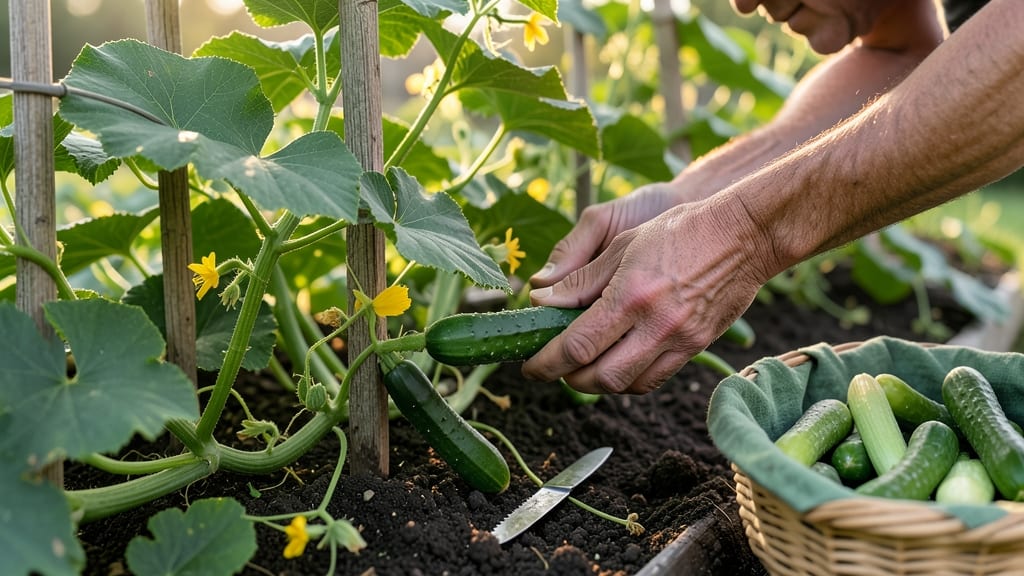
Harvesting cucumbers in the right month means the difference between crisp, sweet bites and bitter, seedy disappointment—so timing is everything for your 🥒 plants.
Most gardeners I know wait until July or August, but that’s often too late for peak flavor, especially in cooler zones. The truth is, your harvest window can start as early as June in warm climates or stretch into September if you pick the right varieties.
Below, I’ll break down the best months for your specific cucumber type—whether it’s slicing, pickling, or heirloom—and how to adjust for your climate zone. Plus, I’ll share the simple tricks to spot cucumbers at their ripest, so you never miss a harvest again.
Ready to turn your garden into a year-round cucumber powerhouse? Let’s dive into the exact timing and cues you’ve been missing.

Harvest months for cucumber varieties: when to pick for maximum yield
Timing your cucumber harvest depends entirely on the variety you’re growing and your local climate. Slicing cucumbers like 'Straight Eight' typically ripen in late June to August, while pickling varieties such as 'Boston Pickling' reach peak flavor in July to early September.
Heirloom types like 'Lemon Cucumber' often mature slightly later, around mid-July to October. Understanding these windows helps you avoid bitter, seedy cucumbers and enjoy crisp, flavorful harvests.
Not all cucumbers need bees for pollination. Parthenocarpic varieties like 'Sweet Success' produce fruit without pollinators, meaning they can ripen 1-2 weeks earlier than traditional types. These varieties thrive in greenhouses or containers, giving you a head start in early summer.
Meanwhile, standard pollinated varieties rely on bees, often delaying harvest by 7-10 days if pollination is poor.
Your harvest months also shift based on your USDA hardiness zone. In Zones 3-5, cucumbers typically start yielding in late June or July, while Zones 7-10 can enjoy harvests from May through October.
Even in warm climates, late-season varieties like 'SuYo Long' can extend your harvest into November if planted early.
Here’s a quick reference for harvest timing by variety type, including early, mid, and late-season options:
| Variety Type | Harvest Window | Key Traits | Best For |
|---|---|---|---|
| Early-Season (Slicing) | Late June – July | Fast-growing, 50-60 days to harvest | Salads, fresh eating |
| Mid-Season (Pickling) | July – Early August | Small, firm, 55-65 days to harvest | Pickles, fermenting |
| Late-Season (Heirloom) | August – October | Slow to mature, 65-75 days | Gourmet dishes, long storage |
| Parthenocarpic (Bee-Less) | June – September | No pollination needed, 50-60 days | Greenhouses, containers |
| Long Vining (Trellis) | July – October | Vines 10-15 ft, 60-70 days | Space-saving, high yield |
For slicing cucumbers, aim to harvest when they’re 6-8 inches long and deep green. If you wait too long, they’ll turn yellow and develop seeds and bitterness. Pickling cucumbers, on the other hand, should be harvested at 2-4 inches for the best crunch and flavor.
Overripe pickling cucumbers become spongy and watery, ruining their texture for preservation.
Heirloom varieties often have unique ripening cues. For example, 'Lemon Cucumber' turns pale yellow when ripe, while 'Armenian Cucumber' should be harvested at 12-18 inches for the best flavor.
Always check the variety description on seed packets for specific guidance—this can shift your harvest window by 2-4 weeks compared to standard types.
To extend your harvest season, try succession planting. Start with early-season varieties in late April or May, then follow with mid-season types in early June. In warm climates (Zones 8-10), you can even plant fall varieties in August for a late-season harvest.
Just be sure to choose heat-tolerant varieties like 'Straight Eight' or 'Marketmore' to avoid stress.
One common mistake is assuming all cucumbers ripen at the same rate. Bush varieties like 'Bush
Climate zone guide: adjusting harvest timing by USDA zone and season
Your USDA hardiness zone dramatically shifts when to harvest cucumbers—what’s peak season in Zone 3 may be too late for Zone 10. Understanding these differences ensures you enjoy crisp, flavorful harvests instead of bitter or overripe produce.
Let’s break down how to time your harvests by zone, plus strategies to extend your growing season in extreme climates.
In cooler climates (Zones 3-5), cucumbers thrive in late summer when soil warms. Meanwhile, warmer zones (7-10) can stretch harvests into fall or even winter with proper care.
The key is aligning your variety selection with your frost dates—for example, bush varieties mature faster in short seasons, while vining types need more heat.
For cold climates (Zones 3-5), focus on early-maturing varieties and season extenders. Plant cold-tolerant types like 'Arkansas Little Leaf' and use black plastic mulch to warm soil. In Zone 3, you might only get 4–6 weeks of harvest, so prioritize high-yielding varieties.
In hot climates (Zones 9-10), heat stress can turn cucumbers bitter or spongy. To avoid this, harvest early in the morning when temps are cooler. Use shade cloth (30–50%) during peak sun hours and mulch heavily to retain moisture. Drip irrigation is a game-changer for preventing sunscald.
Pro tip: Track your first and last frost dates (find yours via USDA Plant Hardiness Zone Map) and count backward from your average first frost to determine your harvest window.
For example, if frost hits October 15, aim to finish harvesting by mid-September in Zone 5. In Zone 10, you can push harvests into December with protection.
Adjusting your harvest timing by zone isn’t just about months—it’s about listening to your plants. Watch for color changes, size cues, and texture shifts, then fine-tune based on your local microclimate.
With these zone-specific strategies, you’ll maximize your cucumber yield and enjoy fresh harvests for months. 🌱