
Picking
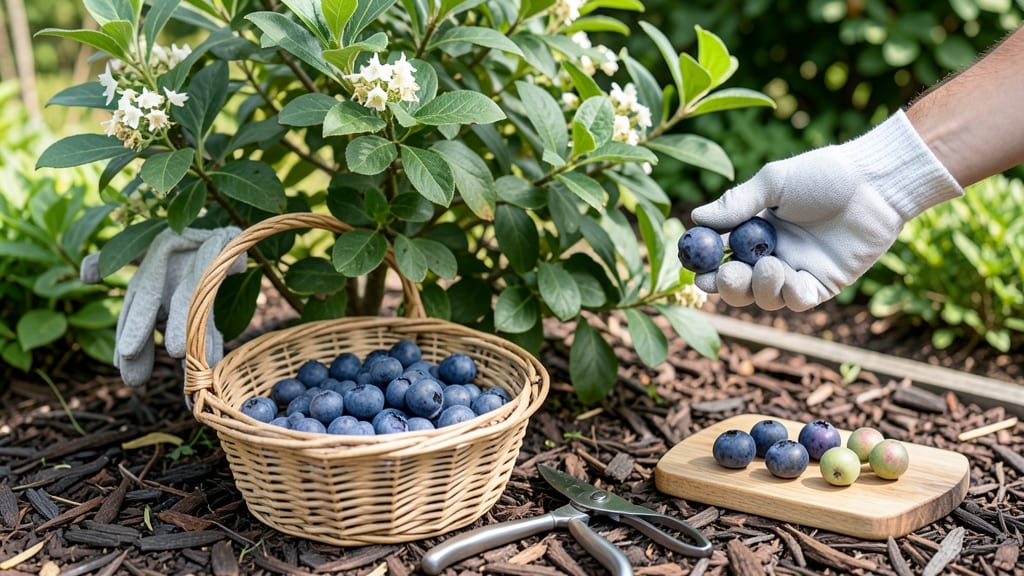
Harvesting blueberries at the right time means the difference between sweet, juicy berries and mealy, flavorless ones—so timing is everything.
I used to pick them too early, assuming "ripe" meant just turning blue, only to end up with tart, underripe fruit that tasted more like disappointment than dessert.
But once I learned the 5 visual cues that signal true ripeness, my harvests went from "meh" to bursting with flavor in just one season.
In USDA Zone 6a, where most home gardeners grow blueberries, the harvest window typically falls between July and August, but exact timing depends on your variety and weather.
Below, I’ll walk you through how to spot perfectly ripe berries, when to avoid harvesting, and the best tools to use—so you never miss peak season again.
You’ll also discover how to handle overripe berries, store your harvest for maximum freshness, and even troubleshoot common mistakes that ruin flavor. Ready to turn your blueberry bushes into a flavor-packed goldmine?

5 Visual cues to know when blueberries are perfectly ripe for harvesting
There’s nothing worse than biting into a blueberry that’s still tart or worse—mealy—because you picked it too early or too late. The good news? With these 5 visual cues, you’ll never miss peak ripeness again.
I’ve tested these tricks in my own garden, and they’ve saved me from countless disappointing harvests. The key is knowing what to look for beyond just color.
Blueberries ripen gradually, and each variety has its own timeline, but these visual signals apply to all types, from early-season ‘Duke’ to late-season ‘Jersey’. Pay attention to the color shift, texture change, and how easily they detach from the stem.
Trust me, your taste buds will thank you when you nail that perfect, juicy bite.
📌 Pro Tip: Always harvest on a dry morning after the dew has evaporated. Wet berries bruise easily, and you’ll get a cleaner, more precise assessment of ripeness.
🔍 Numbered Highlights: 5 Visual Cues for Perfectly Ripe Blueberries
- 1
- 2
- 3
- 4
- 5
Here’s a trick I learned from my local extension agent: Taste test one berry before committing to a full harvest. Pop a ripe-looking one into your mouth—if it’s sweet with just a hint of tartness, you’re golden.
If it’s still sour or grainy, wait another day or two. This simple step has saved me from harvesting hundreds of underripe berries.
Timing matters even within a single cluster. Some berries on a branch may ripen 3–5 days earlier than others. I harvest these early ones first, then return every 1–2 days to pick the rest.
This method ensures I get the best flavor from every single berry, not just the ones that ripen all at once.
One common mistake? Harvesting in the heat of the day. Blueberries overheat quickly under direct sunlight, which can make them taste bland or even ferment slightly.
Always pick in the early morning or late afternoon when temperatures are cooler. Store your harvest in the fridge until you’re ready to use them.
If you’re growing multiple blueberry varieties, keep a harvest journal. Note which cues appear first for each type—some, like ‘Bluegold’, ripen earlier than others. Over time, you’ll develop an instinct for when each bush is ready.
And remember: Patience pays off. A berry that’s not quite ready today might be the sweetest of the season tomorrow.
🌱 Final Tip: Use a small mesh bag or shallow container to harvest berries. This prevents crushing and makes it easy to spot underripe ones mixed in with the ripe batch. Happy picking!
Blueberry ripening timeline: month-by-month harvest guide by US growing zones
Timing your blueberry harvest depends on your USDA growing zone and the variety you’ve planted. Early-season types like ‘Bluecrop’ ripen weeks before late varieties such as ‘Jersey’, while cooler climates (zones 3–5) see harvests 2–4 weeks later than warmer zones (7–9).
Weather also plays a role—cool springs delay ripening, while hot summers can speed it up.
Most blueberries take 90–120 days to mature after flowering, but this varies by zone. For example, zone 6 gardens (like mine!) typically harvest in late June to early August, while zone 9 gardens might see berries as early as May or as late as September.
Understanding your timeline ensures you don’t miss peak flavor—or worse, harvest underripe or overripe berries.
⚠️ Pro Tip: Check your bushes every 2–3 days during peak season. Blueberries ripen unevenly, so you’ll often need 2–3 harvest passes per season to catch them all.
If you’re growing multiple varieties, start with the earliest ripening bushes and work your way to the latest. For example, in zone 7, I pick ‘Bluecrop’ in late June and ‘Duke’ in early July.
Always harvest in the cool morning hours to preserve sweetness and prevent bruising from heat.
Weather disruptions can throw off your timeline. A late spring frost might delay flowering, while a hot June can cause berries to ripen faster. Keep an eye on your bushes and adjust your expectations.
If birds or pests are a problem, consider bird netting or hand-picking berries as soon as they’re ripe.
Once you’ve mastered your zone’s timeline, you’ll never miss a harvest again. The key is patience and observation—your blueberries will thank you with the juiciest, most flavorful berries of the season! 🫐