
How To
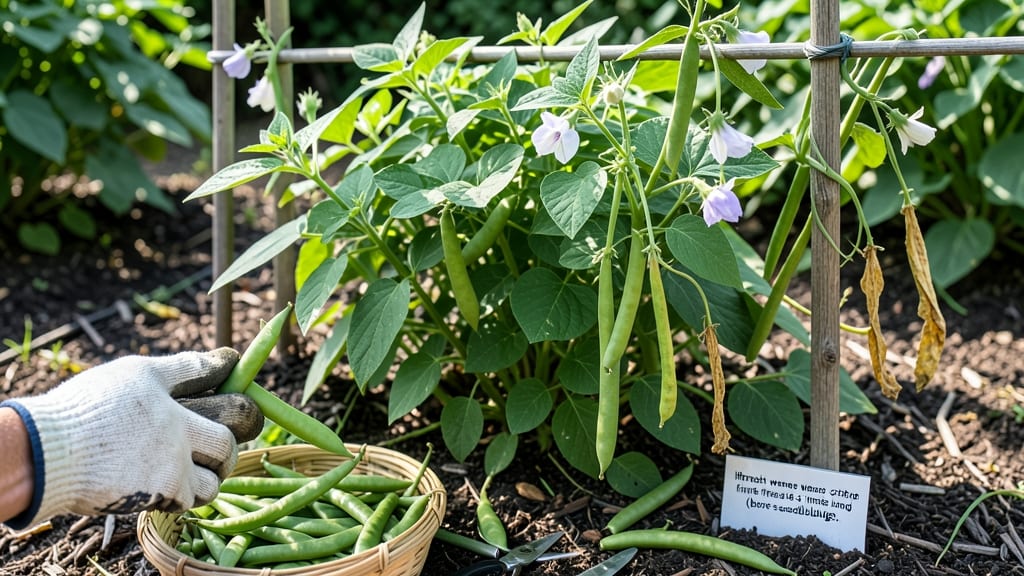
Harvesting beans at the right time ensures you get tender, flavorful pods instead of tough, stringy ones—so knowing when to harvest beans is the key to a great harvest.
Picture this: you’ve waited all season for your 🌱 beans to thrive, only to pick them too late and end up with leathery pods that snap back at you. That’s why timing matters more than you might think.
Green beans, in particular, need to be harvested when they’re firm, plump, and about 4-6 inches long, depending on the variety. If you wait too long, the seeds inside swell, and the pods toughen up—ruining that perfect crunch.
In this guide, I’ll walk you through the exact signs to look for, how often to harvest for continuous yield, and what happens if you miss the window. By the end, you’ll know exactly when to snip those pods for the best flavor and texture.

3 Visual signs your green beans are ready for harvest
Timing your green bean harvest is an art—pick too early, and you’ll miss out on flavor; too late, and those tender pods turn tough. The key lies in three visual cues that scream "harvest me now!"
These signs ensure your beans are at their peak tenderness and sweetness, not stringy or overripe. Let’s dive into what to look for when scanning your garden rows.
First, understand that green beans mature quickly—sometimes in just 3-5 days from when they first appear. Missing these visual cues means your crop could go from crisp perfection to woody disappointment faster than you can say "pasta night."
Paying attention to these three signals will help you maximize your yield and keep your plants producing for weeks.
Pro Tip: Always harvest in the morning when pods are cool and crisp. This is when their natural sugars are at their highest, and the cell structure is firmest—ideal for that satisfying snap.
- 1. Pod Size: Green beans reach harvest-ready length when pods are 4-6 inches long (varies by variety). For example, Blue Lake beans hit peak size at about 5 inches, while Roma beans are ready at 3-4 inches. Use your thumb as a rough guide—pods should span from your thumb to your first knuckle for most varieties.
- 2. Pod Color & Firmness: Look for pods that are vibrant in color (deep green for green beans, purple for wax beans) and feel firm to the touch. Gently squeeze a pod—it should yield slightly but not feel mushy. If it’s soft, it’s past its prime. For the snap test, bend a pod slightly; it should crack audibly like a twig, not bend like rubber.
- 3. Seed Development: Peek inside the pod (or cut one open if you’re unsure). At the perfect harvest time, seeds should be visible but tiny, about 1/8-inch wide. If seeds are larger or filling the pod, the bean is overmature and will taste starchy and tough. Think of seeds like tiny marbles—they should be barely there, not taking up space like golf balls.
One common mistake I see is waiting until pods are too large because gardeners assume "bigger is better." But oversized pods mean the plant has shifted energy from producing more beans to enlarging seeds. This not only reduces your total harvest but also makes the pods leathery.
For example, a Blue Lake bean left on the vine for just 2 extra days can go from tender to tough in a flash.
Another trick is to harvest every 2-3 days during peak production. This encourages plants to keep producing new pods instead of focusing on seed development. I’ve found that consistent harvesting can extend your green bean season by 3-4 weeks compared to picking sporadically.
Plus, it keeps your plants from getting overcrowded with mature pods, which can stress the vines.
If you’re growing bush beans versus pole beans, the signs are the same, but the pace differs. Bush beans mature faster (50-60 days) and often produce all their pods at once, so you’ll need to harvest them daily for a week or two.
Pole beans, on the other hand, produce continuously over 60-90 days, giving you more flexibility but requiring regular checks every 2-3 days.
For heirloom varieties like Kentucky Wonder or Contender, pay extra attention to color. Some heirlooms develop stripe patterns or waxy coatings as they mature. If you see these traits appearing, it’s a clear signal to harvest soon—these are often secondary indicators of overripening in certain varieties.
Finally, don’t ignore the plant itself. If your green bean plants start to yellow or droop, it’s a sign they’re redirecting energy to seed production. This is your last call to harvest aggressively before the plant shuts down for the season.
In my garden, I’ve learned that listening to the plant as much as the pod is key to a successful harvest.
With these three visual cues in mind, you’ll never again miss the perfect moment to pick your green beans. Grab your basket, head to the garden, and enjoy that fresh, crisp harvest before the seeds take over! 🌱
Harvesting frequency: how often to pick for continuous yield
To keep your green beans producing like a well-oiled machine, I’ve learned that consistent harvesting is the secret weapon. When you pick beans regularly—every 2 to 3 days—you encourage the plant to focus on producing more pods instead of letting them mature into tough, stringy messes.
This simple habit can extend your harvest by 3 to 4 weeks compared to picking sporadically.
Think of it like pruning a bush: the more you trim back the old growth, the more room new growth has to thrive.
For bush beans, I aim to harvest 3 to 4 times per week, while pole beans—thanks to their continuous flowering—can handle daily picking if the pods are ready. The key is to stay ahead of the plant’s natural cycle.
| Bean Type | Ideal Harvest Frequency | Peak Season | Yield Boost Tip |
|---|---|---|---|
| Bush Beans | Every 2-3 days | July-August | Harvest when pods are 4-6 inches |
| Pole Beans | Daily (if ready) | June-September | Pinch back tips to encourage branching |
| Dwarf Beans | Every 3-4 days | Late July-October | Use trellis for better air circulation |
Seasonal adjustments are crucial, too. In the early summer heat, I harvest more frequently—sometimes twice daily—to prevent pods from over-maturing. Conversely, as temperatures drop in late summer, I ease up to every 3 to 4 days since growth slows naturally.
Always check for firmness and snap before pulling the trigger (or scissors!).
Pruning can also work wonders for extending your harvest. For pole beans, I gently trim back overgrown vines after the main harvest wave to encourage a second flush of flowers. Just be sure to leave at least 6 inches of growth so the plant can recover.
This trick has given me an extra 2 to 3 weeks of harvest in my garden!
Pro tip: Use a sharp pair of pruning shears to avoid damaging the plant. I’ve found that harvesting in the morning—when pods are crispest—also makes a noticeable difference in flavor. Plus, it’s way more enjoyable to snack on fresh-picked beans straight from the garden!
If you let pods linger too long, the plant will shift its energy into seed production, and your harvest will fizzle out faster. By staying on top of it, I’ve seen my green bean plants produce up to 50% more over the season.
It’s all about that balance: pick often, but don’t overdo it—your beans will thank you with tender, sweet pods all season long. 🌱✂️