
Picking
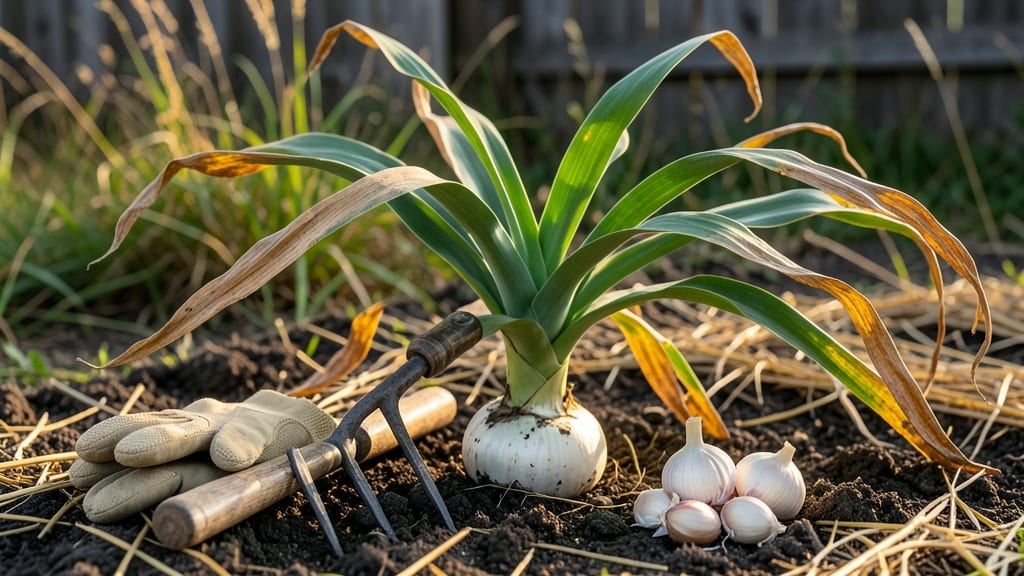
Harvesting garlic in North Carolina at the right time ensures you get the perfect plump bulbs your kitchen deserves.
Timing your garlic harvest in North Carolina’s humid climate can mean the difference between plump, flavorful bulbs and sad, shriveled cloves—so don’t miss these key signs!
Look for the lower leaves to turn brown and crispy while the top leaves stay green, a clear signal your 🧄 is ready. The bulbs should also feel firm when gently dug, and the cloves should be plump, not soft.
Below, I’ll walk you through the exact signs to watch for, how to avoid common mistakes, and how to cure your garlic for long-term storage—so you can enjoy homegrown flavor all year.

When to harvest garlic in NC: the 3 key signs (leaf browning, flower stalk & more)
North Carolina’s humid summers and variable climate make garlic harvesting a delicate timing challenge. Miss the window, and you’ll end up with shriveled bulbs or moldy cloves.
Unlike cooler climates, NC’s heat speeds up maturity, so leaf browning happens faster—often by mid-May to June, depending on your region. The Piedmont’s cooler nights may delay harvest by 1-2 weeks compared to Coastal areas’ faster heat.
Don’t rely on a calendar—garlic tells you when it’s ready through three clear visual cues. First, watch for lower leaves turning brown and papery. Second, check for a flower stalk (scape) emerging.
Third, gently dig up a test bulb to see if the cloves are plump and firm. Ignore these signs, and you risk poor storage quality or lost yield.
🌱 Did You Know? NC’s high humidity during curing can cause mold if bulbs aren’t dried properly. The key is balancing harvest timing with post-harvest care—more on that later!
| Harvest Sign | What to Look For | NC Timing Guide | Action Step |
|---|---|---|---|
| Lower Leaf Browning | Bottom 1/3 of leaves turn brown and crispy | Piedmont: Late May Coastal: Early June |
Test-dig a bulb to check clove firmness |
| Flower Stalk (Scape) | Hard stalk emerges from center (optional to remove) | Soft stalk: 2-3 weeks until harvest Hard stalk: Ready now |
Remove stalk to redirect energy to bulbs |
| Bulb Maturity | Cloves feel plump and firm when dug | Hardneck: 270-300 days Softneck: 240-270 days |
Harvest on dry, sunny day (avoid rain for 3 days) |
| Soil Conditions | Dry soil around bulbs (not soggy) | Piedmont: Soil dries faster Coastal: Monitor humidity |
Water lightly 2 days before harvest to loosen soil |
Start by checking for browning lower leaves, the first and most reliable sign. In Piedmont regions, this typically appears by late May, while Coastal gardeners may see it as late as early June.
The humidity difference between these areas affects drying times, so adjust your harvest window accordingly. For example, Durham’s cooler nights slow leaf browning, while Wilmington’s heat accelerates it.
Next, watch for the flower stalk (scape) emerging from the center. If it’s soft and green, wait 2-3 weeks. But if it’s hard and woody, your garlic is ready—remove the stalk to redirect energy to bulb development.
This is especially critical in NC’s heat, where stalks can rob nutrients from bulbs if left unchecked.
Finally, perform the dig test: gently lift a bulb to check clove firmness. If they’re plump and papery-skinned, it’s harvest time.
In hardneck varieties (like Music or Chesnok Red), this usually happens around 270-300 days after planting. Softneck varieties (like Silverskin) mature faster, around 240-270 days.
Harvest on a dry, sunny morning to prevent mold. Use a fork or spade to loosen soil around the bulb, then lift gently to avoid damaging cloves. Shake off excess dirt, but don’t wash—this can introduce fungal risks during curing.
In NC’s humidity, curing is just as important as timing, so plan to dry your harvest in a well-ventilated, shaded area for 2-4 weeks.
Pro tip: Hardneck garlic (common in NC) often produces larger bulbs if you remove the flower stalk early. But if you love garlic scapes for cooking, let them grow—just harvest the bulbs 2 weeks after stalks harden. Either way, timing is everything in NC’s <
NC-specific harvesting mistakes that ruin your garlic (and how to avoid them)
Harvesting garlic at the wrong time in North Carolina’s humid climate can turn your hard work into disappointment. The Piedmont’s drier air and Coastal Plain’s stickiness both create unique challenges. Many gardeners make costly mistakes—like harvesting too early or ignoring moisture levels—that lead to shriveled bulbs or moldy storage.
One of the biggest errors is waiting too long after the lower leaves turn brown. By then, your garlic may have split cloves or attracted pests. Meanwhile, harvesting too soon—when leaves are still green—results in underdeveloped bulbs that won’t store well.
Even the best NC varieties like ‘Silverskin’ or ‘Artichoke’ need precise timing to thrive.
North Carolina’s high humidity (especially in June) also plays a role. If you don’t dry garlic properly after harvest, you’ll end up with moldy bulbs or rotting cloves.
Many gardeners skip the critical curing process, assuming it’s optional. But in NC’s climate, curing isn’t just recommended—it’s essential for long-term storage.
⚠️ Don’t Harvest When:
- Lower leaves are still green (bulbs won’t be fully developed)
- Upper leaves turn brown (harvest is past due)
- Soil is waterlogged (increases rot risk)
- Rain is forecasted (drying becomes impossible)
✅ Harvest When: Lower 1/3 of leaves are brown and crispy, but upper leaves remain green and sturdy.
Another common mistake is improper drying methods. Many NC gardeners hang garlic bundles in humid garages or basements, where moisture lingers. Instead, aim for a dry, shaded spot with good airflow—like a well-ventilated porch or screened-in area.
If your garage is damp, consider a dehumidifier or move drying indoors near a fan.
For Coastal NC gardeners, salt spray from ocean breezes can also damage garlic during curing. If you’re near the coast, harvest earlier (late May) and use plastic mesh bags to shield bulbs from salt while drying.
Piedmont gardeners, on the other hand, can wait until early June when humidity drops slightly.
To avoid these pitfalls, use this NC garlic harvest checklist before digging:
- ✅ Check for brown, papery lower leaves (not green)
- ✅ Verify upper leaves are still green (not wilted)
- ✅ Test bulb firmness—gently squeeze a few; they should feel solid, not soft
- ✅ Ensure no rain is forecasted for 3–5 days post-harvest
- ✅ Prepare a dry, shaded drying area with airflow
By following these steps, you’ll transform NC’s challenging climate into an advantage—producing plump, storable garlic bulbs that rival commercial quality. The key is patience and preparation, especially in a state where humidity can make or break your harvest. 🧄